Germany is reportedly preparing a major state-backed Nvidia partnership, ABB is closing the loop on its fashion-logistics robots, NEURA is giving robots memory, and Hong Kong is building a place to test them all. Together, these four developments point to a maturing Physical AI industry, where progress increasingly depends on training, testing, and feedback.
Here’s our weekly scan of what moved in Physical AI and robotics, and what it means for the data behind it.
Berlin bets big on compute for robots
According to people familiar with the plans cited by the German business daily Handelsblatt, the German federal government is preparing a wide-ranging, state-funded cooperation agreement with Nvidia. The partnership, which is expected to include a cohort of roughly a dozen prominent German companies and startups such as Siemens, Audi, and Black Forest Labs, focuses on accelerating the take-up of artificial intelligence across the nation’s key industrial sectors. It has two aims, Reuters reported: laying the groundwork for Physical AI tools used to train robots and self-driving vehicles, and building high-performance AI models for industry. The deal is expected to be announced next week at the Invest in Germany conference in Berlin.
Governments are increasingly treating Physical AI as strategic infrastructure. Germany has deep industrial roots and wants to strengthen its position in the race against the US and China. Robotics and industrial AI offer a natural starting point, connecting the country’s manufacturing expertise with the computing power needed to develop more capable systems.
The final terms. The funding amount, program scope, participating companies, and implementation plans will determine whether this becomes a substantial industrial initiative or remains a headline-grabbing announcement. As of this writing, the reported partnership has not been officially confirmed.
We’re encouraged to see Europe investing in Physical AI. Compute helps train models, but robots also need examples of how real work gets done. Investments at this scale can bring data collection, annotation, and evaluation into sharper focus. That’s the part of the stack we care about most.
ABB builds robots that keep learning on the job
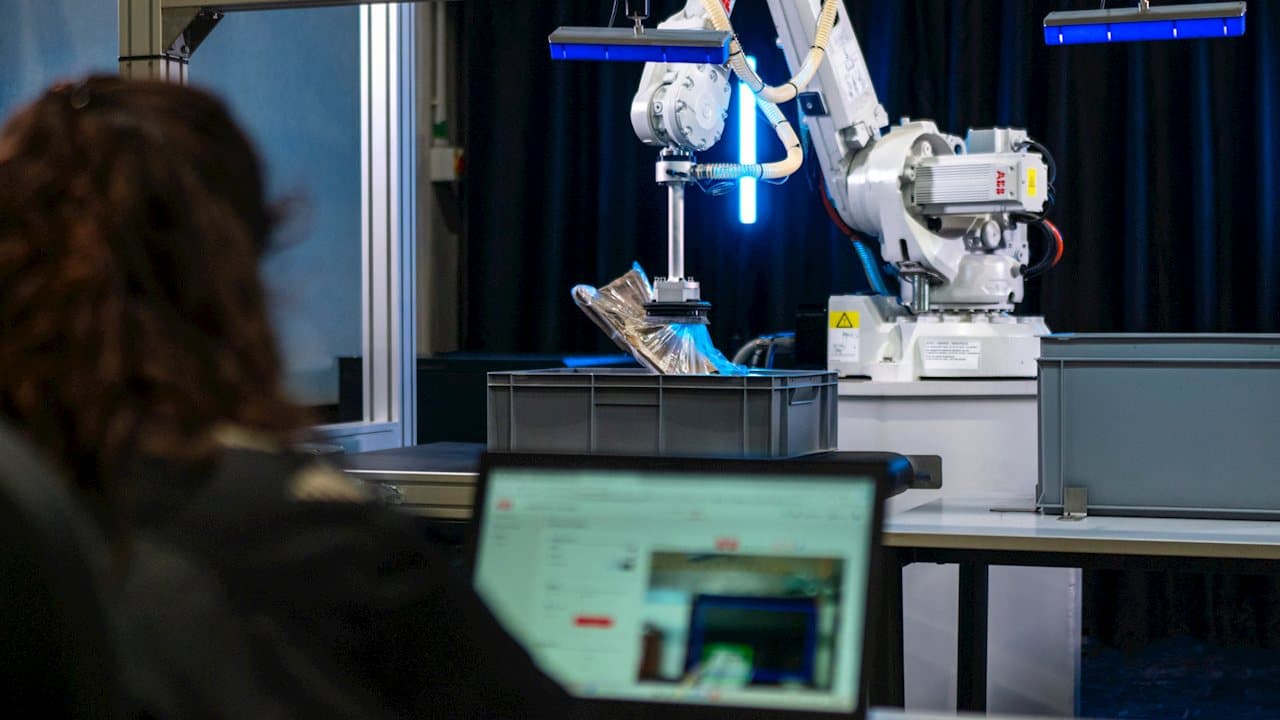
On October 15, ABB Robotics launched its first end-to-end Physical AI sorting solution. It integrates its new AI Robot Trainer software, which ABB also added to its OmniCore EyeMotion vision platform a day earlier, into the Fashion Inductor module, which picks and sorts apparel. ABB reports throughput of up to 1,300 items per hour per cell, a target picking accuracy above 99.5%, and up to 75% less engineering and commissioning effort.
Fashion logistics is a challenging environment for automation. Products, packaging, and operating conditions vary constantly, making reliable picking and sorting difficult to scale.
The more interesting development is the system’s feedback loop. ABB describes a process that monitors robot performance, flags anomalies, generates new training data, and feeds improvements back into the system. The goal is to move beyond one-off training toward continuous improvement.
Real-world performance. ABB’s throughput, accuracy and commissioning figures are company-reported maximums and targets, not independently verified results. We’ll be looking for data from live warehouse deployments to see how the system performs under changing conditions.
This is the feedback loop we love talking about: identify a failure, understand why it happened, turn it into better training data, and redeploy.
The hard part is often the middle. Which anomalies matter? What caused the failure? How should it be labeled so the model can learn the right lesson? A retraining pipeline is only as good as the failure data feeding it. That’s why failure analysis and consistent annotation matter.
A robot brain that feels, listens and remembers
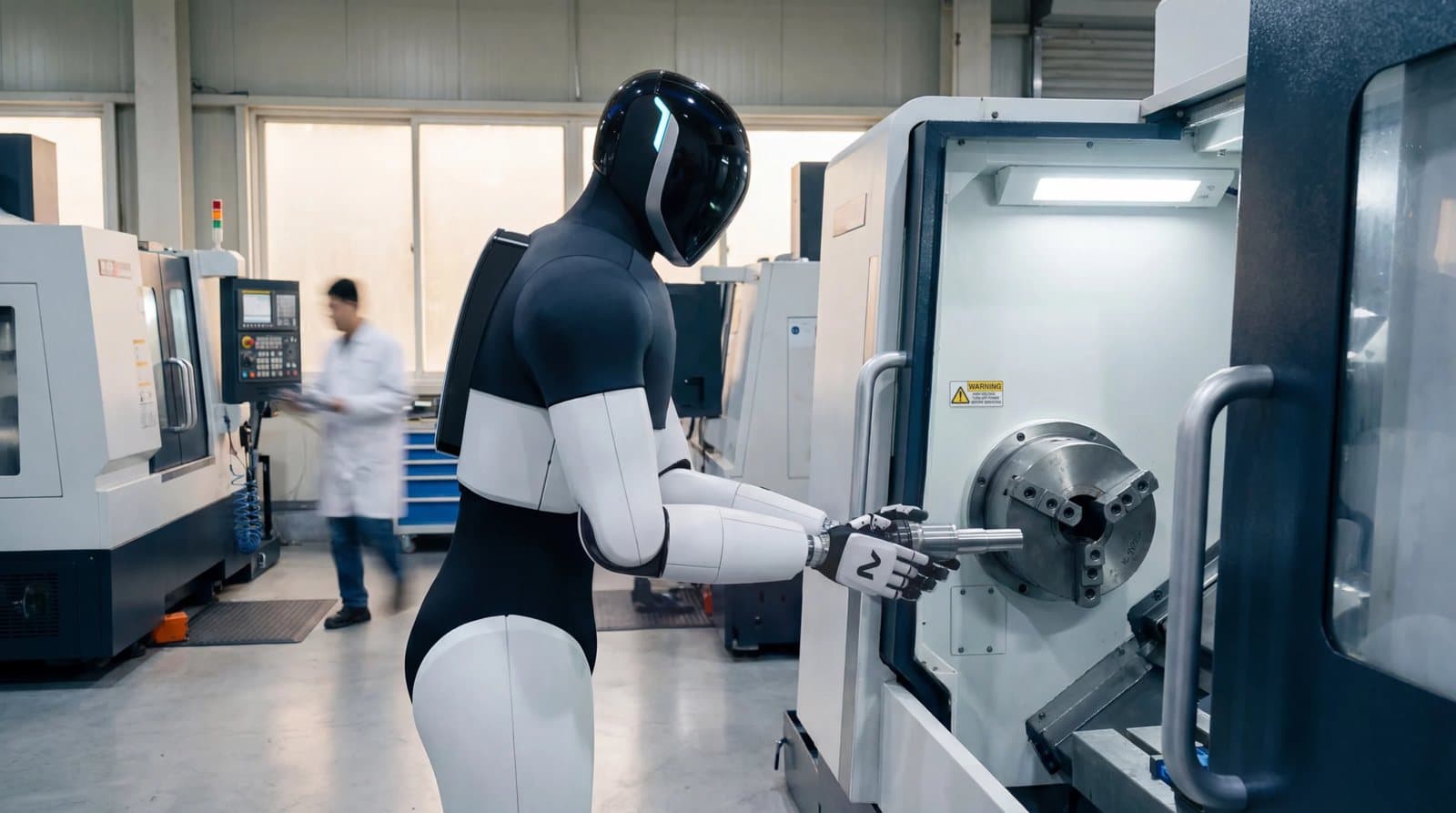
On October 14, NEURA Robotics introduced Neuron AI, a multimodal foundation model it describes as a robot’s “brain.” Built on a Perception-Language-Action (PLA) architecture, it blends 3D vision, touch, audio, and memory so robots can track objects even when out of sight. Trained on real-world data, simulation, and human demonstrations, the model will be shown live at NVIDIA GTC Berlin (October 20 to 22), where NEURA’s 4NE1 humanoid will attempt an autonomous, 11-minute laundry sequence.
Vision alone isn’t enough for complex automation. Fusing touch, sound, and memory can help robots tackle unstructured environments, but combining these distinct data streams reliably remains a massive industry hurdle.
Real-world validation. The GTC laundry demo is a major test for long-horizon task execution, error recovery, and hardware coordination. We are watching to see if NEURA’s live performance matches its launch claims.
Multi-sensory models require hyper-precise data synchronization. Aligning touch and audio with video is difficult, which is why structured human demonstration data is so critical. For complex tasks like laundry, success requires clear data annotation pipelines that score individual steps, not just the final result.
Hong Kong builds a proving ground for robots
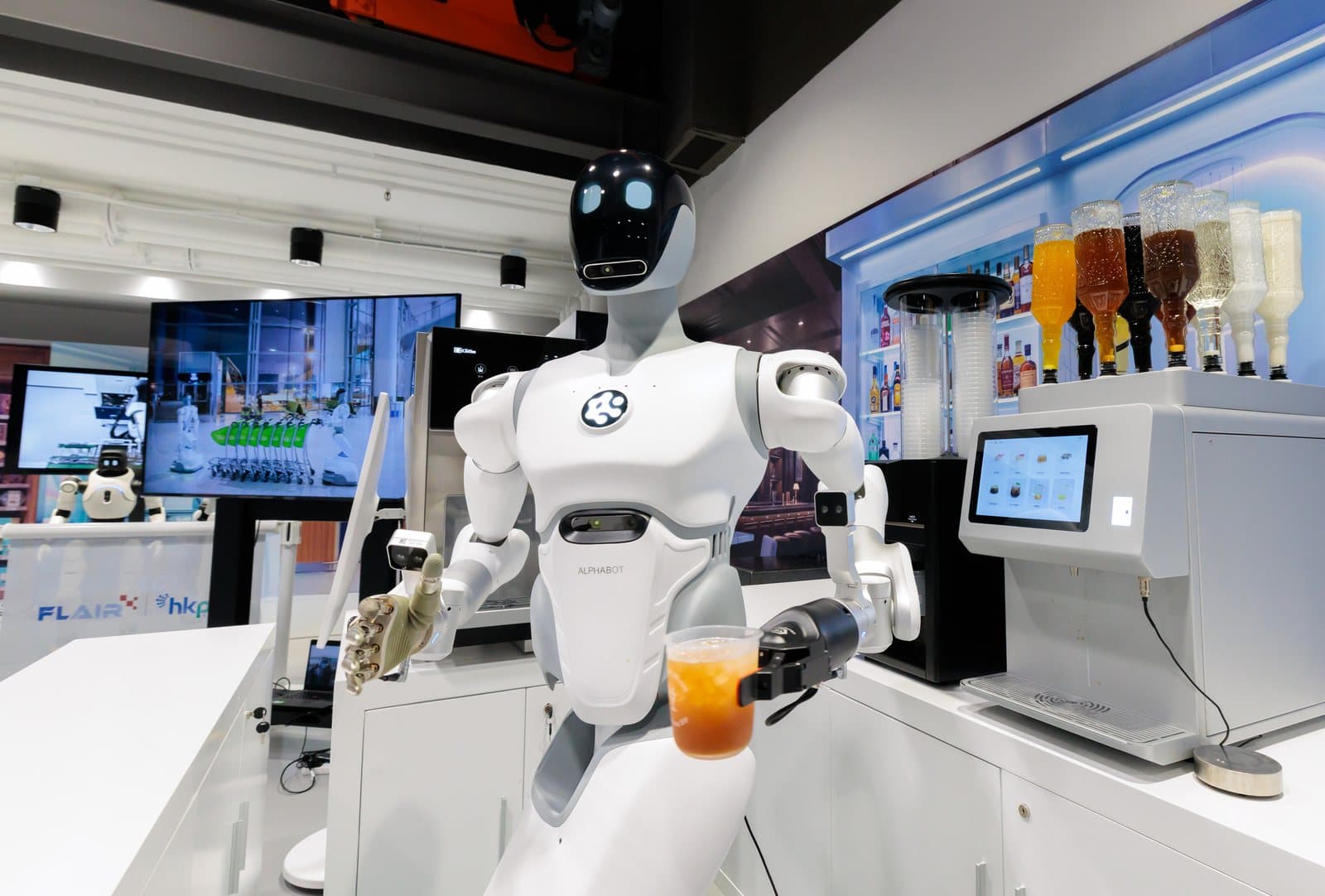
On October 15, the Hong Kong Productivity Council (HKPC) and its tech arm, FLAIR, officially launched the Embodied AI International Applications Hub, the city’s first Physical AI validation facility. Its initial phase unites seven technology partners, including Unitree Robotics, Rice Robotics, and Robotera, with eight international scenario partners. FLAIR will lead a closed-loop training and testing framework spanning sectors such as industrial manufacturing, smart logistics, and retail. At the opening, Hong Kong’s Secretary for Innovation, Technology and Industry, Sun Dong, said the government will add an extra HK$1 billion to its AI subsidy scheme and set up a HK$10 billion industrial fund this year for AI and humanoid robots, Xinhua reported.
Robots that perform well in a lab can struggle in the field. A shared testing environment built around realistic scenarios gives developers a more practical way to assess performance before deploying systems at scale.
It could also help Hong Kong attract robotics companies and establish itself as a hub for applied embodied AI. The opportunity extends beyond access to testing facilities: shared scenarios and evaluation methods could help the industry build a more consistent picture of what robots can actually do.
Whether the results are shared. A training ground becomes much more valuable when its scenarios, scoring methods, and findings are transparent enough to support meaningful comparisons. The quality of the evaluation framework will matter as much as the facility itself.
We keep coming back to one principle: a robot is only as good as the way it is tested.
Realistic scenarios, repeatable scoring, and clearly defined success criteria turn an impressive demo into meaningful evidence. Notice how this week’s stories, from ABB to Hong Kong, point toward the same cycle: train, test, learn, and repeat.
Robot policy evaluation and benchmark design give that cycle rigor. They help teams distinguish genuine improvements from isolated successes and identify where a system still falls short. We’re encouraged to see more of the industry building around that idea.

Cindy writes about Physical AI, robotics, and the human data that teaches models to perceive and act, for Labelix.ai, an independent data foundry for robotics and multimodal AI.
The Data Brief
Get the Radar in your inbox, one sharp read a week on Physical AI and the data behind it.