Physical AI is artificial intelligence that perceives the physical world and acts in it. It turns camera, depth and force inputs into movement, so a robot can pick up a mug, sort a tote or fold a towel rather than only recognize them. It is why humanoid robots have moved from demos to factory floors, and why the race between them is being decided by training data more than by hardware.
Everyone is talking about humanoid robots. Most conversations, however, focus on the hardware: how fast robots move, how much they can lift, or how closely they resemble humans. But that is only half the story.
Behind every robot that can pick up a box, sort inventory, or assemble products is something far less visible: high-quality data. Before robots can work safely and reliably in the real world, they need to learn how people interact with it. At Labelix.ai, we believe the future of Physical AI will not be defined by hardware alone. It will be shaped by the data that teaches robots how to perceive, reason, and act.
- Physical AI turns perception into action:it is what lets a robot decide to grasp a mug, not just recognize one.
- Humanoid wins by default, not by design:homes, tools, and most existing training data were already built for a human-shaped body.
- Deployment is real, but narrow:Agility Robotics’ Digit has moved over 100,000 totes for GXO and Figure AI is on BMW’s line; homes are still years out.
- Hardware is catching up; data is the bottleneck:every demonstration must be captured, synced, and labeled before a robot can learn, and that step decides who wins.
What is Physical AI, and why is everyone talking about it now?
Physical AI refers to AI systems that can understand and interact with the physical world. It turns perception into action, allowing robots to move, manipulate objects, and complete real-world tasks.
Physical AI: AI systems that perceive the physical world through sensors and turn that understanding into action, so a machine can move, manipulate objects, and complete real-world tasks, not just generate content.
To do this, robots combine multiple streams of information, such as:
Training these systems also requires several learning approaches, including imitation learning from human demonstrations, reinforcement learning, and physics-based simulation. Each contributes a different piece of how robots learn to move safely and effectively in the real world.
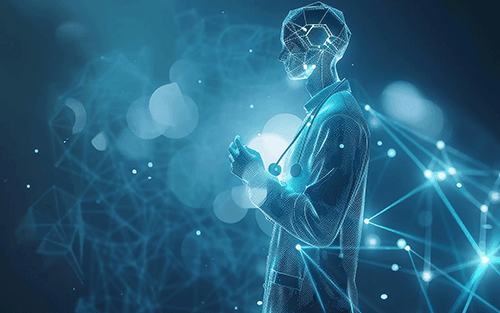
Physical AI vs. Generative AI
Generative AI excels at understanding and generating digital content: text, images, audio, and code. Physical AI has a different job. It must perceive the physical world and turn that understanding into actions.
| Generative AI | Physical AI | |
|---|---|---|
| Its job | Understand and generate digital content | Perceive the world and act on it |
| A coffee mug | Recognize it | Grasp it, judge if it is full, place it without spilling |
| The hard part | Understanding the world | Operating within it |
What are humanoid robots, and why do they learn from us first?
Humanoid robots and general-purpose robots are often used interchangeably, but they describe different things. A humanoid robot is about form: a human-like body built to work in spaces designed for people, without those spaces needing to be redesigned. A general-purpose robot is about capability: the ability to adapt across many tasks and environments, rather than repeating one programmed motion.
That overlap matters for another reason: much of the data these robots learn from already exists in human form. Videos of workers, motion-capture recordings, labelled demonstrations, and teleoperation sessions show robots how real tasks are performed.
People teach robots, robots learn from experience, and robots help teach other robots.The flywheel behind Physical AI
Why “general purpose” is harder than it sounds
Traditional industrial robots succeed because they operate in controlled settings: the same object, the same sequence, minimal variation. The real world does not offer that. Boxes arrive damaged, lighting shifts through the day, products vary in shape and weight, and people constantly introduce the unexpected.
A robot trained to pick up one box in one warehouse will not automatically succeed with hundreds of different objects across hundreds of environments. Generalization comes from diverse experience, which comes from high-quality training data. That is exactly where specialized data partners become critical.
Hitting the data wall?
See how a dedicated data team fits your use case. No pitch.
Where are they working today?
Despite the excitement, most real-world deployments are happening in factories and warehouses, not people’s homes, because industrial environments offer the right balance of structure and variability. Robots can do useful work while continuously generating the data needed to improve.
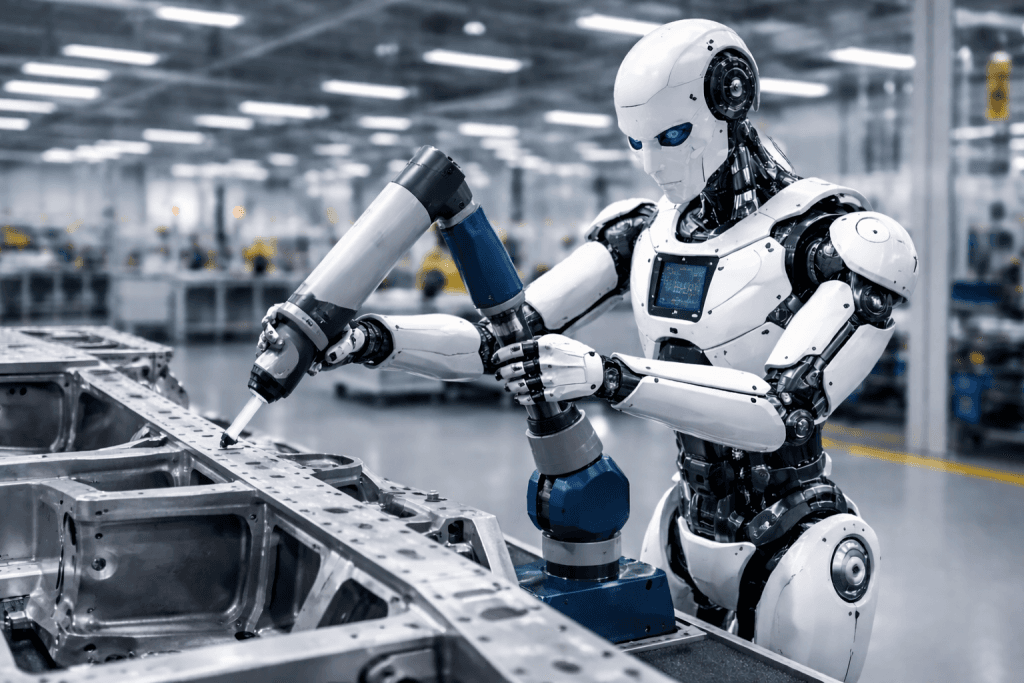
Warehouse and logistics
Warehouses are one of the first proving grounds. Picking items, moving containers, and transporting inventory are repetitive enough to automate while still exposing robots to variability. Amazon keeps expanding robotics across its fulfillment centers, while Agility Robotics’ Digit has completed more than 100,000 tote movements with GXO.
Manufacturing
Figure AI has partnered with BMW to test humanoid robots on production lines, while Toyota has piloted Digit to evaluate general-purpose robots in industrial workflows. Every successful task, unexpected situation, and recovery from a mistake becomes training data.
The home (not yet, but getting closer)
A robot that folds laundry or unloads the dishwasher remains one of Physical AI’s biggest ambitions. Homes are far less predictable than factories: furniture moves, and people, pets, and clutter constantly reshape the environment. That is why most companies focus on logistics and manufacturing first.
Why humanoid robot training data is hard to collect
If robots already learn from people, why is training data still such a bottleneck? Unlike generative AI, which learns from text and images already online, Physical AI depends on data that must be captured, synchronized, and annotated before it can train a model.
Every demonstration becomes a dataset through a repeatable pipeline:
- Capture. Record the demonstration across every stream: video, depth, force, and motion.
- Synchronize. Align all of those sensor streams precisely in time.
- Annotate. Review, segment, and label the demonstration into structured data.
- Train. Feed the model diverse examples, including the failed attempts that teach recovery.
Beyond data: other challenges
Data is the foundation, but not the only piece. Robotics companies must also improve battery life, build systems that stay reliable after thousands of real tasks, and establish safety standards as robots work alongside people. Reliable data supports all of these: the better teams understand how robots behave across situations, the safer those systems become.
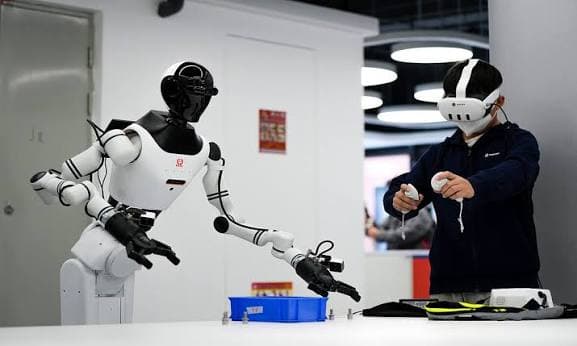
How Labelix.ai builds the data humanoid robots learn from
Every useful dataset starts with real human activity, performed in a setting that looks and feels real. That is what our process is built around.
Any environment, at any scale. We build and dress physical sets to match whatever a robot will encounter, from a single fully-furnished home to as many as a project needs, built in parallel. Kitchens, living spaces, retail floors, and workshops, all built to the project’s needs and dressed to feel real, not staged.
The right people for the task. Realistic environments still need the right people in them. Through our connections across Bangladesh’s universities, we recruit contributors across the full range a project requires, from no formal qualification through PhD-level expertise, ramped up quickly and dedicated to a single project rather than rotating between them.
The humanoid form matters not only because our homes, factories, and tools were built for people, but also because most of the data these robots can learn from was created and labeled by us.Rashid Arif, Co-founder, Labelix.ai
Curious how this works?
Hardware may capture the headlines, but data will determine which robots actually work in the real world. As Physical AI matures, companies that can consistently generate high-quality, real-world training data will not just support the robotics industry, they will help shape it.
Whether you are building the next generation of Physical AI robots or other multimodal AI systems, Labelix.ai can help you create the high-quality datasets they depend on. Request a pilot tailored to your use case.
Frequently asked questions
What does Physical AI actually mean?
Physical AI is the umbrella term for AI that acts in the real world rather than just generating content. It covers perception (sensors, vision, touch), decision-making, and physical control all working together in a single system.
Is a humanoid robot the same as a general-purpose robot?
Not quite. A robot can be humanoid without being general-purpose (built for one task, in a human-shaped body), or general-purpose without being humanoid (a wheeled robot that handles many jobs). The two increasingly overlap, but they're independent design choices.
Which industries are using humanoid robots today?
Today, most humanoid robot deployments are in logistics and manufacturing, where structured environments help robots learn safely. Pilots are also expanding into healthcare, while home use remains a longer-term goal.
Why can't humanoid robots just learn from data scraped off the internet?
Robots need real-world demonstrations that capture movement, force, sensor data, and outcomes. Unlike text or images online, this data must be collected, synchronized, and annotated before it can train Physical AI models.
How do humanoid robots learn from human data?
Robots learn from videos, motion capture, teleoperation, and other demonstrations of people performing real tasks. They then refine those skills through simulation and real-world experience.
What does Labelix.ai do?
Labelix.ai is an independent data annotation company that helps AI teams collect, organize, and prepare high-quality datasets for Physical AI, robotics, and other multimodal machine learning applications.

Cindy writes about Physical AI, robotics, and the human data that teaches models to perceive and act, for Labelix.ai, an independent data foundry for robotics and multimodal AI.
The Data Brief
One sharp read a month on Physical AI and the data behind it.