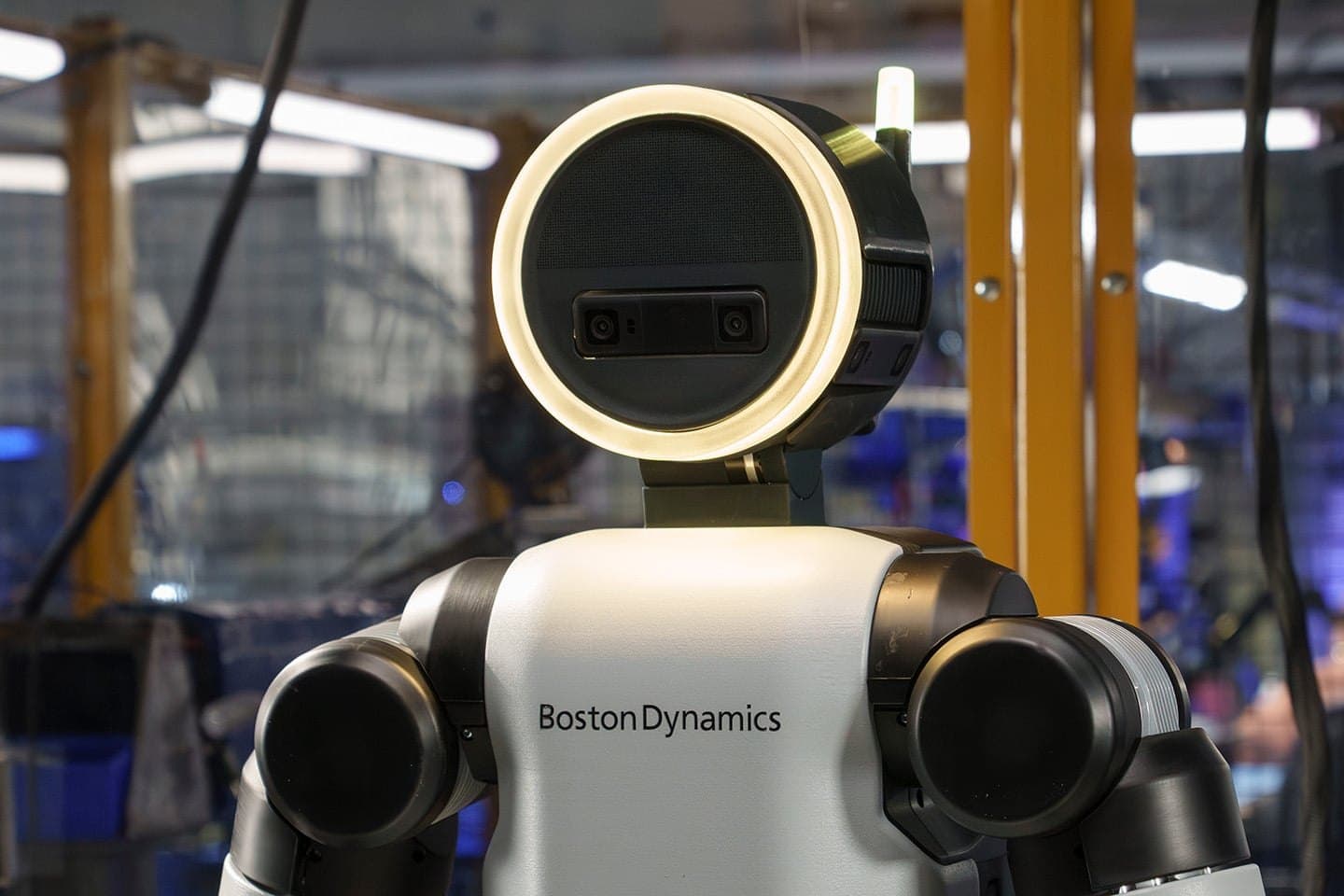
Hugging Face’s robotics work connects physical hardware with tools for building and sharing AI. Through its acquisition of Pollen Robotics, it brought the Reachy robots into its ecosystem.
Reachy Mini supports desktop interaction and AI experimentation, while Reachy 2 serves manipulation research. Alongside them, LeRobot helps developers record demonstrations, train models, and share datasets across supported robots.
Here’s how the platforms differ, what buyers should know, and why useful robot learning still depends on data quality.
| Hugging Face robotics at a glance | |
|---|---|
| Company | Hugging Face, the AI platform behind LeRobot |
| Hardware company | Pollen Robotics, acquired by Hugging Face in April 2025 |
| Desktop robots | Reachy Mini Lite and Reachy Mini Wireless, for interaction, coding, and AI experimentation |
| Research robot | Reachy 2, for manipulation and embodied AI research |
| Software | LeRobot provides tools for recording demonstrations, training models, and sharing robotics datasets |
| Intended users | Developers, educators, researchers, and robotics enthusiasts |
| Buying options | Reachy Mini: official Pollen store. Reachy 2: contact Pollen to confirm availability and purchasing terms |
| Ecosystem distinction | SO-101 is a LeRobot-supported arm, with parts sourcing linked in the official assembly guide |
Company Snapshot
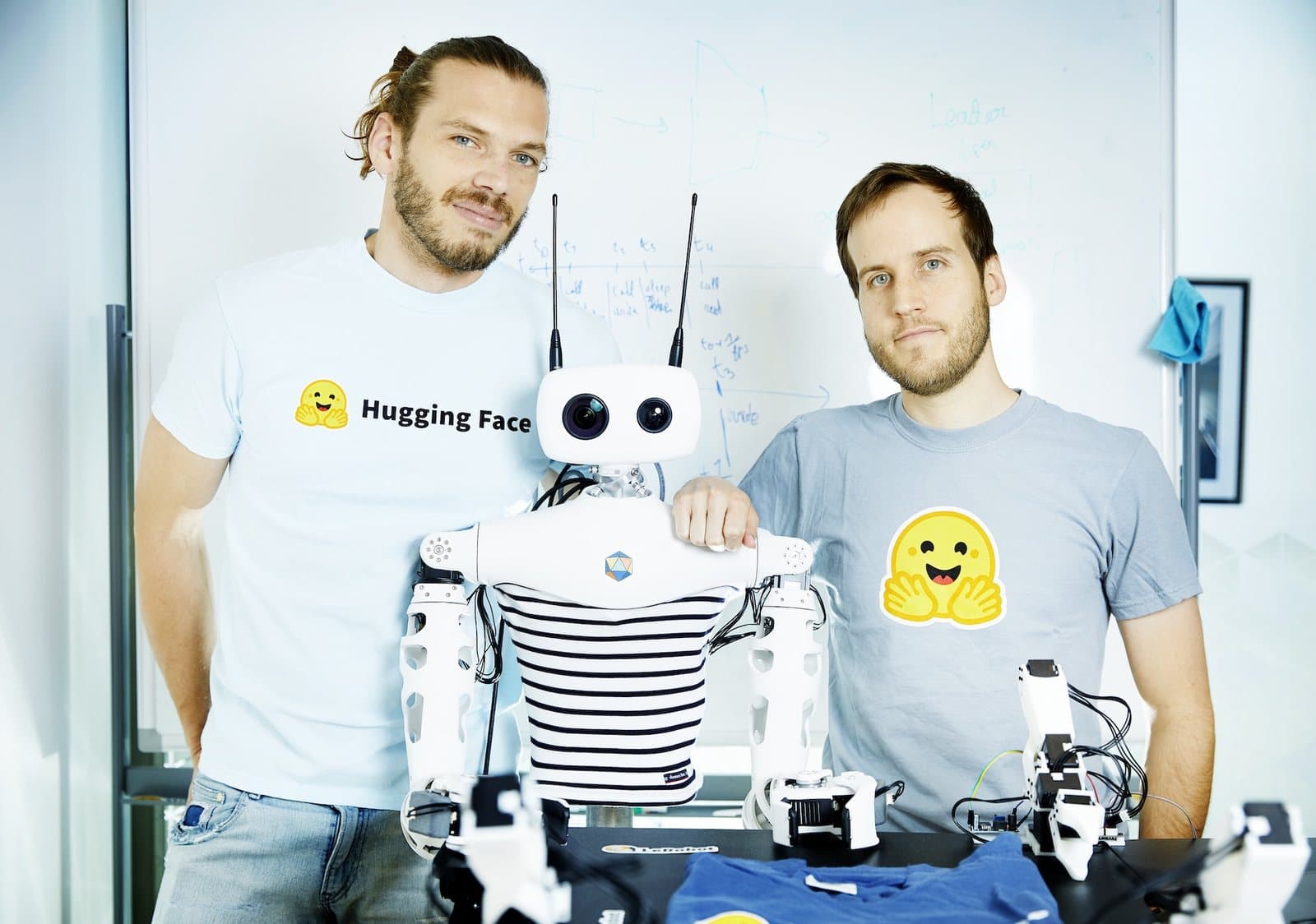
Hugging Face’s robotics work began before it acquired Pollen Robotics. It launched LeRobot in 2024 and collaborated with Pollen on Reachy 2 that June.
Pollen brought an established hardware team to the partnership. Founded in 2016, Pollen’s founders include Matthieu Lapeyre and Pierre Rouanet, former researchers from Inria’s Flowers team.
The acquisition, announced on April 14, 2025, brought that hardware expertise into Hugging Face. In the announcement, co-founder and chief scientist Thomas Wolf wrote that robotics “should be open, affordable, and private.”
That gives the company a broader role than supplying robots alone: it also provides tools for developers building their own robotics applications.
The Technology: Reachy Mini, Reachy 2, and LeRobot
Reachy Mini: A Desktop Robot for AI Experimentation
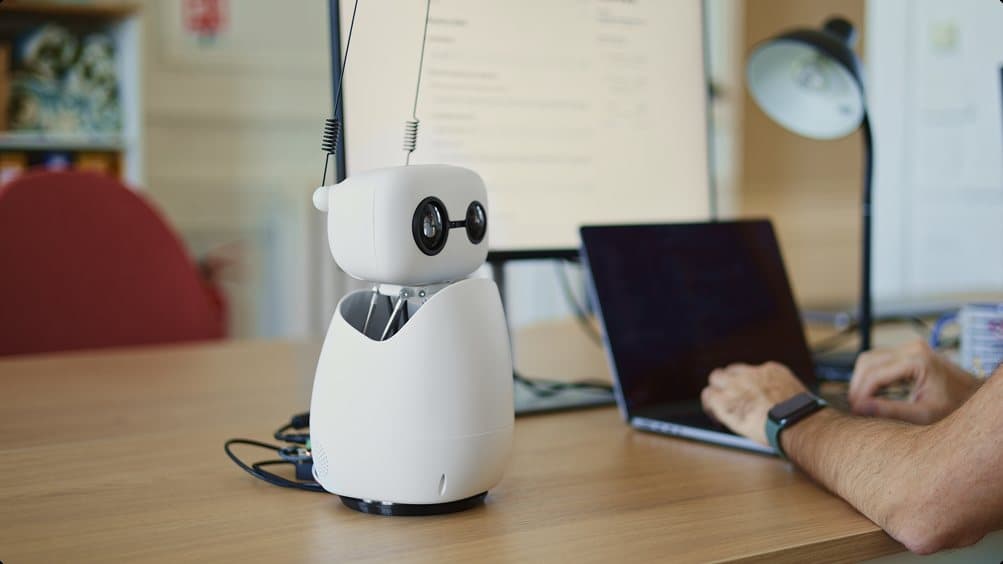
Reachy Mini gives developers a physical interface for experimenting with AI. Its camera, four microphones, speaker, and programmable movements support applications such as conversation and hand tracking.
The two versions differ mainly in computing and connectivity:
- Reachy Mini Lite: connects to an external computer through USB and uses wall power.
- Reachy Mini Wireless: includes a Raspberry Pi Compute Module 4, Wi-Fi, and a battery.
Both offer the same motion capabilities and arrive as assembly kits. Developers can use Python or JavaScript and explore applications shared through Hugging Face Spaces.
| Robot facts | Reachy Mini Lite | Reachy Mini Wireless |
|---|---|---|
| Official advertised price | $399 | $499 |
| Extended dimensions | 30 × 20 × 15.5 cm | 30 × 20 × 15.5 cm |
| Manufacturer-listed weight | 1.35 kg | 1.475 kg |
| Movement | Six degrees of freedom in the head, body rotation, and two movable antennas | Same as Lite |
| Battery | Wall-powered | 2,000 mAh, 12.8 Wh |
| Hands and payload | No manipulation arms or hands; payload not applicable | Same as Lite |
Hardware specifications come from the official Lite datasheet and Wireless datasheet.
How to buy: order through Pollen’s official store. Pollen ships directly to the EU, UK, US, and Canada, directing other destinations to its official distributor, Seeed Studio. Its published lead time is up to 90 days after purchase. Shipping, taxes, and import charges are additional.
Official video: How to create your own custom conversation app on Reachy Mini, from Hugging Face.
Prices and specifications checked October 28, 2026.
Reachy 2: A Platform for Manipulation Research
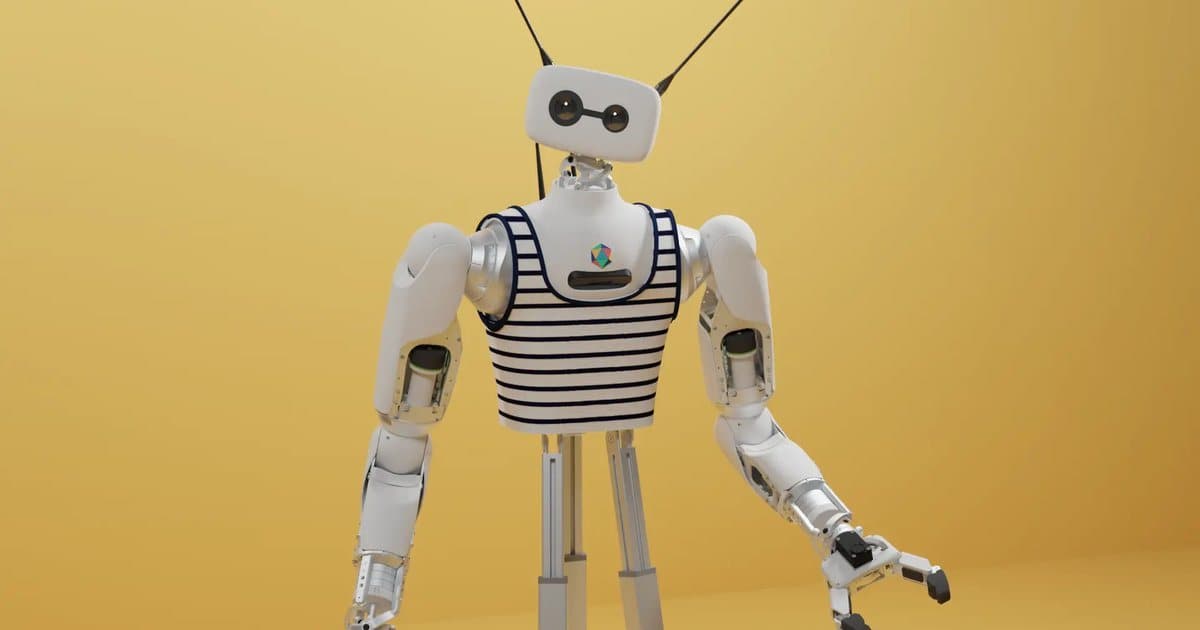
Reachy 2 is designed for robotics labs studying how machines grasp and handle everyday objects. It combines human-scale arms, grippers, vision, and an optional omnidirectional mobile base.
Researchers have several ways to work with it:
- VR teleoperation: see through the robot’s cameras and control its arms, head, grippers, and base.
- Python programming: use its SDK to program robot behavior.
- Demonstration collection: generate data through teleoperation for imitation learning.
The robot runs ROS 2 Humble. Its onboard computer handles the robot stack; Pollen’s documentation specifies customer-provided computers for AI processing.
| Robot facts | Reachy 2 |
|---|---|
| Current official price | Not published on the current product page |
| Height | Adjustable, 136-166 cm |
| Manufacturer-listed weight | Up to 50 kg for the full robot |
| Arms | Seven degrees of freedom per arm |
| Arm payload | Up to 3 kg per arm |
| Grippers | Two-finger grippers with interchangeable tips; maximum opening of 100 mm |
| Vision | Stereo and RGB-D |
| Mobile base | Three omniwheels and LiDAR |
| Battery runtime | Eight hours listed for the mobile base; whole-robot runtime not specified on that page |
How to buy: contact sales@pollen-robotics.com to confirm current availability, configuration, and pricing. Hugging Face’s April 2025 announcement advertised orders at $70,000 through that address. That historical offer should not be treated as a verified current price.
Official video: Reachy 2 (beta) - practicing his skills.
Sources checked October 28, 2026.
LeRobot: Connecting Hardware to Robot Learning
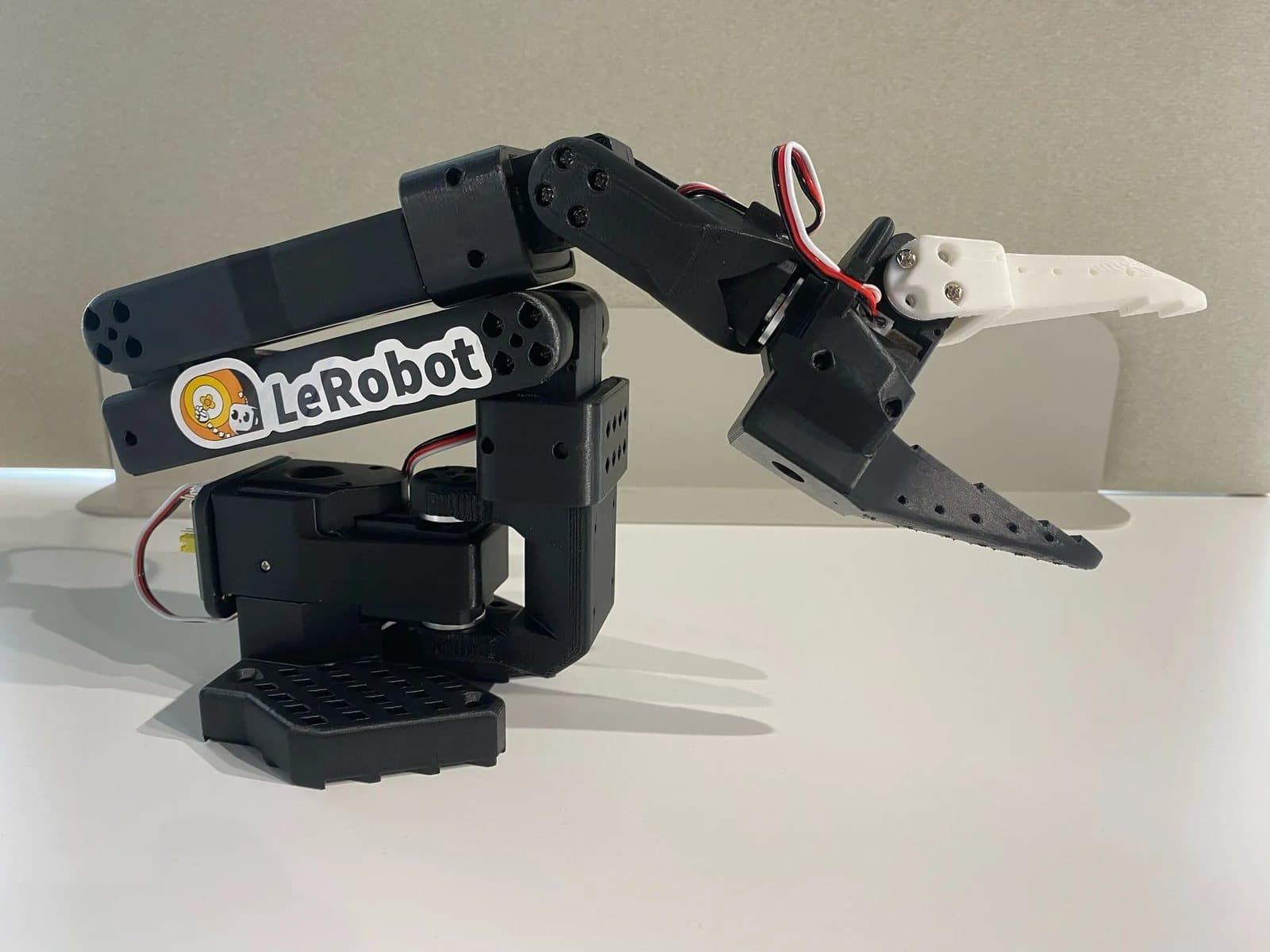
LeRobot is Hugging Face’s open-source software library for robot learning. It supports platforms including Reachy 2 and SO-101, with tools for collecting data, training models, and running learned behaviors. In its first twelve months, its GitHub repository went from zero to over 12,000 stars, Hugging Face said in its acquisition announcement.
Its demonstration-based workflow has four stages:
- Teleoperate: control a supported robot to demonstrate a task.
- Record: capture synchronized camera footage, robot states, and actions.
- Train: use demonstrations to train a policy; the model that determines the robot’s actions.
- Deploy: run the trained policy on the robot.
Developers can share datasets and trained models through the Hugging Face Hub. They can also start with existing datasets instead of collecting every demonstration themselves.
The SO-101 documentation covers parts sourcing, assembly, motor setup, and calibration. SO-101 is a supported hardware platform, separate from Pollen’s Reachy product line.
Business Model and Strategy
Hugging Face combines robot hardware sales with tools for developing and sharing robotics applications. Its products address different audiences: Reachy Mini supports desktop experimentation, while Reachy 2 targets manipulation research.
Alongside the hardware, its ecosystem provides:
- Community applications: developers can publish Reachy Mini applications through Hugging Face Spaces for other owners to use.
- Shared datasets and models: LeRobot helps developers build on existing robotics research.
- Development resources: published code, documentation, and design files support customization under their respective licenses.
Together, these offerings suggest a strategy centered on developer participation. Buyers get hardware they can program, while community contributions expand the applications and learning resources available around it.
Custom projects still require development work. Reachy Mini, for example, ships as a kit that takes about two hours to assemble, and new behaviors still have to be built and tested by the team using them.
The Data Challenge
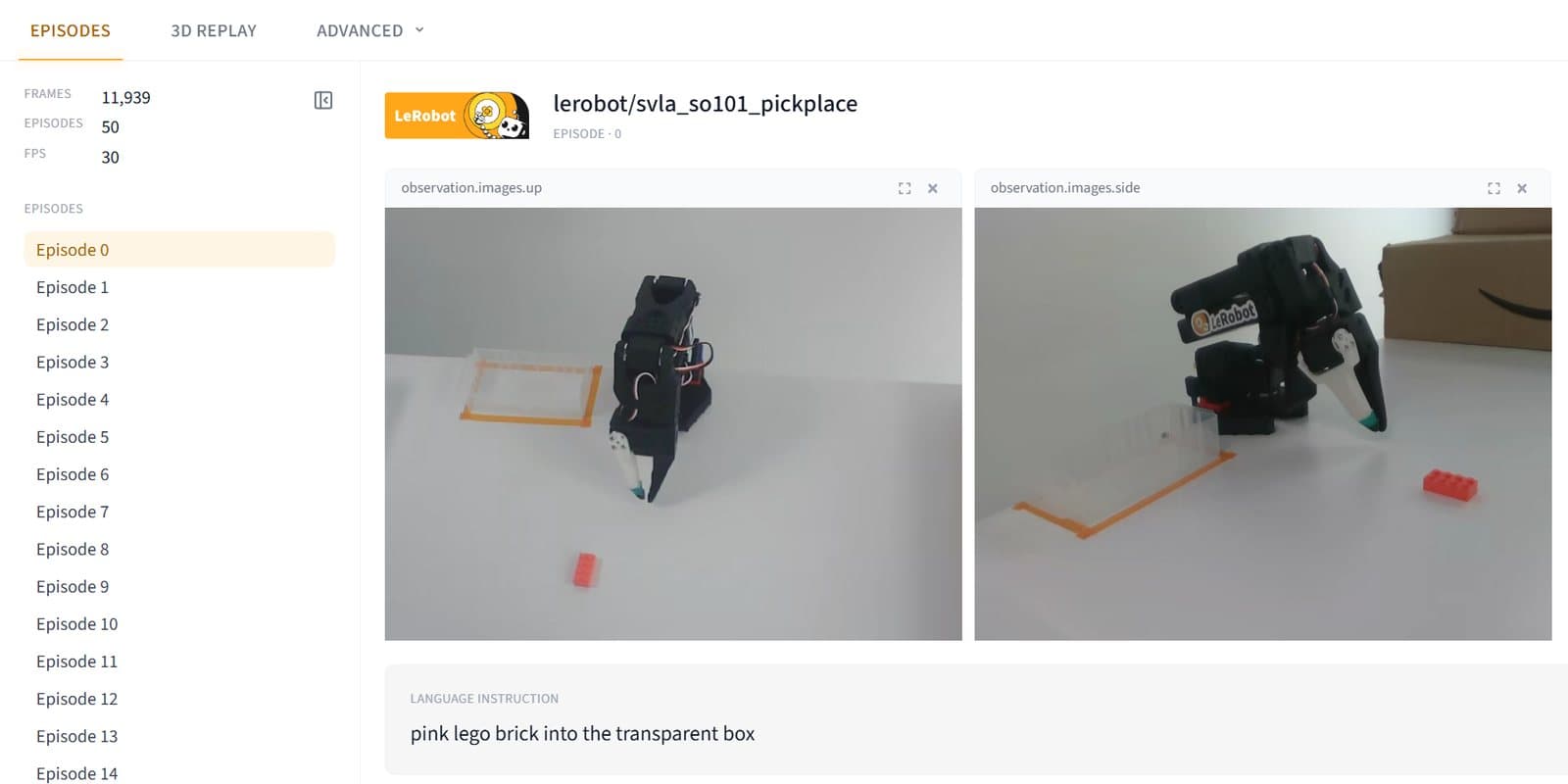
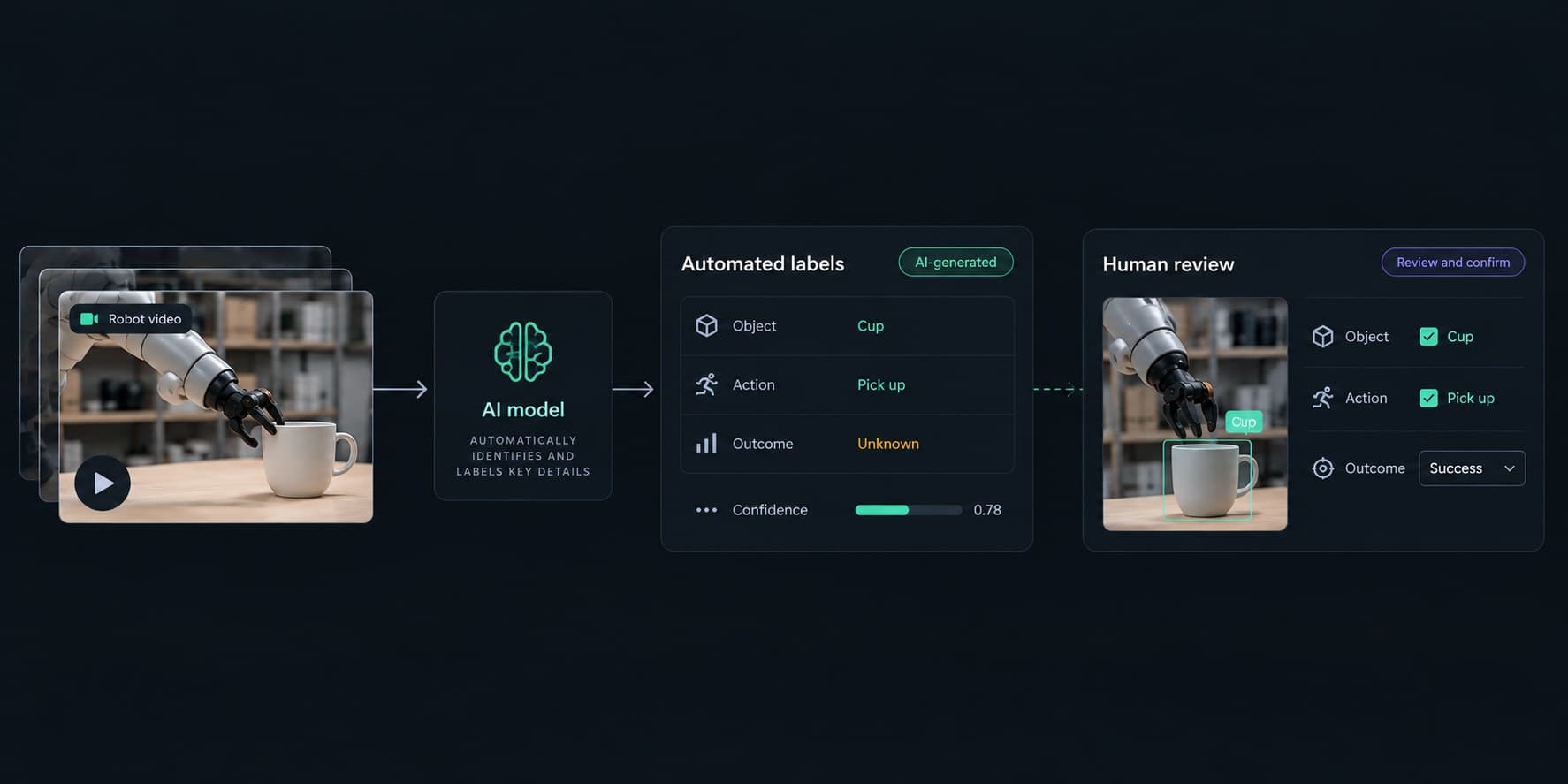
LeRobot’s dataset format organizes camera footage, robot states, actions, timestamps, and task descriptions. For teams using these datasets, the next challenge is deciding which demonstrations fit their training and evaluation goals.
Useful review questions include:
- Task outcomes: did the attempt meet the defined success criteria, partially complete the task, or require human intervention?
- Failures and recovery: does the demonstration capture successful execution, an error, or recovery, and is that distinction documented?
- Recording conditions: how do the hardware, camera views, objects, and environments compare with the intended application?
For example, a cup-placement task might require the cup to remain upright within a designated shelf area. Reviewing that outcome requires clear criteria, beyond knowing that the instruction was “place the cup.”
Shared data gives teams material to build on. Documented conditions and consistent outcome definitions help them judge how to use it. (We go deeper in what makes a robotics dataset usable.)
Labelix.ai’s Take
Hugging Face makes robotics tools and shared datasets accessible to more developers. Their usefulness depends partly on how clearly teams can interpret the recorded behavior.
A team selecting demonstrations for imitation learning may need different annotations from one investigating failures. Task steps, interventions, and outcomes should be labeled according to the project’s intended use.
Labelix.ai’s robotics data annotation services support this work by helping teams structure and annotate robot recordings. Those annotations give researchers context for their training, analysis, and evaluation decisions.
Have robot demonstrations that need labeling? Contact Labelix.ai to discuss a representative sample, your review criteria, and annotation needs.
Have robot demonstrations that need labeling?
Send a representative sample: one task, a few episodes, your hardest cases. A dedicated Labelix.ai team labels steps, interventions and outcomes against your criteria and shows you how the close calls were decided.
FAQs
How much does a Hugging Face robot cost?
Pollen Robotics lists Reachy Mini Lite at $399 and Reachy Mini Wireless at $499. Shipping, taxes, and import charges are additional.
What can Reachy Mini actually do?
Reachy Mini supports conversation, expressive movement, and camera-based applications. Owners can explore community apps or build their own interactions using its camera, microphones, speaker, and programmable motion. Its focus is desktop interaction and AI experimentation.
Does Reachy Mini need a computer?
Reachy Mini Lite needs an external computer connected through USB for processing. Wireless has a built-in Raspberry Pi CM4, so it can run without an attached computer. Whether an application needs online services depends on the application.
Do you need coding skills to use Reachy Mini?
Not for every activity. You can use existing apps and create movements with Pollen's Marionette tool without writing code. To develop your own applications, Pollen provides JavaScript and Python SDKs.
Can you use LeRobot without owning a robot?
Yes. LeRobot's documentation describes training on existing Hugging Face datasets, evaluating policies in simulation, and exploring free Colab notebooks. These options let you begin learning about robot training before purchasing hardware.

Stephanie writes about robotics, agriculture AI, and the training data behind them, for Labelix.ai, an independent data foundry for robotics and multimodal AI.
Get the next one first
One sharp read a month on Physical AI and the data behind it.