A robotics dataset is usable when it gives a robot enough variation to generalize: diverse scenes, objects and lighting; synchronized multimodal sensor streams; failures recorded alongside successes; and annotations applied consistently across the whole set. Size alone decides none of that. Ten thousand near-identical demonstrations teach less than one thousand that capture the situations the robot will actually meet.
Ask most people building robots what they need more of, and the answer is almost always “more data.” It’s an easy number to chase because it’s easy to measure.
But size isn’t the same thing as usefulness, and the industry’s habit of treating dataset size as a proxy for dataset quality is one of the more expensive mistakes teams make in Physical AI right now.
A robotics dataset isn’t valuable because it contains millions of frames or demonstrations. It’s valuable when it gives a robot enough information and variation to learn a task and generalize beyond the exact situations it’s already seen.
In one of our earlier blogs, we covered how robots learn from human demonstrations. However, demonstrations are only the starting point. What determines what a robot can actually learn is the quality and structure of that data. That’s what this article is about.
- Volume is a weak proxy for quality:a smaller, varied dataset can teach a robot more than millions of near-identical demonstrations.
- Capture what the task needs, in sync:robotics data is multimodal, and streams that drift out of alignment teach the model a distorted task.
- Diversity is what enables generalization:variation across objects, environments, and edge cases is what lets a robot handle situations it never saw in training.
- Consistent annotation is the real bottleneck:generating footage is easy; turning it into structured, consistently labeled, timestamp-aligned data is the hard part.
More robotics data isn’t always better
Here’s the trap: a million nearly-identical demonstrations can teach a robot less than a smaller, more varied dataset. Record the same task in the same environment ten thousand times, and you haven’t built variation, you’ve built repetition. Repetition teaches a robot to memorize a sequence, not to understand a task.
A robot trained to pick up the same box from the same shelf will get very good at exactly that. Change the lighting, dent the box, or move it six inches, and performance can fall off a cliff because the robot never learned “pick up a box.” It learned “pick up this box, right here, under these lights.”
This isn’t hypothetical. Large open robotics datasets like Open X-Embodiment illustrate the value of collecting demonstrations across many robots, tasks, and environments. The broader the range of situations represented in the data, the better a model can learn patterns that transfer beyond a single setup.
Useful data increases the range of situations a robot can handle. It doesn’t just increase the number of files in a folder.
What should a robotics dataset actually capture?
Robotics data is fundamentally multimodal. A useful robot learning dataset might combine:
Video alone can show a robot moved toward an object. It can’t show how it moved, where its joints were, how much force it applied, or what happened the instant the object resisted. Those signals live in other streams; collecting video alone only captures part of the story.
That doesn’t mean grabbing every sensor available. It means capturing what the task requires and keeping those signals synchronized.
A single demonstration might involve camera footage, robot state, joint positions, force data, and teleoperation commands, all captured at once. If those streams drift out of alignment, the resulting training data can associate the wrong sensor readings, actions, or robot states with each moment in the demonstration.
Diversity is what helps robots generalize
If one property separates a dataset that supports generalization from one that simply accumulates, it’s meaningful diversity across:
This matters more for humanoid and general-purpose robots than for a single-task industrial arm. An arm bolted to one station only ever needs to handle that station. A general-purpose humanoid is meant to work in kitchens it’s never seen, warehouses laid out differently from training, and alongside people who move unpredictably. If the training data doesn’t reflect that range, neither does the robot, no matter how capable the underlying model is.
That range needs to show up in two places at once:
- The tasks themselves (pick and place, opening and closing, sorting, carrying, and tool manipulation, mapped to what the robot is actually meant to do, not padded with unrelated tasks for volume), and
- The environments those tasks are captured in (different kitchens, warehouse layouts, object arrangements, lighting). Without both, a model can quietly learn to associate a task with a specific room rather than with the task itself.
Don’t scrub out every failure
There’s a natural instinct to clean a dataset until it only contains perfect runs. That instinct optimizes for the wrong thing. Teams that strip out every failed grasp, slip, and occlusion end up with a dataset that looks great in a demo and falls apart the moment the real world does something it didn’t rehearse.
Robots operating outside a lab will hit slips, occluded objects, unexpected positions, failed grasps, and human interruptions. If a humanoid has never seen a recovery from a failed grasp, it has no idea what to do the first time it drops something.
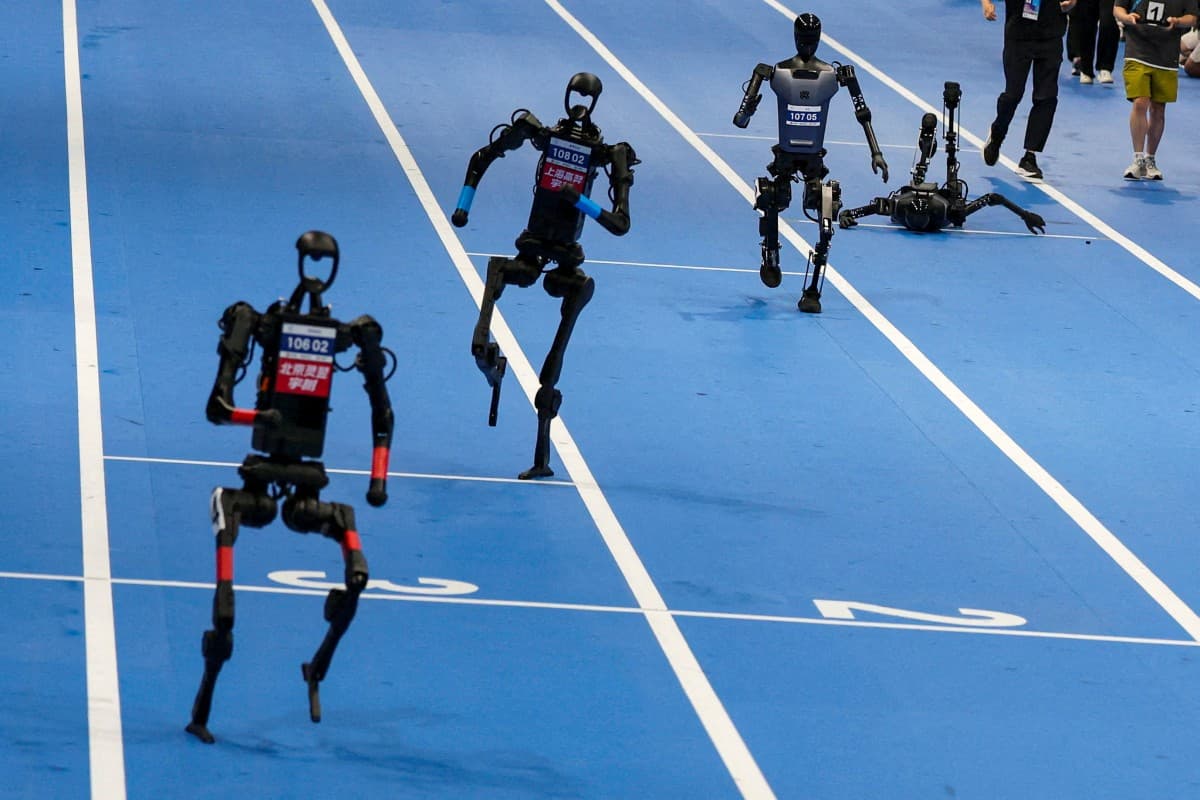
A dataset that only contains perfect runs looks great in a demo and falls apart the moment the real world does something it didn’t rehearse.Why edge cases belong in the data
Why annotation and structure matter
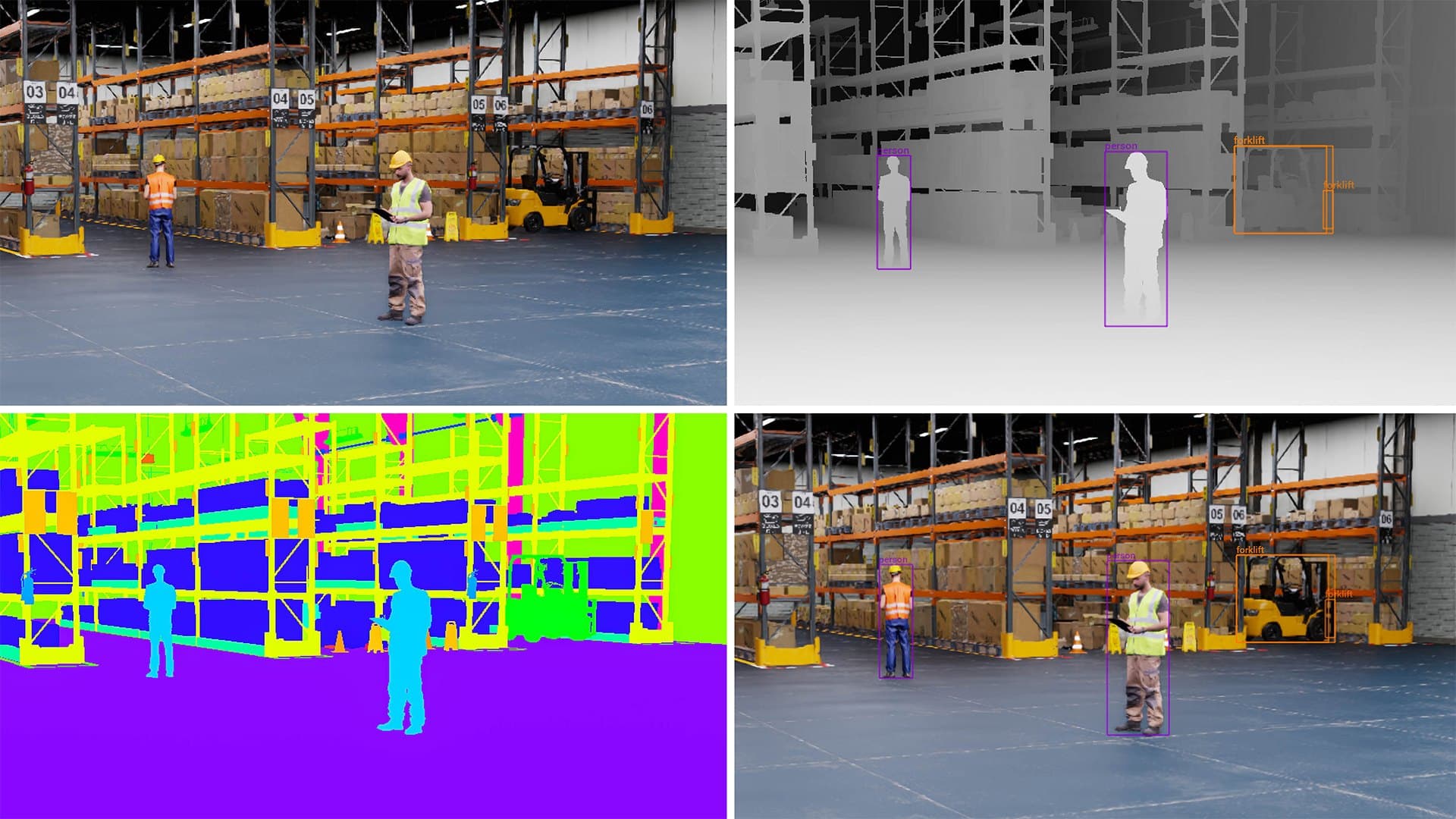
Robotics data annotation is often assumed to mean drawing boxes around objects. In reality, it’s broader and may include:
Consistency in how that annotation gets applied matters as much as the annotation itself. If similar actions get labeled differently across thousands of demonstrations (one annotator’s “grasp” is another’s “pick”), the dataset becomes harder for a model to learn from, even if every individual label is technically correct.
Because robotics data is time-dependent, annotations also need to align precisely with timestamps and sensor streams, not just sit next to a still frame. For robotics teams collecting multimodal demonstrations, this is usually the real bottleneck.
Generating raw footage is the easy part. Turning it into structured, consistently labeled data a model can train on is the harder, less visible work, and it’s where Labelix.ai’s annotation pipeline is built to take the load off internal teams.
Sitting on footage that isn’t training data yet?
See how a dedicated data team turns raw multimodal sessions into structured, trainable datasets. No pitch.
How do you know if a robotics dataset is actually good?
A practical way to evaluate a robotics dataset, whether it’s your own or one you’re considering from a vendor, is to look at seven areas:
- Coverage: does it represent the tasks the robot actually needs to perform?
- Diversity: is there enough variation to support generalization, rather than repetition at scale?
- Quality: are the recordings clear and accurate, without avoidable errors?
- Consistency: is the data structured the same way throughout, or does it drift across batches?
- Completeness: are the necessary sensor streams, timestamps, and metadata present?
- Edge cases: are failures and unusual situations represented, rather than just clean successes?
- Scalability: can the collection and annotation process produce more data without quality degrading?
A dataset that performs well across all seven is far more likely to be useful for training and evaluation. One that scores well on volume alone may leave important gaps that only become obvious when the robot encounters conditions outside its training data.
Building a robotics dataset that robots can actually learn from
A useful robotics dataset starts with a simple question: what does the robot need to learn, and what conditions will it encounter outside the training environment? That answer should shape the entire data strategy, from collection to quality control. In practice, that means:
- Defining the tasks, behaviors, and edge cases the model needs to learn.
- Collecting demonstrations across environments, objects, and conditions that reflect real deployment.
- Identifying the sensor streams needed to capture each task properly.
- Synchronizing video, robot state, actions, and other modalities as data is collected.
- Annotating demonstrations using clear, consistent standards.
- Including failed attempts and recovery behaviors where they’re relevant.
- Applying quality control throughout the process rather than only at the end.
- Structuring the dataset so new demonstrations can be added without breaking consistency.
The goal isn’t to produce the largest dataset possible. It’s to build a dataset that gives a model enough reliable variation to learn the task and continue improving as new data comes in. That’s the difference between collecting robotics data and building robotics training data.
Better robotics data starts with the right data strategy
A robotics dataset earns the word “useful” when it reflects the real-world conditions a robot has to operate in, and gives the model enough reliable, well-structured information to learn from those conditions.
Building a robotics dataset? Labelix.ai helps Physical AI teams collect, organize, annotate, and quality-check the multimodal data their models depend on. Get in touch with us to discuss your data requirements or request a pilot.
Frequently asked questions
What is a robotics dataset?
A collection of data, including video, sensor readings, and robot states, captured to train or evaluate how a robot performs physical tasks in the real world.
What data is used to train robots?
Typically a mix of human or teleoperated demonstrations, video, sensor data (depth, force, tactile), robot joint states, actions taken, and environmental context.
Why is robotics data annotation important?
It turns raw recordings into structured information a model can learn from, marking actions, task stages, objects, and outcomes so the data has meaning beyond pixels.
How is robotics data different from regular AI training data?
It's multimodal and time-dependent in a way most AI training data isn't. A single demonstration might combine video, force readings, and joint positions that all need to stay synchronized.
How do robotics companies collect training data?
Common methods include teleoperation, human demonstrations on sensor-equipped robots or wearable rigs, real-world recordings, and simulation, often combined rather than used alone.
How much data does a robot need to learn a task?
There's no fixed number. It depends far more on diversity and quality than volume. A well-diversified dataset of a few hundred demonstrations can outperform a poorly varied one of tens of thousands.

Cindy writes about Physical AI, robotics, and the human data that teaches models to perceive and act, for Labelix.ai, an independent data foundry for robotics and multimodal AI.
The Data Brief
One sharp read a month on Physical AI and the data behind it.