This week’s stories point to the same question: who supplies the real-world data and judgment that robots learn from? Nvidia is releasing human activity data, OpenAI is stepping into hardware, Unitree is building a loop where AI refines its own robot code, and IDC shows humanoids moving from demos to real work.
Here’s our weekly scan of what moved in Physical AI and robotics, and what it means for the data behind it.
Nvidia moves from tooling to data
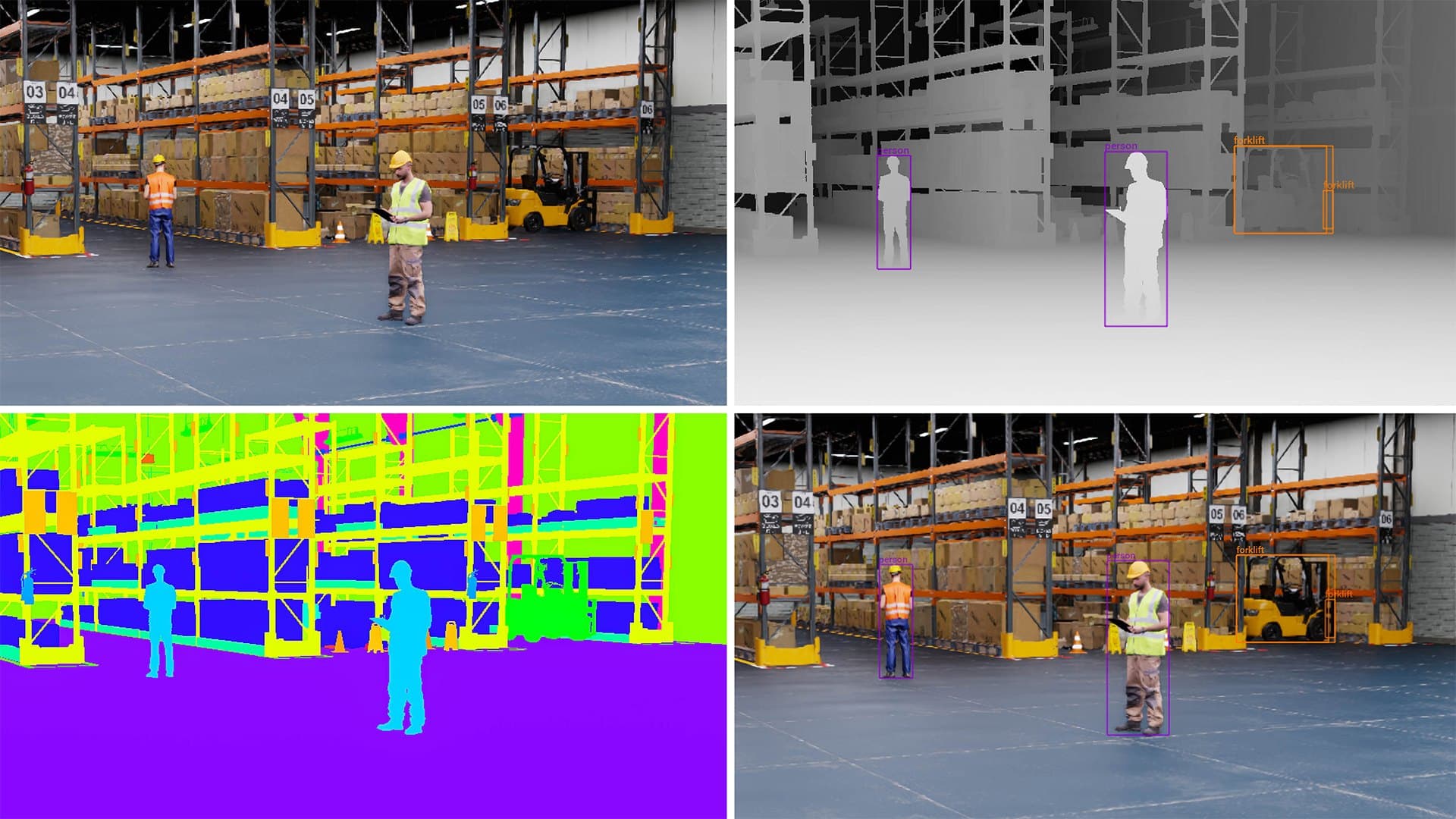
On October 21, at GTC Berlin, NVIDIA announced a major expansion of its Isaac open robotics platform, weeks after the Isaac ROS 5.0 release we covered. Isaac Lab 3.0 is now generally available for training and refining robot policies, while a new Isaac OS runtime connects AI, sensors, controls, and hardware across the path from simulation to physical robots.
Nvidia also released the SimReady Central Library, featuring more than 2,000 simulation-ready robotics and factory assets, and the Human 1M Dataset, which includes diverse human activities captured in synchronized three-view video with 3D hand tracking. Agile Robots introduced Agile ONE SN, a reference humanoid built on Isaac GR00T and Jetson Thor, with availability planned for early 2027. Nvidia says it cuts researchers’ setup time from weeks to days.
Last time, Nvidia’s news focused on how robot software gets built. This time, the announcement spans the path from data to deployment, including the training data itself. That’s a notable expansion of scope. NEURA, which we covered last week, is also using Isaac Sim and Isaac Lab to generate synthetic training data for its Neuron AI model.
How open the data really is. Human 1M is available on Hugging Face, but the full version is limited to Cosmos Coalition partners. Since these details come from Nvidia’s own announcement, claims about setup time and performance should be treated as company-reported results.
What stands out to us is the Human 1M Dataset. Nvidia is bringing human activity data into a broader robotics stack that already spans simulation, training, and deployment. That’s an important signal: as Physical AI advances, the focus is shifting beyond building better models to giving them better data to learn from.
But making human demonstrations useful for robot learning takes more than capturing footage. The data needs to be labeled consistently and structured around the behaviors robots are expected to learn. Simulation can help scale training, while real human behavior provides a valuable reference for how tasks unfold in the physical world. Getting those pieces to work together is a challenge we’ll be watching closely.
OpenAI confirms it is building humanoid robots
CEO Sam Altman has confirmed that OpenAI is developing its own humanoid robots, according to Ynet News. He confirmed the plans on the Sources podcast and, in a separate Fortune interview in September, said, “I think we’ll have a cool demo in 2027,” adding that robots walking the streets are still a few years further out.
Reports suggest the first machines will target industrial work, such as building facilities and data centers, with household chores a longer-term ambition. OpenAI has not shared a design, specific capabilities, or a commercial launch date. Its careers page lists roles in mechanical engineering, control systems, electronics, and safety.
OpenAI is moving from software into hardware. It has backed Figure and 1X, whose NEO we have profiled, so it could eventually find itself competing with companies it has backed. This is also not its first attempt at robotics: its 2019 Rubik’s Cube-solving robotic hand was trained in simulation before being deployed on a physical robot.
What “demo” turns out to mean. The 2027 target refers to a prototype demonstration, not a commercial product, and the gap between a staged demo and a robot that works reliably for hours is substantial.
We love seeing a leading AI lab commit to the physical world. More entrants mean more attention on humanoids and potentially greater demand for high-quality robot training data. Starting with factories and data centers suggests OpenAI recognizes the importance of real-world work environments as it develops its robotics ambitions.
Our caveat is the word “demo.” A demo shows what a robot can do once. Robot policy evaluation helps establish whether it can do the same thing reliably, and that is what helps close the gap between an impressive demonstration and a useful product.
Unitree wants robots that improve themselves
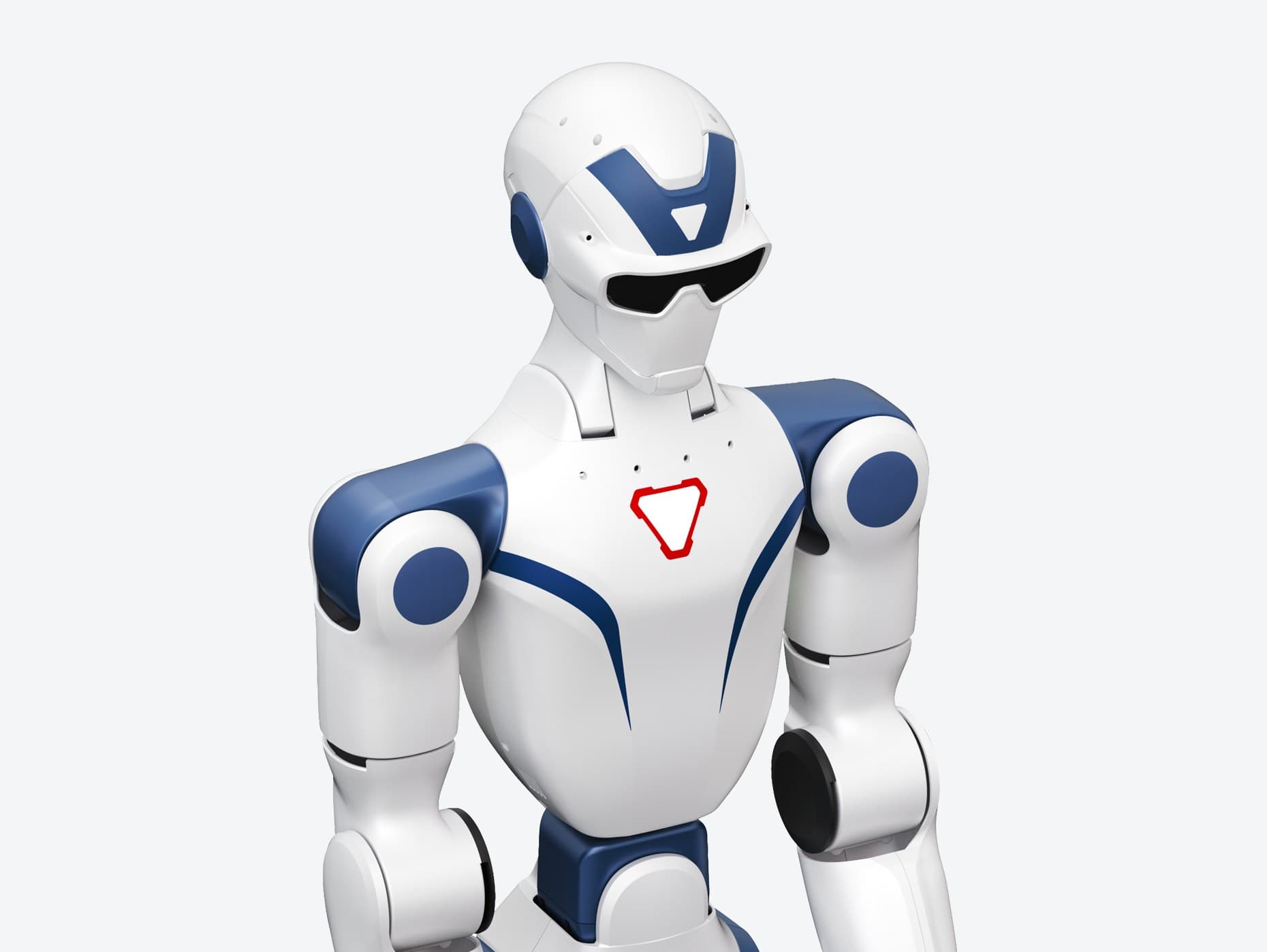
On October 22, at a physical AI conference it hosted in Hangzhou, Unitree Robotics founder Wang Xingxing unveiled “Unitree Rehearsal,” which he called the company’s most important project of the year.
The system under development would allow AI to search research papers, write code, and test it in simulation before running trials on physical robots. Unitree already uses AI this way and collects feedback from real-world tests to adjust its models, Bloomberg reported. Wang also said the most advanced AI developers have begun letting their models improve themselves.
Robotics development still relies heavily on manual programming and testing. If a loop like this works, it could change the pace of iteration, shifting the bottleneck from writing code to determining which results are reliable and worth building on.
Evidence. Rehearsal is still a project in development, and no timeline or results have been shared yet. The idea that robots can improve themselves this way remains the founder’s goal, not a demonstrated outcome.
This connects back to ABB’s feedback loop from last week. A self-improving system is only as good as the criteria used to evaluate it, making evaluation central to the loop. Someone still needs to define success, spot the near-miss, and explain why a robot failed. That’s where benchmark design and failure analysis come in.
We like that Unitree still tests on real robots and feeds those results back into its models. Faster iteration is exciting, but the loop still needs people to set the standards, interpret the results, and check whether improvements hold up in the real world.
Humanoids head for real work as US rules reshape the market
On October 22, IDC published an analysis of the FCC’s July rule adding foreign-produced advanced robotic devices to its Covered List. New foreign-made models can no longer obtain the equipment authorization required for sale in the US unless they receive a Conditional Approval, while previously certified models can keep shipping and can receive software updates through at least January 1, 2029.
IDC projects US humanoid revenue will be 41% below its pre-restriction baseline in 2027 and 58% below by 2030. It expects much of the displaced volume to shift to other markets, particularly Europe.
The market is moving fast. IDC reports that approximately 25,000 humanoids shipped in the first half of 2026, surpassing the roughly 18,500 shipped throughout 2025. It projects shipments to exceed 750,000 by 2030. The share of humanoid shipments going to real-world work nearly doubled to about 30%, although most enterprises piloting embodied AI remain at the proof-of-concept stage.
Whether the projections hold. These figures are IDC’s estimates, not measured outcomes. The rule’s eventual reach will depend on early Conditional Approval decisions, with applications due January 1, 2028, and whether the restrictions are extended to components.
We’ll leave the policy debate to others. Our interest is what the shift from demos to real work means for data. A robot working in the real world needs training data that reflects its operating environment and evaluation that captures real-world conditions, not just performance in a convincing demo.
If more humanoid deployments shift toward Europe and other markets, training and evaluation will need to account for a wider variety of environments and tasks. That raises the bar for consistent annotation and repeatable robot policy evaluation, the same cycle of training, testing, and learning that we keep coming back to.

Cindy writes about Physical AI, robotics, and the human data that teaches models to perceive and act, for Labelix.ai, an independent data foundry for robotics and multimodal AI.
The Data Brief
Get the Radar in your inbox, one sharp read a week on Physical AI and the data behind it.