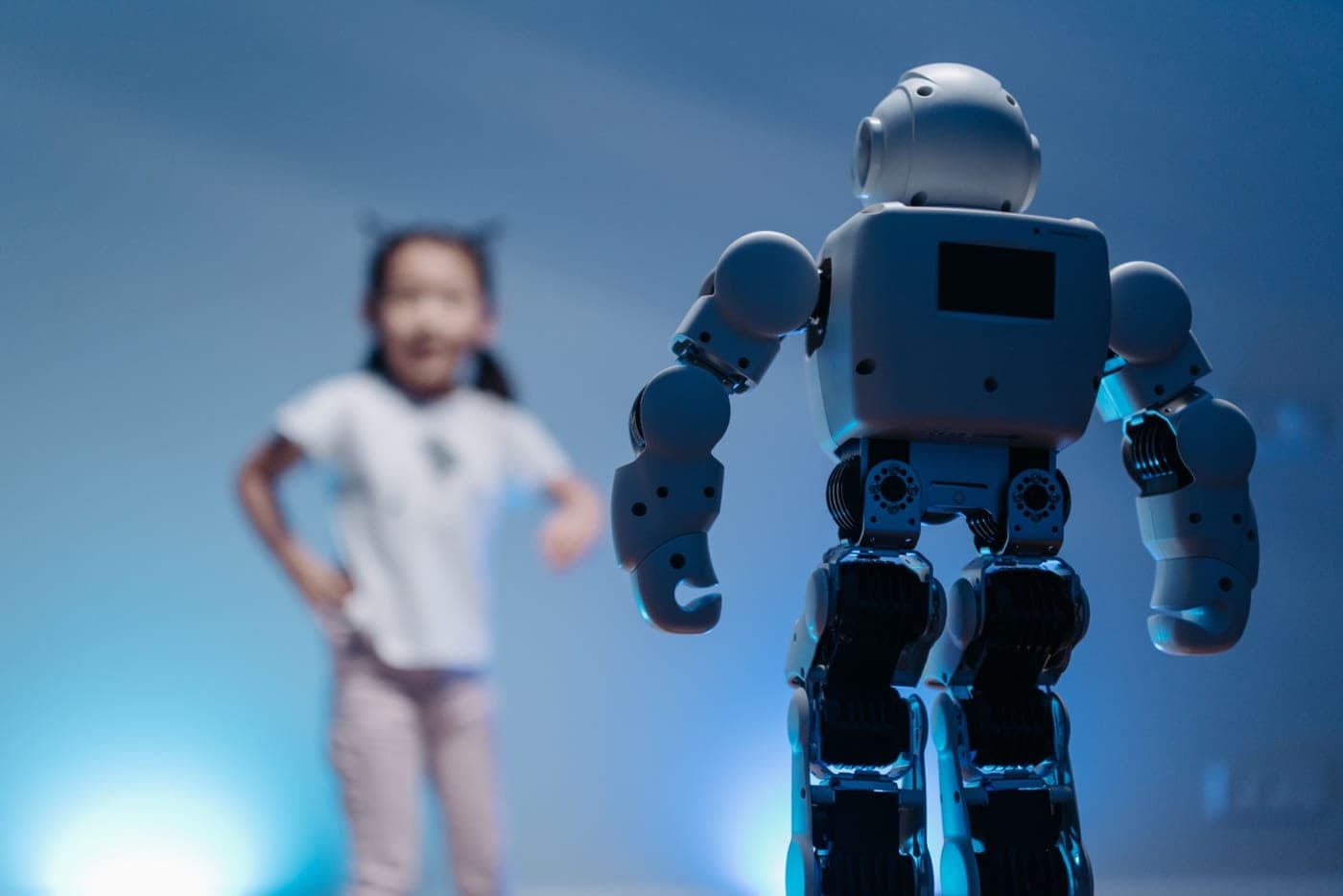
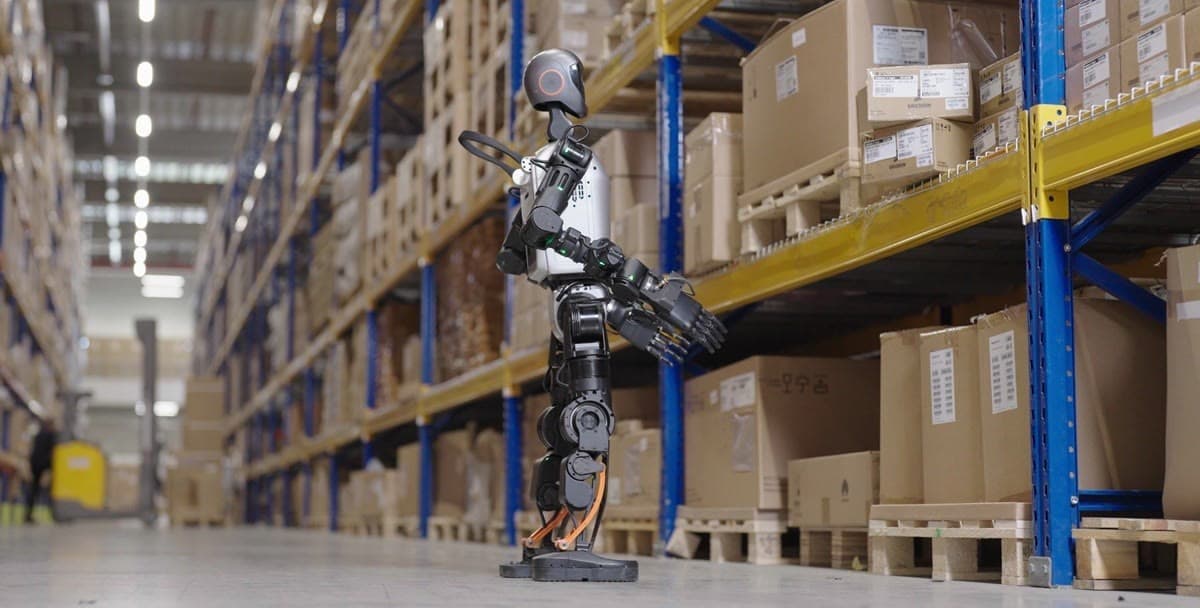
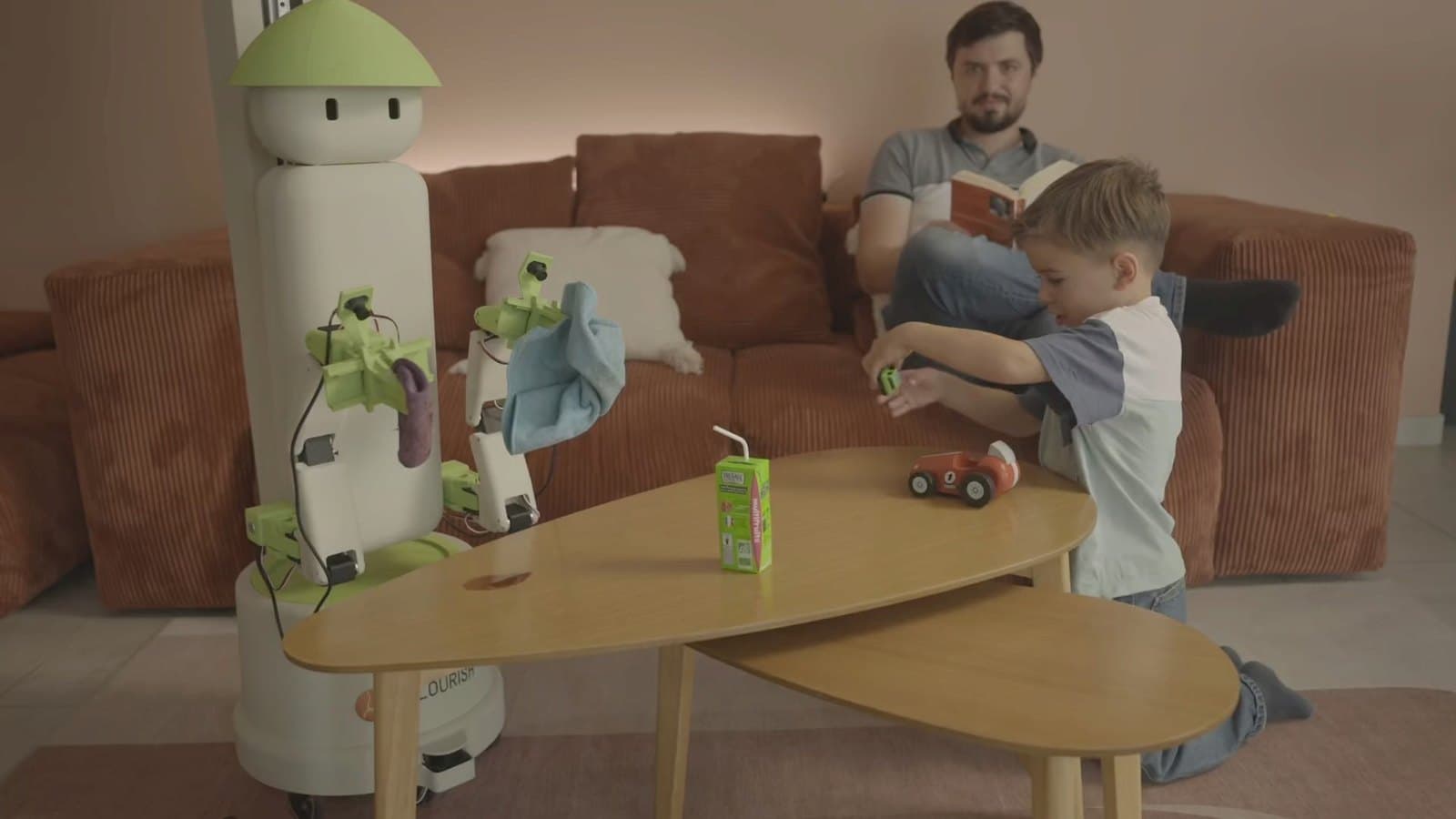
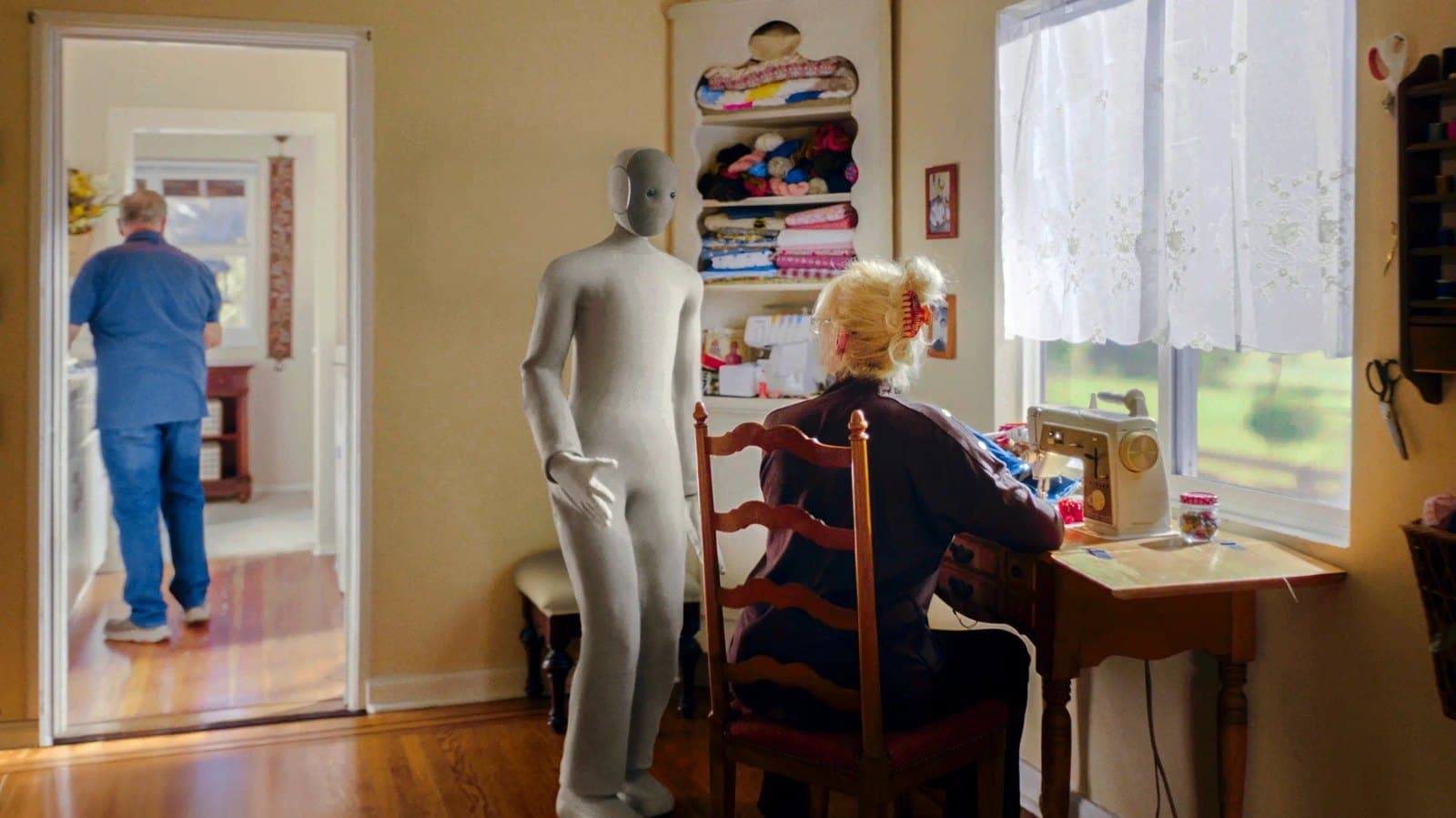
1X Technologies is the company behind NEO, a 66-pound humanoid robot built for the home rather than the factory. It sells directly to consumers, for $20,000 or $499 a month, and it is open about the fact that a remote human operator still helps with the chores NEO cannot yet do alone. That makes 1X the clearest test of one idea in Physical AI: that the home itself can be the training ground.
| 1X at a glance | |
|---|---|
| Founded | 2014 in Norway, as Halodi Robotics |
| Headquarters | Palo Alto, California |
| CEO | Bernt Børnich |
| Robot | NEO, a home humanoid: about 5'6", 66 lbs, about four hours per charge |
| AI model | Redwood, a vision-language-action model, running on an onboard NVIDIA Jetson Thor |
| Price | $20,000, or $499 a month |
| Factory | Hayward, California, rated for 10,000 robots a year |
| Backers | OpenAI Startup Fund, EQT Ventures |
Company Snapshot
1X Technologies started in Norway in 2014 as Halodi Robotics. Today it is based in Palo Alto and led by CEO Bernt Børnich. Its focus has stayed consistent for a decade: a humanoid that can work safely around people, and eventually inside their homes.
The company is backed by the OpenAI Startup Fund, which invested in 2023, and by EQT Ventures, which led a $100 million Series B in January 2024. Since September 2025, reports have said 1X is seeking up to $1 billion at a valuation of at least $10 billion. No close has been publicly confirmed, and more recent reporting says SoftBank is in talks for a controlling stake at a lower figure, about $6 billion.
The Technology: NEO
NEO is a home humanoid, and it looks like one. It stands about 5'6" and weighs 66 lbs, which is light for a robot this size. The body is wrapped in a soft 3D lattice and a machine-washable knit suit. It runs about four hours per charge and is designed to be quiet.
The more interesting choice is underneath. Most humanoids use rigid geared joints. NEO uses tendon-driven actuators, loosely inspired by how muscles work. The result is low inertia, so the robot yields on contact instead of pushing back. That matters when the “workplace” has kids, pets, and a coffee table.
NEO’s hands feature 25 degrees of freedom, with 22 fully actuated across the fingers and palm, plus 3 at the wrist. They are rated IP68 waterproof and food-safe, allowing them to easily handle wet jobs like dishes and self-cleaning. In July 2026, 1X officially announced this new tendon-driven hand design, which will ship on every production unit.

On the software side, NEO runs Redwood, 1X’s vision-language-action model, on an onboard NVIDIA Jetson Thor chip. Redwood takes camera input and an instruction, then outputs whole-body movement.
Here is the part 1X has been upfront about. When NEO hits a task it can’t do yet, the owner can schedule Expert Mode. A trained 1X operator connects remotely with a VR headset and guides the robot through the job, a form of teleoperation. The owner approves each session, and the session footage helps train the model. Reviewers note that complex chores like folding laundry still lean on this help in early units.
In June 2026, 1X also launched a World Model Lab, a research group that pretrains models on web video, first-person human video, simulation and robot data. It signals that 1X wants to learn from more than teleoperation alone.
Business Model and Strategy
Most humanoid companies are starting with factories and warehouses. 1X went the other way and sold to consumers first.
Pre-orders opened on October 28, 2025 at $20,000, or $499 a month as a subscription. The company reported more than 10,000 pre-orders within five days. In April 2026, it opened a factory in Hayward, California, rated for 10,000 robots a year.
There is an enterprise thread too. A December 2025 partnership with EQT makes up to 10,000 NEO units available to its roughly 300 portfolio companies between 2026 and 2030, starting with US pilots. Each company decides for itself whether to take part.
The model has a clear logic. Homes are the hardest environment to train for, and homes are also where a humanoid needs to prove it is useful. Every early customer is, in a sense, a co-trainer. Expert Mode turns each household into a source of demonstrations, and each demonstration makes the next robot a little more capable.
It is also a model that asks for trust. 1X has been careful not to promise every deposit holder a 2026 delivery, and independent confirmation of how many robots are actually in homes is still thin. The company’s own milestones for the next year, including first verified deliveries and World Model results, will tell the real story.
The Data Challenge
A factory floor is predictable. A home is not.
No two kitchens are laid out the same. Lighting changes throughout the day. A dishwasher in one house opens differently from the one next door. Objects get left in odd places. This long tail of variation is what separates a good demo from a robot that works in thousands of homes. (We compared what home, warehouse and factory robots each need in robot training data by environment.)
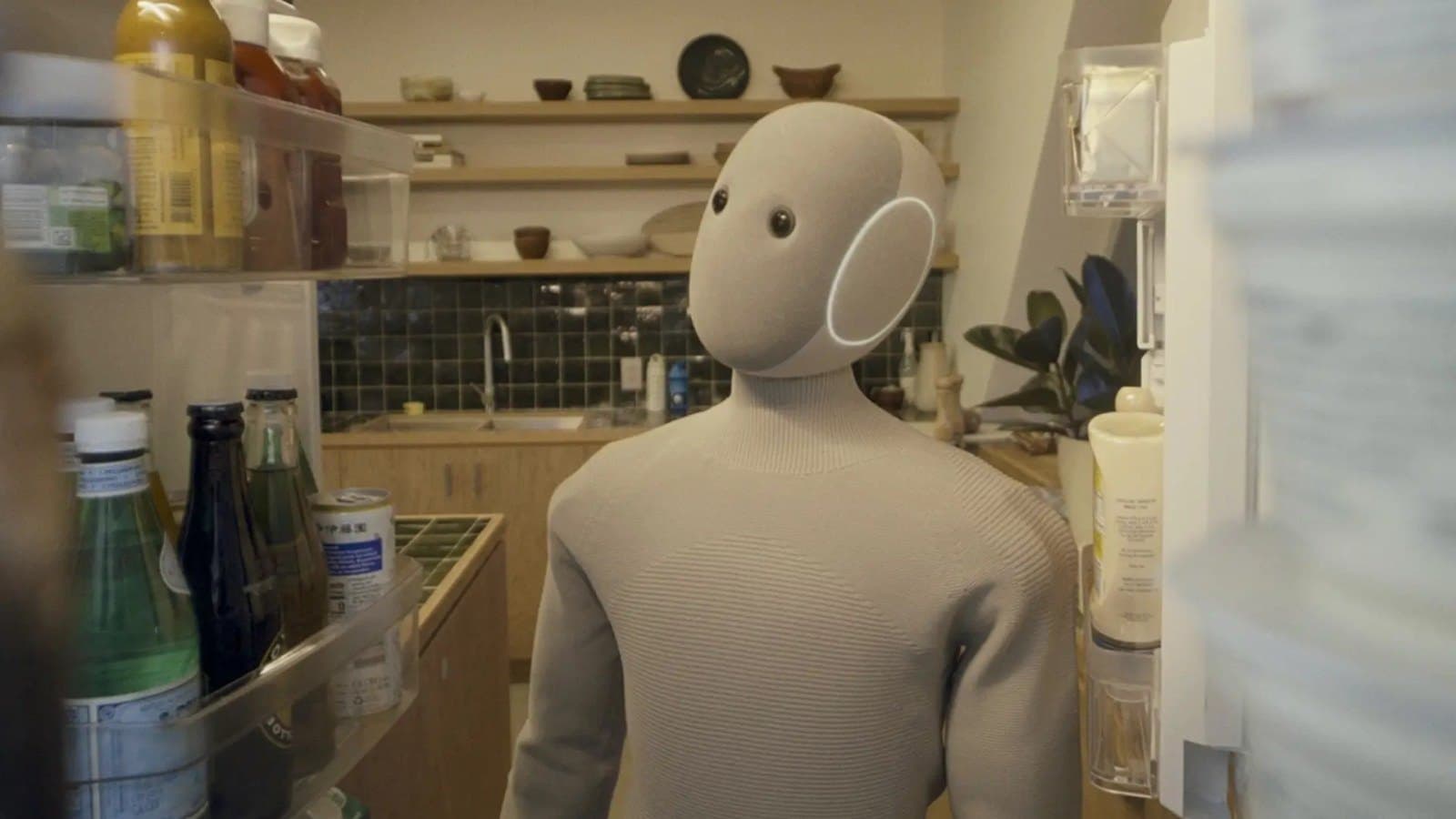
NEO’s learning loop depends on the data coming out of Expert Mode. Each session produces video, audio, and motion records of a human completing a household task through a robot body. That raw material is valuable, but it is not training-ready on its own.
Consider what has to happen before a model can learn from it:
- Streams must be aligned. Camera feeds, audio, and body and hand motion all need to line up in time.
- Outcomes must be judged. A clean fold and a sloppy fold can look alike in footage. A dish that is stacked and a dish that is barely balanced can too.
- Handoffs must be marked. The moment the robot gets stuck and the operator steps in is one of the most useful signals in the whole session. It shows exactly where autonomy ends.
- Operator quality varies. Human demonstrations are not all equal. A recovery after a mistake is a different lesson from a smooth first attempt, and a model needs to know which is which.
Then there is privacy. Home footage can include family members, personal items, and private spaces. 1X says owners approve sessions, can set no-go zones, and can blur people. Any data pipeline built on in-home footage needs that same care at the labeling stage, not just at capture.
Labelix.ai’s Take
1X is making an unusual bet. Where others aim to master controlled environments first, it is betting that the messy home can be the training ground itself. If that works, the payoff is huge, because the home is the largest environment a general-purpose robot could ever enter.
What stands out to us is how much the plan rests on data quality. Expert Mode only improves NEO if the demonstrations are labeled well. That means separating good attempts from near misses, flagging where the robot needed help, and keeping the process respectful of the people whose homes it learns from. Volume helps, but consistency and judgment decide whether more footage makes a better model. It is the same discipline behind robot policy evaluation: the same call, made the same way, every time.
It is also worth watching how the human-in-the-loop model evolves. As Redwood gets more capable, operator time should shrink. The pace of that shift will say a lot about whether home robots can scale economically.
For anyone following physical AI, 1X is a useful reminder that the hardest problems are not always the most visible ones. The robot’s soft body gets the attention. The data behind its behavior will decide whether it remains in the kitchen, or gets relegated to the closet.
Have demonstration footage that needs labeling?
Send a representative sample: one task, a few sessions, your hardest episodes. A dedicated Labelix.ai team labels steps, handoffs and outcomes against your guideline and shows you how the close calls were decided.
FAQs
What is 1X Technologies?
1X Technologies is an AI and robotics company based in Palo Alto, California, founded in Norway in 2014 as Halodi Robotics. It builds NEO, a humanoid robot designed to work safely around people in the home.
How much does the NEO robot cost?
1X opened pre-orders on October 28, 2025 at $20,000 to buy, or $499 a month as a subscription.
Is NEO fully autonomous?
Not yet for every task. NEO runs Redwood, 1X's vision-language-action model, on an onboard computer. For chores it cannot do on its own, the owner can schedule Expert Mode, where a trained 1X operator guides the robot remotely.
What is Expert Mode?
Expert Mode is a scheduled session in which a 1X operator connects remotely through a VR headset and guides NEO through a task. The owner approves each session, and the session footage helps train the model.
Has NEO shipped to customers?
1X opened its Hayward, California factory in April 2026 and says first customer shipments are planned for 2026. Independent confirmation of how many robots are in homes is still limited.

Cindy writes about Physical AI, robotics, and the human data that teaches models to perceive and act, for Labelix.ai, an independent data foundry for robotics and multimodal AI.
Get the next one first
One sharp read a month on Physical AI and the data behind it.