Robots are getting better at judging their own work. Google’s reasoning model checks whether a task step actually succeeded, a Paris startup wants to teach factory robots from a handful of demonstrations, and a Chinese arm maker is showing what force-controlled hardware looks like in a real factory. Even a new surgical robot venture is built around one question: who stays in control?
Here’s our weekly scan of what moved in Physical AI and robotics, and what it means for the data behind it.
Google brings Gemini Robotics ER 2 to enterprises
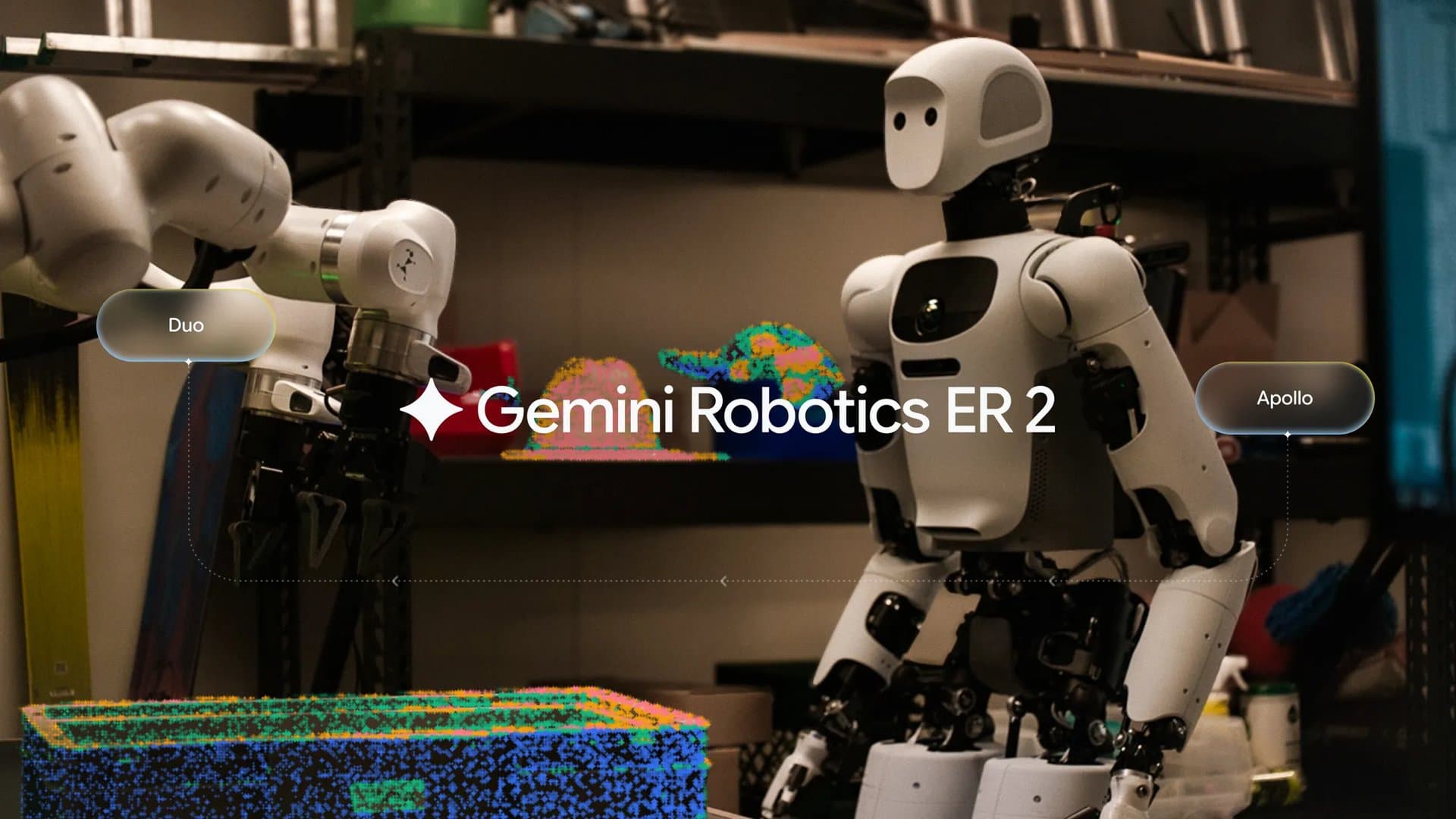
On October 27, Google Cloud announced that Gemini Robotics Embodied Reasoning 2 (ER 2) is in public preview on its Gemini platform. Google DeepMind introduced the model in July; this week’s news is that enterprises can now build with it on Google Cloud. ER 2 acts as a robot’s high-level planner. It reasons over video, plans long tasks, and calls lower-level controllers, such as vision-language-action (VLA) models, as tools. Google says it works across robot types, from stationary arms to humanoids.
A key feature is task verification. The model classifies progress on a step and can pinpoint the video frame where a key event happens, such as when to stop pouring a liquid. Google reports 91.3% accuracy and a 0.96-second mean absolute frame distance for that task. Google also pitches the model for building training data, using it to curate and label demonstration videos before training custom VLA models. Google names Boston Dynamics, DeepReach, Arm and A*STAR IMRE among the companies building with it.
Robots fail quietly when they can’t tell whether a step worked. A model that judges progress from video could give them a way to retry a step without restarting a whole workflow. Google also treats the whole pipeline as a product, from simulation in tools like MuJoCo-Warp and NVIDIA Isaac Sim through data curation to deployment.
How the model performs outside Google’s own benchmarks. The figures above come from Google, and the model is still in preview.
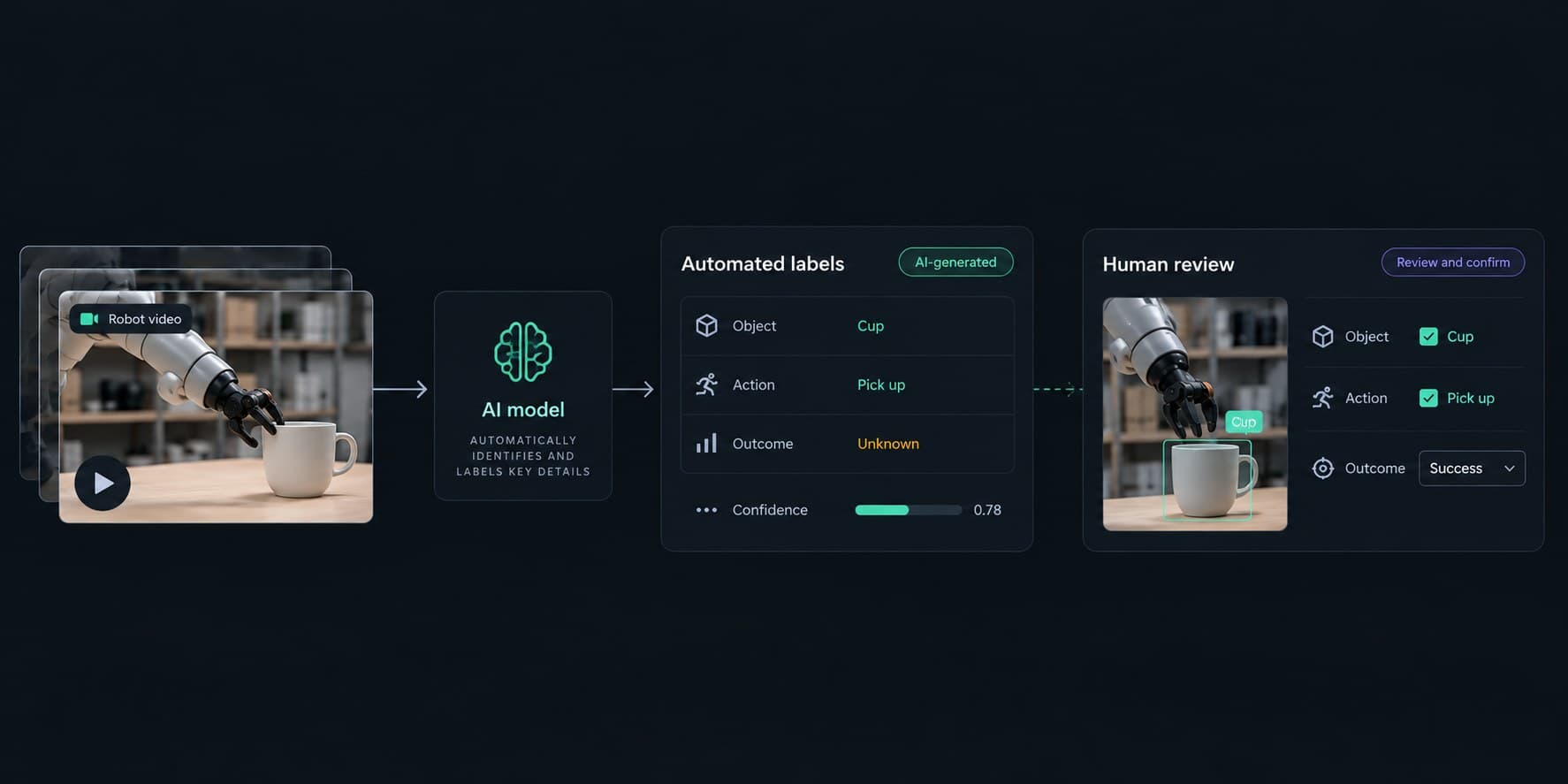
We find the labeling angle the most interesting part. Using a model to find key moments in demonstration video is the kind of work annotation teams do today, and it will likely speed up first passes.
But a model judging whether a step succeeded is only as trustworthy as the standard behind it. Someone still has to define what “success” and “near-miss” mean for a given task, and check the model’s calls against ground truth. That’s the territory of benchmark design and robot policy evaluation.
Bleu Robotics raises €5 million to teach robots from fewer demos
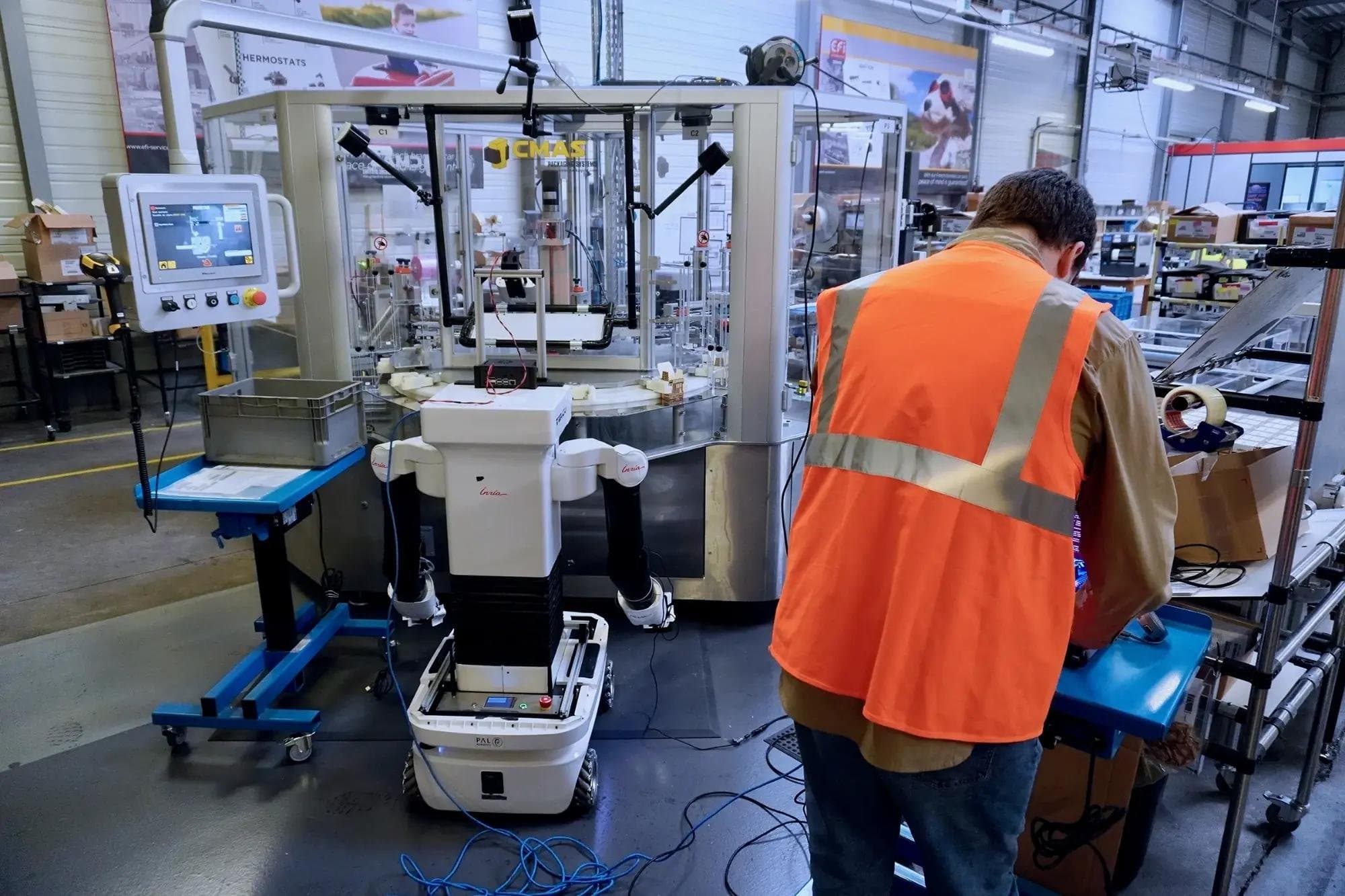
On October 29, Paris-based Bleu Robotics announced a €5 million pre-seed round co-led by Contrarian Ventures and OVNI Capital. The startup was co-founded in late 2025 by Benoît Berkoukchi, a former Renault assembly-line manager, and Inria researchers Jean-Baptiste Mouret and Serena Ivaldi.
Bleu builds software that lets industrial robots, including humanoids, learn new tasks from operator demonstrations. According to EU-Startups’ coverage, the models can learn from as few as ten demonstrations. Rather than a single end-to-end model, Bleu infers the intent behind a demonstration, including the goal and constraints, and then works out how to reproduce it. The company says it targets full deployment in under an hour, and that first deployments are underway with major automotive manufacturers and hygiene-paper producer WEPA, whose venture arm also joined the round.
Cutting deployment from months to hours is what factories want from robot learning. It’s also a bet that smarter learning methods can reduce how much data a new task needs.
The proof. Bleu has not disclosed how many robots are deployed, contract values, or independently measured performance. The speed and demo-count claims are company-reported.
We like the ambition, and we think a few good demonstrations beat thousands of messy ones. But “ten demonstrations” only works if those ten are right. They need to cover the task’s variations, show the recovery from slips, and be labeled consistently enough that the system learns the intended behavior rather than an operator’s quirks.
Fewer demonstrations doesn’t mean less data work. It raises the stakes on each one, which is why we care about how demonstrations are captured and checked before they ever reach a model.
ROKAE ships its 10,000th force-controlled arm
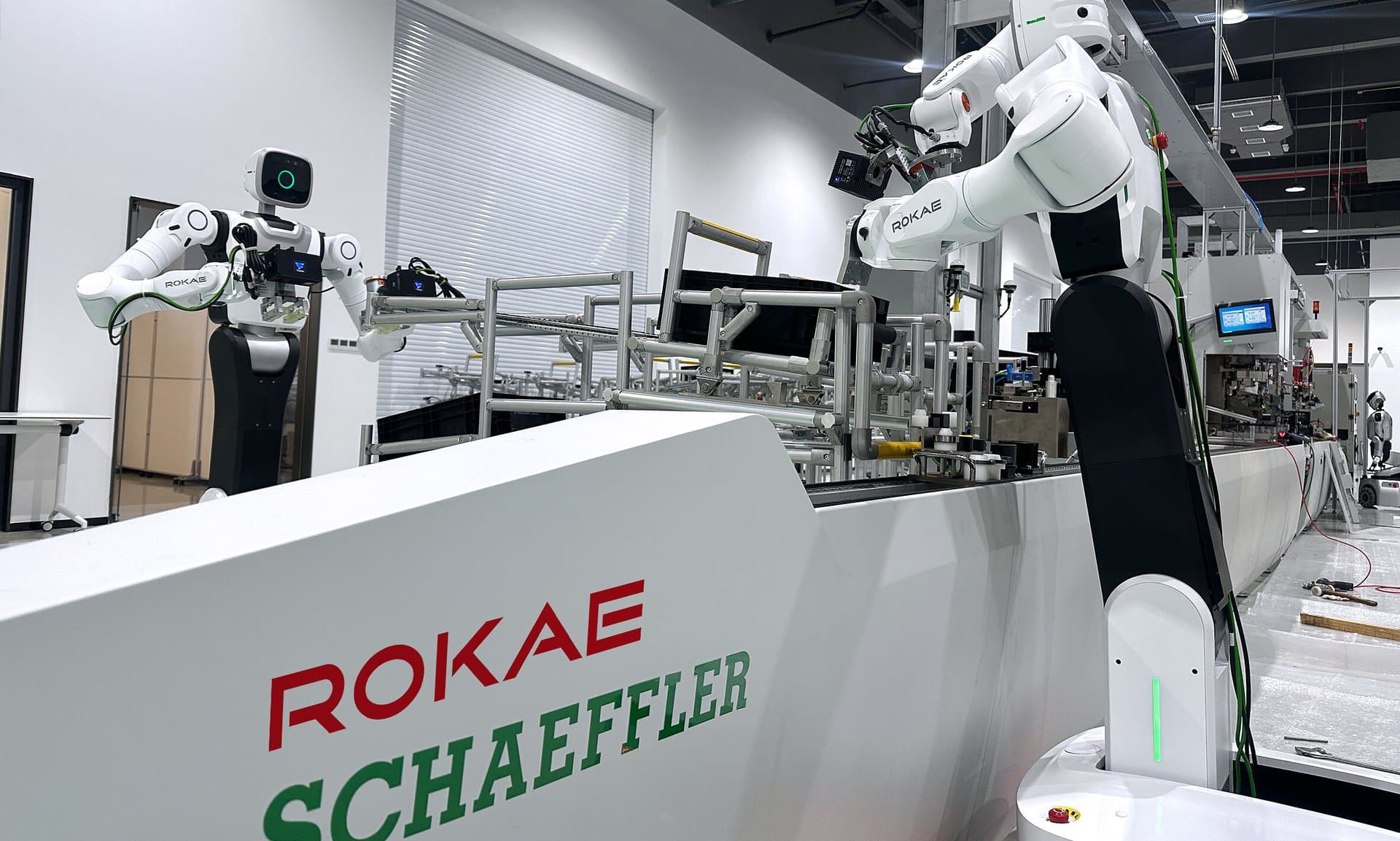
On October 26, Chinese robotics firm ROKAE announced it had delivered its 10,000th humanoid force-controlled arm, which left its factory in Zoucheng, Shandong, on September 29. The count refers to the arm product line, not complete humanoid robots. ROKAE says more than 80 industrial partners have built its arms into production applications.
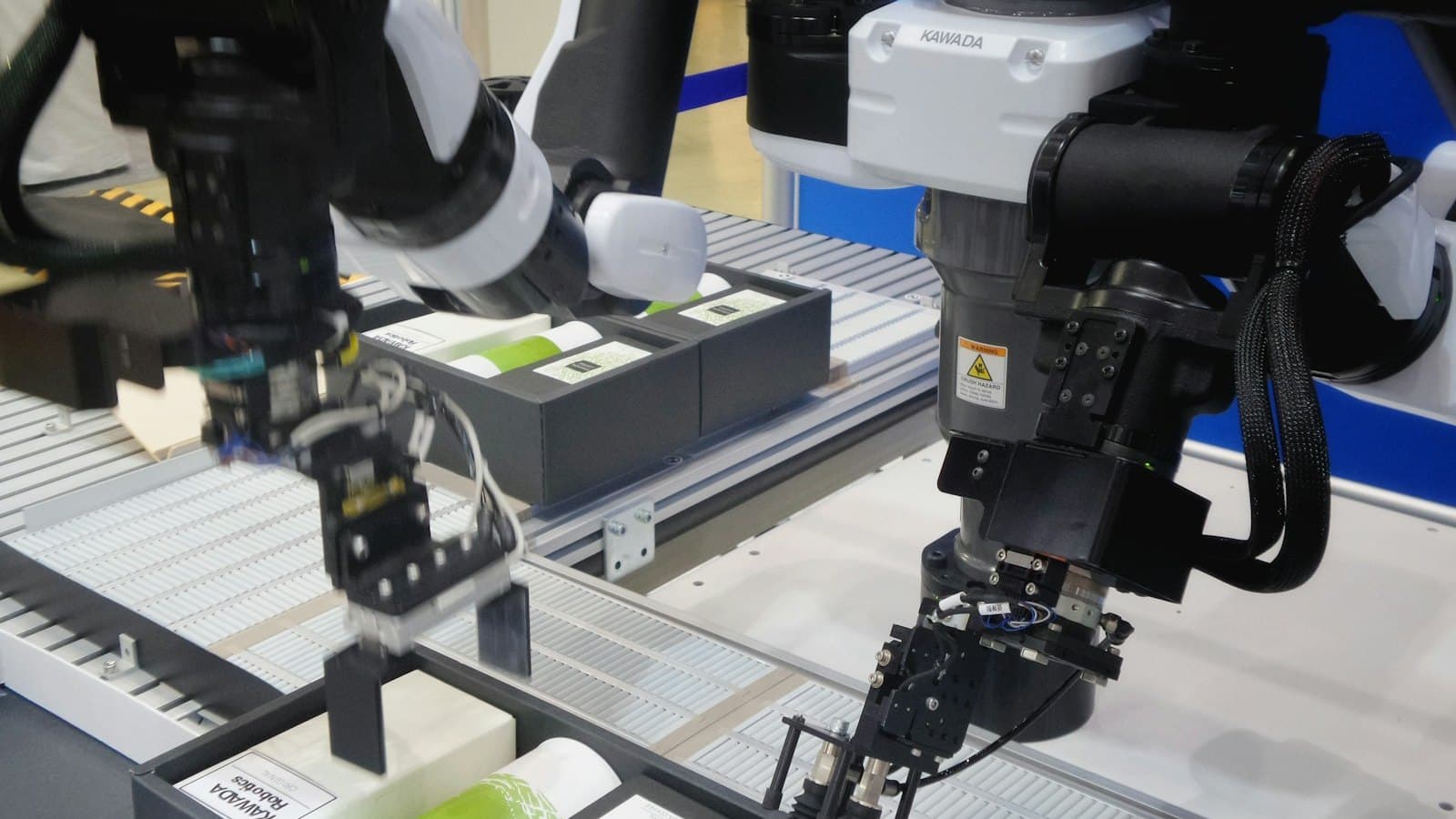
The company also said five of its Helios wheeled humanoids, fitted with AR Series arms, are working at Schaeffler’s factory in Taicang, China. They handle parts, assembly and inspection on a line that makes components for humanoid robots. Force-controlled arms regulate the pressure they apply on contact, which matters for assembly and handling.
Last week, IDC’s data showed humanoids moving toward real work. This is a concrete example of what that looks like on a factory floor. It also shows the supply chain maturing, with specialist suppliers selling arms and joints to humanoid builders.
The details. Neither company has shared production rates, how often humans step in, or productivity gains. Schaeffler’s own release from October 20 describes six humanoids across five stations without naming their maker, while ROKAE’s announcement names five of its own, a difference neither explains.
Force control makes us think about what contact-rich data looks like. Tightening a part or seating a connector depends on how a task feels as much as how it looks, so the signals matter beyond video.
The missing operating numbers are the gap we keep pointing to. A pilot becomes a product when someone measures success rates, interventions and failure modes over weeks, not minutes. That’s the job of failure analysis and repeatable evaluation.
New venture aims to put compact robots in every retina surgeon’s hands
On October 29, Swiss company VisioSurgical Solutions (VSS) launched in Lausanne to develop a compact retinal surgery robot. It was founded by Marc de Smet, Patricia Zilliox and Bryan Robb. De Smet co-founded Preceyes, whose system performed the first robot-assisted retinal surgery in a human and was acquired by Carl Zeiss Meditec in 2022.
The VSS robot is designed to deliver precision better than 10 microns and to fit any operating room, with retinal surgery and gene and cell therapy delivery first, followed by glaucoma and cataract applications. It’s working with Kaleidoscope Innovation on product development and is raising a seed round. The system is in development and not for sale.
Retinal surgery works at a scale where hand tremor is a real limit, so robots can extend what surgeons do. As de Smet puts it, “the robot extends the surgeon’s hands, it does not replace them.” A compact design also matters: the company says today’s surgical robots are room-sized and cost upwards of $1 million.
Whether it reaches a working prototype. This is an early-stage company with a concept and no product, and a medical device faces a long road of testing and approval.
This sits outside our humanoid focus, and the release doesn’t mention AI. But it carries a principle we share: the most useful machines are built around expert human judgment. Here that judgment belongs to the surgeon, and in training data it belongs to the people who demonstrate and label tasks.
As robots move into delicate, high-stakes work, the quality of that human input will matter even more, whether it comes through a controller or a labeled dataset.

Cindy writes about Physical AI, robotics, and the human data that teaches models to perceive and act, for Labelix.ai, an independent data foundry for robotics and multimodal AI.
The Data Brief
Get the Radar in your inbox, one sharp read a week on Physical AI and the data behind it.