A weekly scan of what moved in Physical AI and robotics, and what it means for the data behind it.
Skild AI’s S1 learns new tasks from a single human video
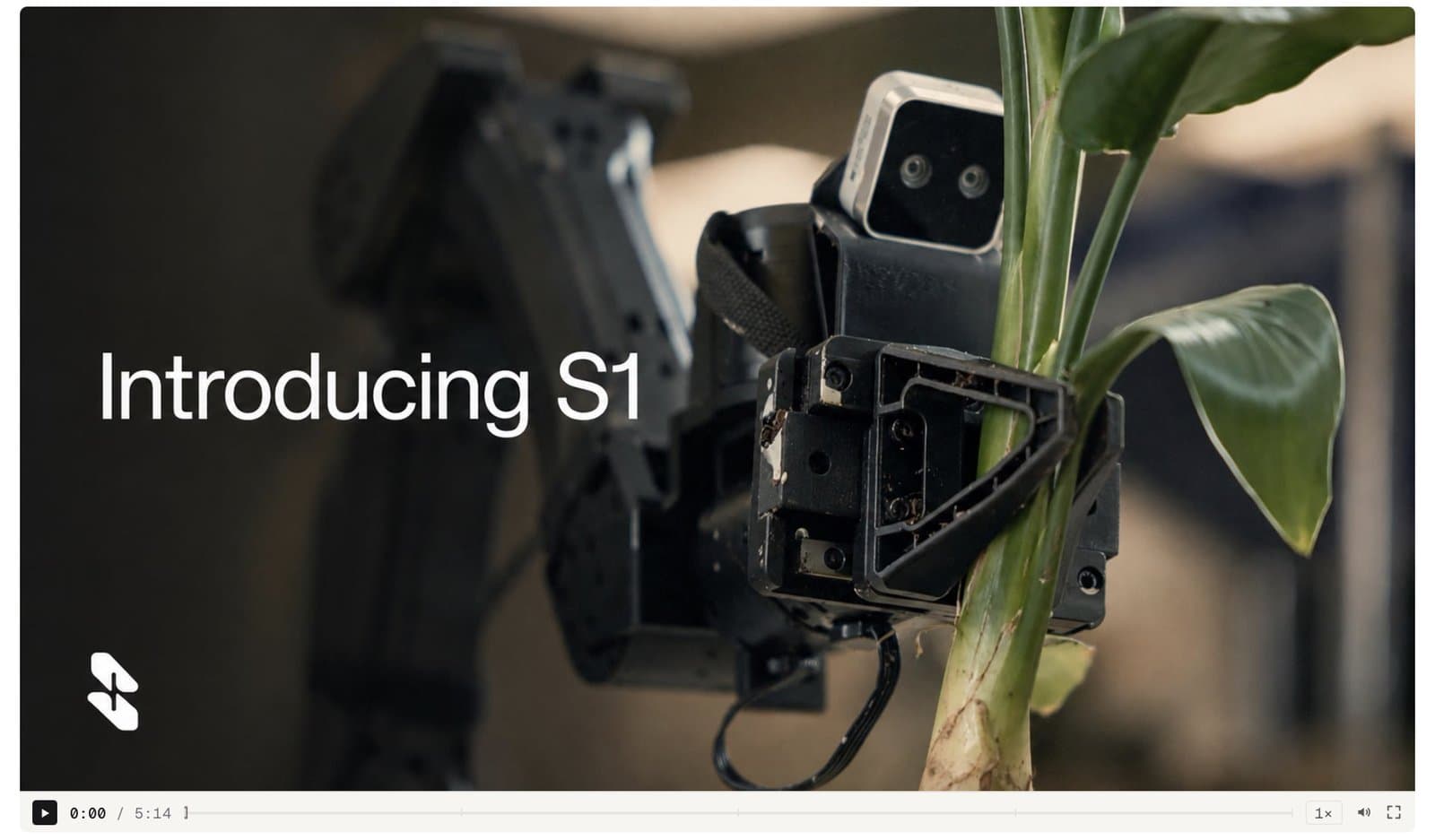
On August 25, Skild AI announced S1, a robot foundation model that can learn a new task from a single human demonstration video. In Skild’s internal benchmark, S1 hit 66% success on tasks absent from pretraining, versus 9% for a language-prompted policy trained on the same data, architecture, and compute. It uses one egocentric video as the task prompt, no fine-tuning. There are no public weights, API, or paper yet.
The interesting idea isn’t the 66% figure, it’s using video as an instruction for robots. A demonstration communicates spatial relationships, movement, timing, and sequence in ways a written prompt cannot. But scale is the catch: at 1,000 hours the language policy actually won (53% vs 43%); the video approach only pulled ahead at 100,000 hours. So this isn’t “video beats language,” it’s an approach whose edge emerges with very large amounts of physical-world data.
Whether S1 generalizes beyond the four tasks shown (potting, pancakes, pour-over coffee, kit assembly). Real-world robotics is constant variation, and a robot needs to adapt when reality doesn’t match the demo, not just imitate a sequence. Without a paper or independent evaluation, the 66% is also hard to assess for reproducibility.
Video is becoming a genuine interface between humans and robots: a demonstration carries movement, timing, and physical context, not just an instruction. But raw video is only the start. At scale, Physical AI needs data that is structured, consistently annotated, and quality-controlled, and ways to capture the details that actually matter for physical interaction.
Figure AI launches Index to scale human data for robot training
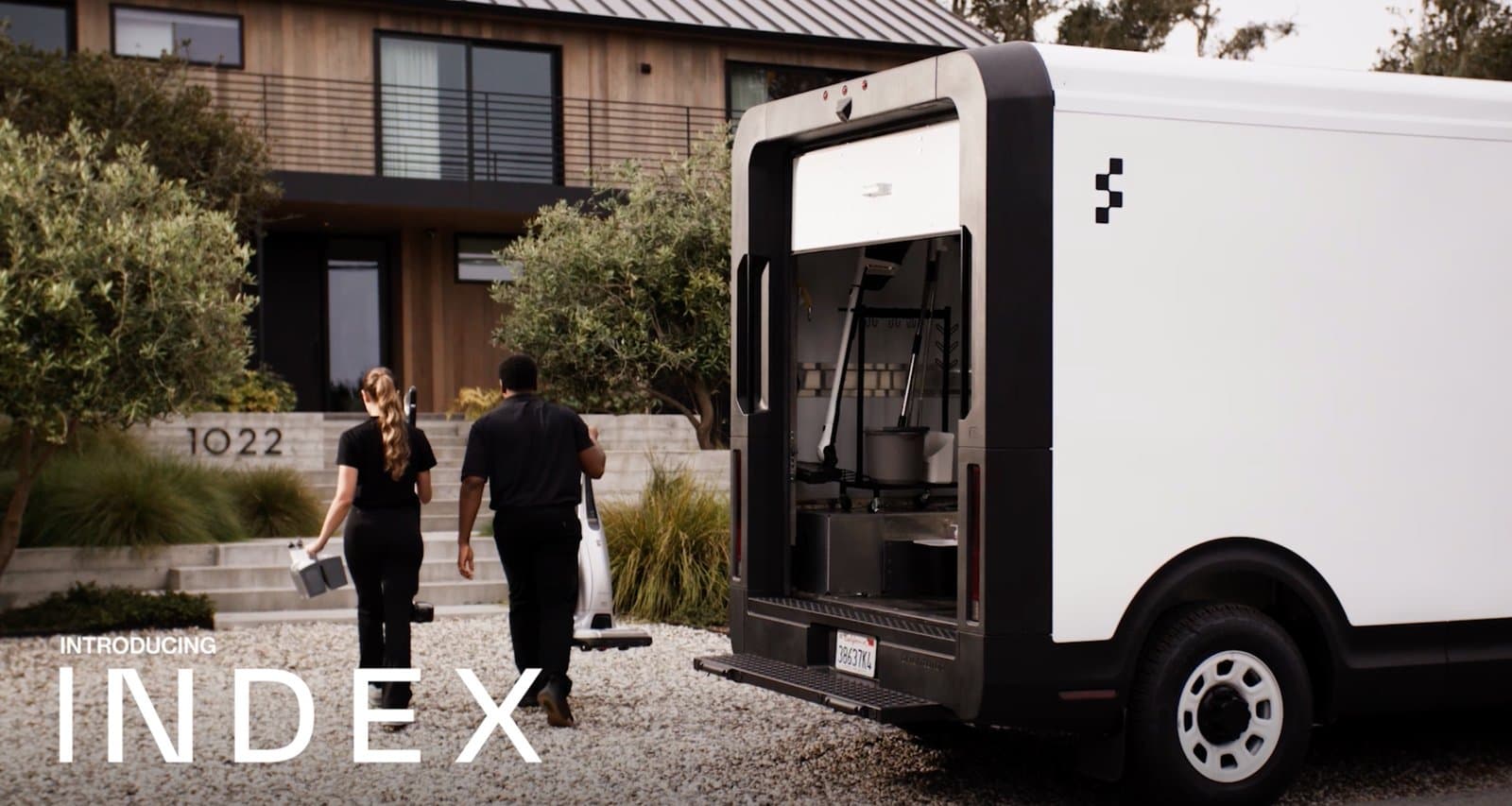
On August 25, Figure AI announced Index, a pipeline to collect and process real-world human activity for robot training. Figure says its app has passed 264,000 downloads across 108 countries, 44,000+ weekly active users, and 16 million videos, processing ~30 minutes of video every second, with $15 million paid to contributors so far. It plans to spend more than $1 billion on data and compute over the next 12 months.
Figure’s bet is that general-purpose robots need large-scale physical-world data to learn how humans interact with the world, and that its Helix control system learns from exactly this. Notably, Figure says existing data vendors couldn’t meet Helix’s throughput, diversity, and quality requirements, so it built its own pipeline to capture the long tail of everyday tasks.
What happens after collection. Figure says every 1,000 hours contains 373 unique tasks, 1,146 objects, and 116 environments, but diversity alone doesn’t guarantee useful training data. Its pipeline filters submissions, screens fraud, removes duplicates, rebalances, and generates captions. The real test is whether that pool measurably improves Helix’s ability to generalize.
Index makes the point plainly: collecting data is only half the problem. Millions of videos still have to be filtered, organized, annotated, and quality-controlled before they become training data. Figure building its own end-to-end pipeline after finding vendors insufficient is a strong signal of how demanding that half is.
A Chinese humanoid breaks its own 100-meter record
Tiangong Ultra ran 100 meters in 8.86 seconds at the World Humanoid Robot Games in Beijing, beating Usain Bolt’s 9.58-second human record, three days after setting a 9.39-second mark at the same event. The Games gathered more than 2,000 robots across 51 events, from sprints to table tennis to practical tasks.
The story isn’t raw speed. Running fast requires precise coordination of balance, motors, body control, and impact management. The Games are a public testing ground for those capabilities, and by mixing athletics with household, hospitality, and emergency scenarios, they reflect a shift toward testing robots on tasks that resemble real work.
Why speed alone isn’t enough: Tiangong Ultra reportedly fell after crossing the line and hitting a padded barrier. For robots meant to work around people, the harder questions are stopping safely, handling surprises, and recovering from mistakes, reliability, not one impressive movement.
The Games are a snapshot of where the field is heading: from controlled demos toward measurable real-world capability. They also expose the gap between a successful demo and reliable deployment, and the data from these interactions, especially the failures, is what closes it.
XPENG raises to scale its humanoid robotics business

XPENG announced a funding round for its humanoid robotics business, led by IDG Capital with Gaorong Ventures and strategic support from Tencent and Alibaba. The funds go to robotics R&D, Physical AI model training, data generation, manufacturing, and global expansion. Its humanoid, IRON, is expected to reach mass production by the end of 2026, with commercial deliveries planned for 2027.
XPENG is betting its EV experience translates to humanoids. IRON pairs a human-like design with 76 degrees of freedom and on-robot AI, and the company is bringing its chips, software, manufacturing, and supply chains into robotics, a sign the race for commercial humanoids may hinge on industrial scale, not just AI breakthroughs.
Whether XPENG can move IRON from development to reliable mass production on schedule, starting in its own stores and campuses before 2027. And how its “Production-Data-Models-Deployment” flywheel works in practice: whether more robots in the world generate the data to keep improving them.
The through-line across the industry: data, models, and deployment are becoming one loop. Every deployment can become new training data, but turning it into model improvement takes reliable collection, processing, and quality control. The infrastructure behind the robots matters as much as the robots.

Cindy writes about Physical AI, robotics, and the human data that teaches models to perceive and act, for Labelix.ai, an independent data foundry for robotics and multimodal AI.
The Data Brief
Get the Radar in your inbox, one sharp read a week on Physical AI and the data behind it.