A weekly scan of what moved in Physical AI and robotics, and what it means for the data behind it.
Nscale backs Figure with a $3.5B AI cloud deal

On September 3, Nscale and Figure signed a strategic partnership committing at least $3.5 billion in AI cloud compute, with a stated intent to scale beyond $6 billion. The deal covers the potential deployment of up to 100,000 Nvidia GPUs on the Vera Rubin platform, with the first capacity landing at Nscale’s site in Barstow, Texas in the second half of 2027. Nscale also invests in Figure, becoming a shareholder and Figure’s preferred compute provider.
This is the largest dedicated compute commitment made for a Physical AI company, and it settles an open question: training robot policies is now being budgeted at the same scale as training frontier language models. The money is aimed at Figure’s Helix models, the step from task-specific behaviors toward policies that generalize.
Whether the data pipeline keeps pace with the silicon. Figure spent August scaling Index, its human-activity collection app, and has said it will spend more than $1 billion on data and compute over twelve months. Compute contracted through 2027 only pays off if there is well-structured physical-world data to run through it.
Compute is the easy half to buy. A GPU contract can be signed in a quarter; a diverse, consistently annotated, quality-controlled body of physical-world data takes far longer to build. When a company commits billions to compute and to its own collection pipeline in the same season, that is a statement about where the bottleneck actually sits: the data side has to scale with it.
A dual-arm robot assembles formwork and ties rebar on a construction site
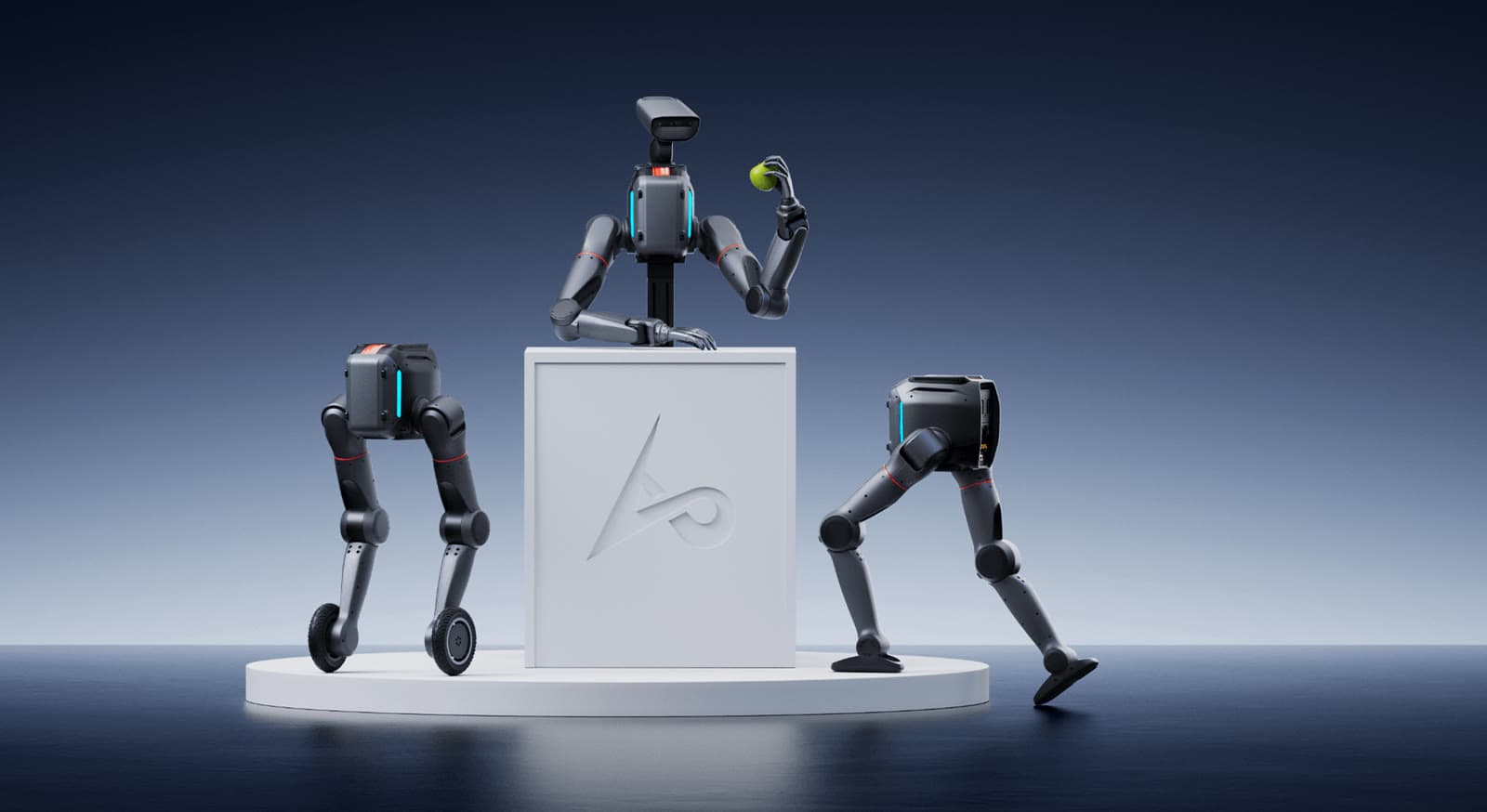
Physical AI developer ZINOVA, working with construction robotics firm RIC Robotics, completed a scaled concrete-slab pour demonstration using TRON 2, the dual-arm robot from LimX Dynamics. The run covered formwork assembly and the laying and tying of multi-layer rebar. TRON 2 is a multi-form platform: one body that reconfigures between dual-arm, wheeled, and bipedal setups.
The idea being tested is ZINOVA’s “tool intelligence”: a framework built around tool grasping, interaction perception, and task morphology, so that one system can be reused across different tools, tasks, and robot bodies rather than engineering a bespoke machine per trade. Construction is a good proving ground because it is where general-purpose claims get expensive quickly.
The distance between a scaled demo and a live site. Real construction brings changing layouts, inconsistent materials, uneven surfaces, weather, and people moving through the work area. What transfers from a controlled slab pour to that environment is the question worth tracking, and the answer will come from field data, not from the demo reel.
Tool use is one of the richer annotation problems in robotics. Grasp points shift with the tool, and success is defined by contact, force, and sequence rather than by object position alone: a rebar tie is correct or it is not, and the difference lives in the interaction. Getting that labeled consistently is what turns site footage into training data instead of an archive.
Medtronic invests $700M in surgical partner Cornerstone Robotics
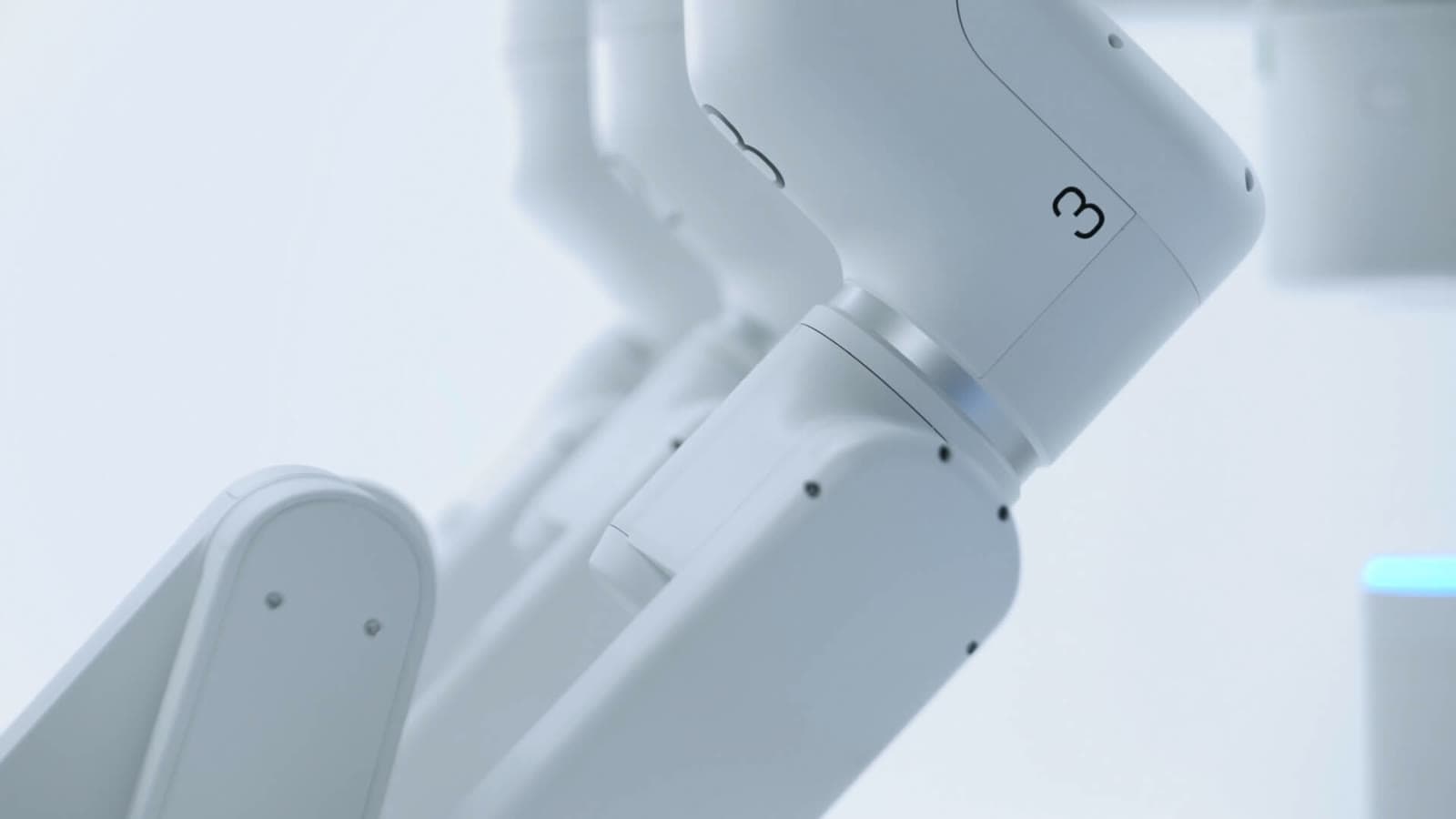
On September 1, Medtronic announced a strategic partnership with Hong Kong-based Cornerstone Robotics, built on an approximately $700 million investment that includes rights to distribute Cornerstone’s Sentire surgical system in select markets outside the US where it is already approved: China, Singapore, and Europe. Medtronic will carry Sentire alongside its own Hugo platform. Sentire is a multi-port system with an immersive console and dual-console capability, approved in China in 2024 and CE-marked in May 2026.
Surgical robotics is the counterweight to the humanoid story. Instead of one general-purpose machine attempting everything, these are specialized systems built for precision inside a controlled environment, with a regulatory path and a paying customer already in place. Medtronic choosing to distribute a second platform rather than build one says something about how fast that market is segmenting by procedure and by economics.
Whether two platforms in one portfolio genuinely gives surgeons more choice or splits the training and service burden. And whether the surgical-video corpora these systems generate start feeding autonomy research, which is where the specialized and general-purpose tracks would begin to converge.
Surgical video is the strictest annotation environment in robotics: clinical accuracy, expert reviewers, and patient-data handling that cannot be improvised. It is a useful reference point for everyone else, because it shows what the field looks like when quality control and data governance are treated as requirements rather than as a later cleanup step.
Lightberry opens reservations for the $39,990 Lumi humanoid
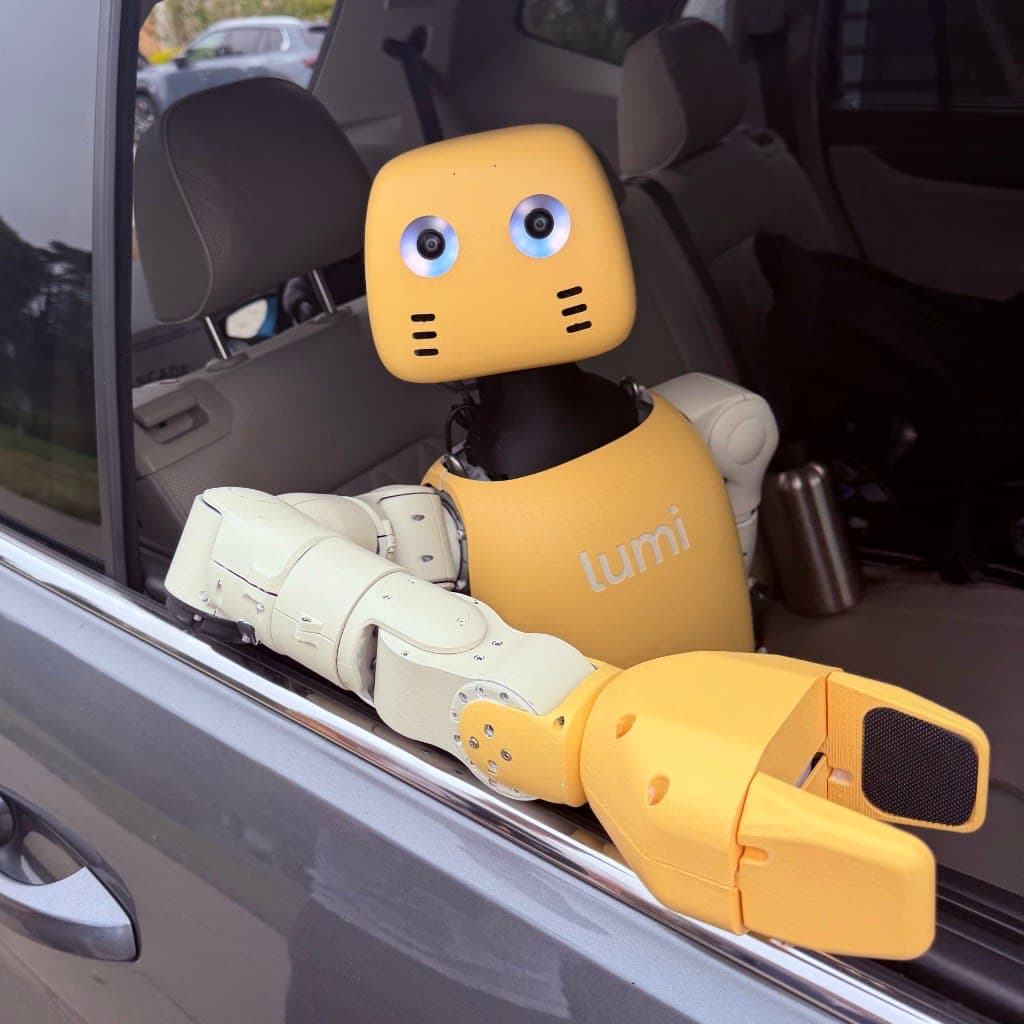
San Francisco startup Lightberry opened reservations for Lumi, a 4ft 2in humanoid built on Unitree’s G1 chassis with Lightberry’s own sensors and software on top. It runs Nvidia Jetson Thor with 64GiB of memory, and has 34 degrees of freedom, a 421Wh battery, dual 1920x1200 cameras, and a beamforming microphone array. The first 100 Founder Edition units are $39,990 against a refundable $200 deposit, with the company signalling hardware in the $20,000 range afterwards. Lightberry positions Lumi for entertainment and public-facing interaction: conversation, storytelling, photos, and guiding people, extendable through an SDK.
Lumi is a clean example of a pattern that keeps recurring: build the differentiated software on a mature hardware platform rather than developing a complete system from scratch. Unitree supplies the body, Nvidia supplies the compute, and Lightberry competes on interaction quality. It shortens the path to a shipping product considerably.
Whether the interaction holds up outside a demo. A robot that entertains a crowd has to read the room, handle interruptions, recover from being misheard, and stay coherent over long unscripted exchanges. That is a different and harder problem than manipulation, and it gets measured in front of an audience.
Social robots generate a category of data the manipulation-first world tends to skip: multi-party speech, gaze, gesture, turn-taking, and the moments where an interaction breaks and recovers. Those need human judgment to label well, because the ground truth is what a person actually meant, not what a sensor recorded.
Nvidia’s Jetson Orin Nano 2 brings more AI to the edge
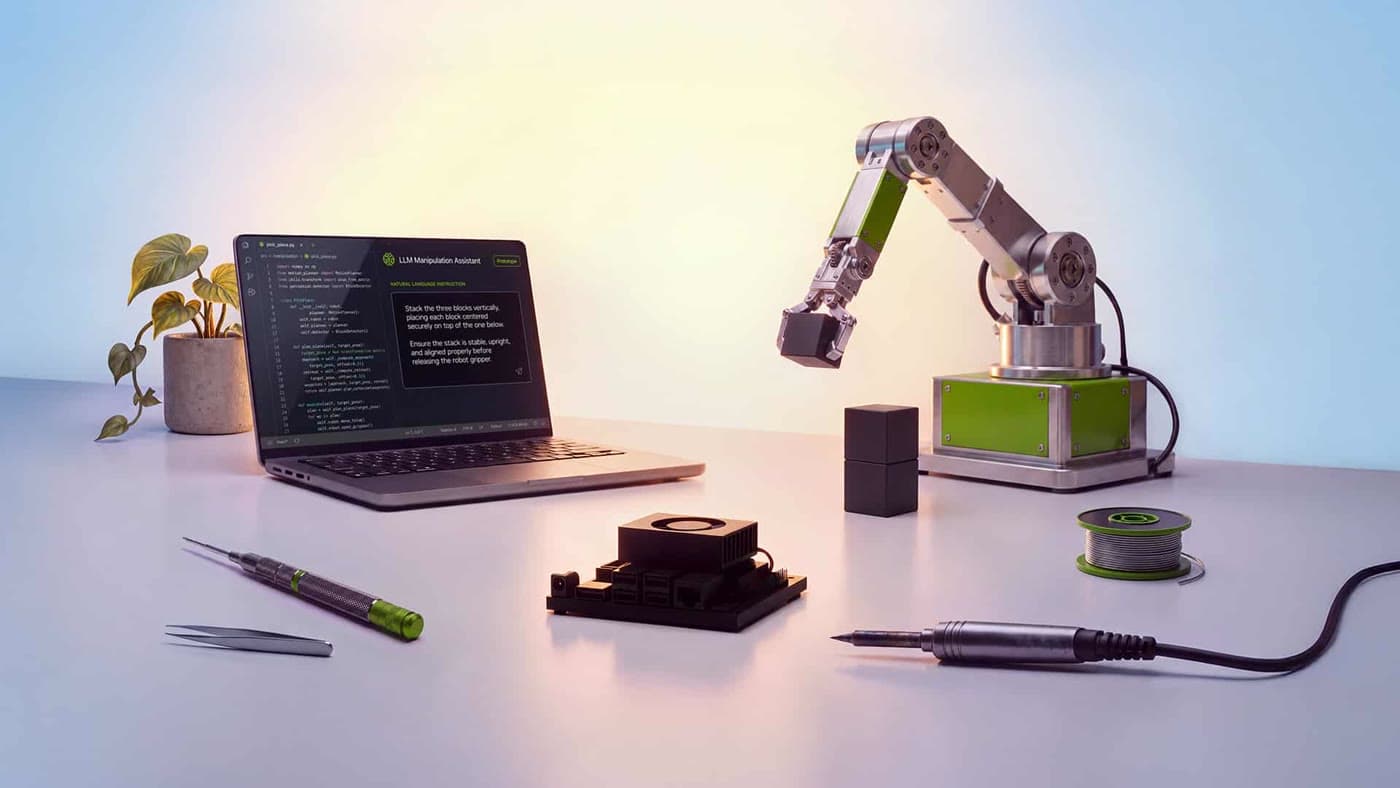
Nvidia announced the Jetson Orin Nano 2 on August 25, an entry-level robotics computer delivering 78 trillion operations per second with 8GB of memory and an 8-core Arm CPU. It doubles the inference performance of its predecessor in the same form factor, or delivers the previous generation’s performance for 40% less power in 15-watt mode. Cognex, Doosan Bobcat, Matic, and Wing are among the first adopters. The module and developer kit arrive in the first half of 2027.
The headlines this year go to billion-dollar humanoid programs, but more than 3 million developers build on Nvidia’s robotics stack, and most of them are working on drones, inspection robots, and vision systems. Enough on-board compute to run a vision language model directly on the robot, at entry-level cost and power, widens who can build capable machines rather than deepening what the best-funded labs can do.
The gap between announcement and availability. Hardware landing in the first half of 2027 gives developers a target rather than a tool today. The more interesting signal will be what the first adopters ship on it, and whether smaller edge devices start producing training data at a volume that matters.
Cheaper capable compute means more robots in more places, and every one of them is a potential source of real-world data. That is the opportunity and the workload in the same sentence: the volume of footage grows much faster than the capacity to annotate it well. Which recordings are worth labeling, and how carefully, becomes the decision that determines what the data is worth.

Cindy writes about Physical AI, robotics, and the human data that teaches models to perceive and act, for Labelix.ai, an independent data foundry for robotics and multimodal AI.
The Data Brief
Get the Radar in your inbox, one sharp read a week on Physical AI and the data behind it.