A factory in China where robots build robots at a 10-minute pace, a new robot-brain company betting that human data beats teleoperation, a humanoid designed to work without a safety cage around it, and Japan’s answer to what happens when a robot breaks down mid-shift. Four different bets on the same underlying question: what actually gets a robot from demo to deployment.
Here’s a weekly scan of what moved in Physical AI and robotics, and what it means for the data behind it.
- UBTECH starts production at its new “robots building robots” factory Manufacturing
- Reward AI launches OM-1: a robot policy learned entirely from human hand data Human data
- Agility unveils Digit 5 for cage-free human-robot work Humanoids
- GMO Air launches Japan’s first “robot ambulance” to keep humanoids running on the job Operations
UBTECH starts production at its new “robots building robots” factory
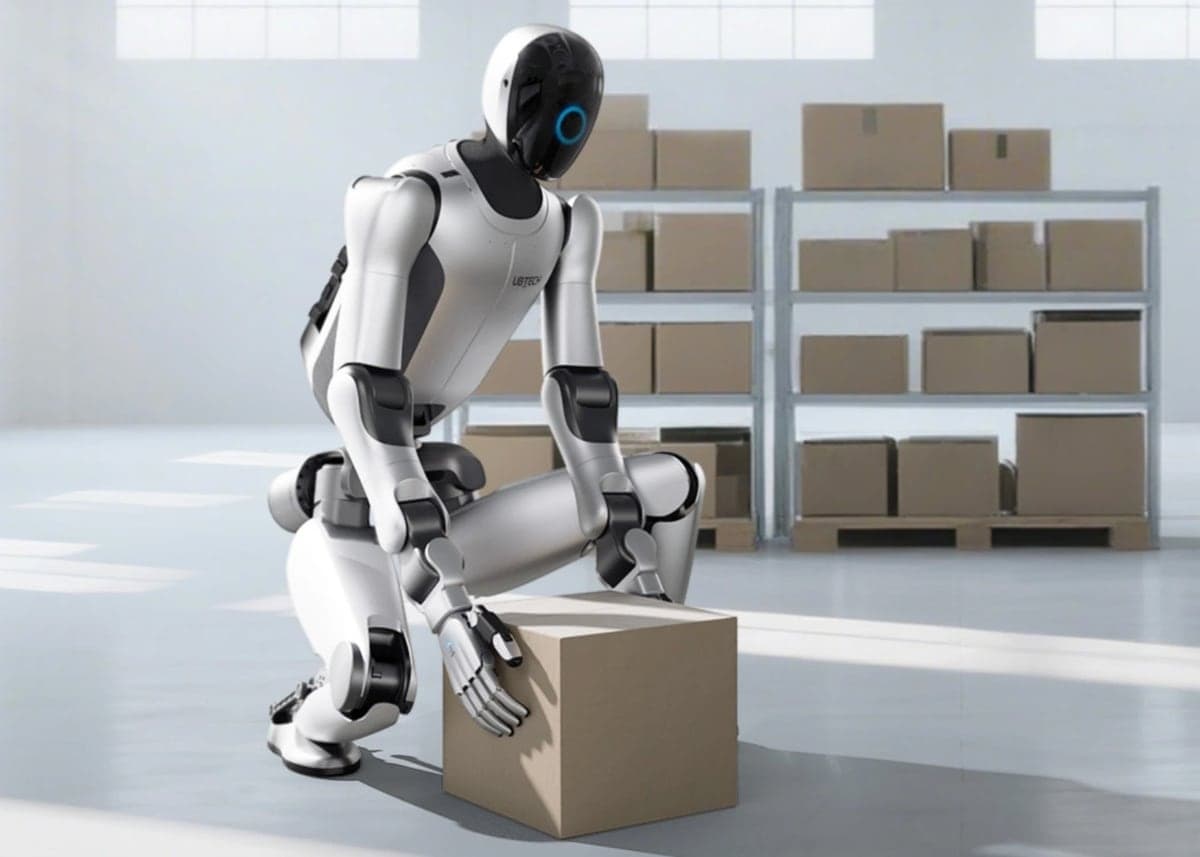
On September 12, UBTECH began operations at a 14,000-square-meter humanoid factory in Liuzhou, Guangxi, built with Siemens and designed for an annual production capacity of more than 10,000 units. UBTECH says the line can reach a takt of roughly one robot every 10 minutes. The line mainly builds UBTECH’s Walker S and Cruzr series, and it uses its own Cruzr robots for depalletizing, loading, and material transport on the production floor itself, alongside a fully automated warehouse that stores 112 robots in just 65 square meters.
This is the shift the industry keeps promising and is now starting to demonstrate: humanoid production moving from small-batch pilot runs toward standardized, digitized lines, with the design capacity to back it up. It also comes a month after Counterpoint estimated that global humanoid shipments for the first half of 2026 topped 22,000 units, almost entirely from Chinese manufacturers, so the pressure to prove real throughput, not just floor-space announcements, is only going up.
10,000 units a year is a planned design capacity, not a verified round-the-clock output, and the mixed line covers both bipedal Walker S humanoids and wheeled Cruzr platforms rather than 10,000 identical robots. The real test is whether the takt time holds up over months, not a launch-day tour.
A factory line can hit a repeatable 10-minute takt because the manufacturing task is repeatable. The tasks these robots will actually do once they leave the factory floor are not, and that’s where the gap between production capacity and deployment capability tends to show up.
Reward AI launches OM-1: a robot policy learned entirely from human hand data
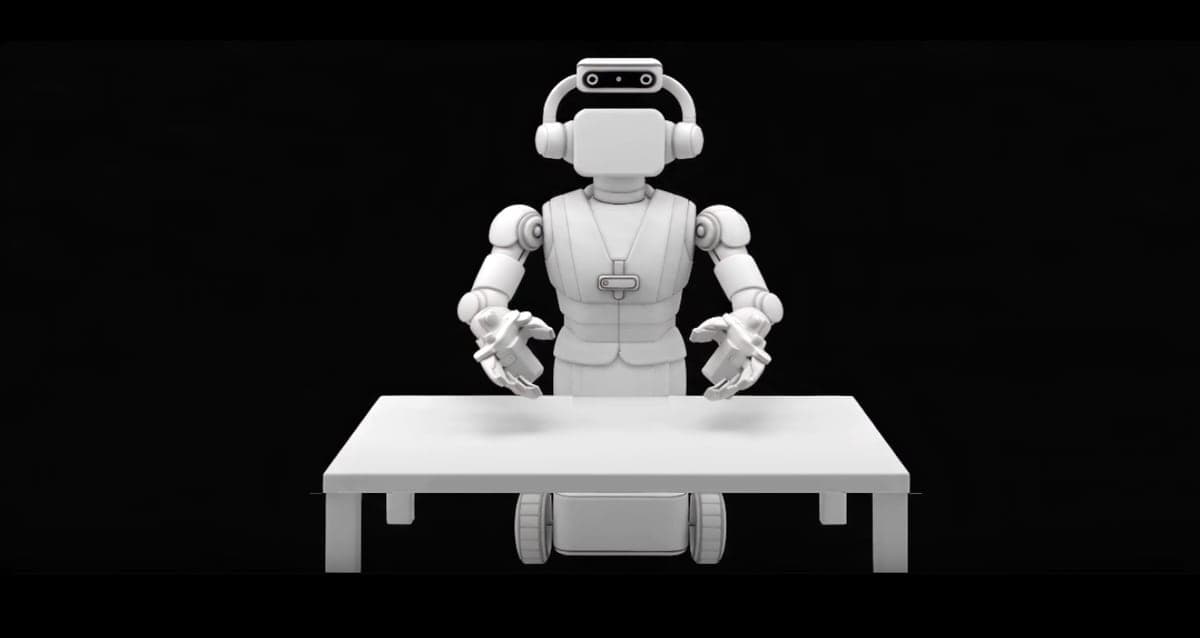
Reward AI introduced OM-1, a general-purpose robot policy trained only on human demonstration data captured through Omnibody Hand, a wearable motion-capture device, with no teleoperation and no on-robot data involved at any stage. The company says OM-1 picks up a new task, including ones with complex dynamics, from under 30 minutes of human data, and the same policy runs across industrial arms and humanoids.
Most robot foundation models still lean on teleoperated data or robot-collected experience to bridge the gap between how a human moves and how a robot has to move. Reward AI is betting that skipping that intermediate step and learning directly from natural human behavior can produce more capable manipulation policies without requiring additional robot-specific data.
The claims are Reward AI’s own, with no independent benchmark yet, and “less than 30 minutes of data” for a new task is a strong number to verify at scale, across more object types, environments, and robot bodies than a launch demo shows.
This is one of the clearest public arguments yet for why the source and quality of human data can matter as much as its volume. If a policy can learn a task from 30 minutes of well-captured demonstration, the result is a useful reminder that the quality, coverage, and structure of the data may matter as much as how much of it there is.
Agility unveils Digit 5 for cage-free human-robot work
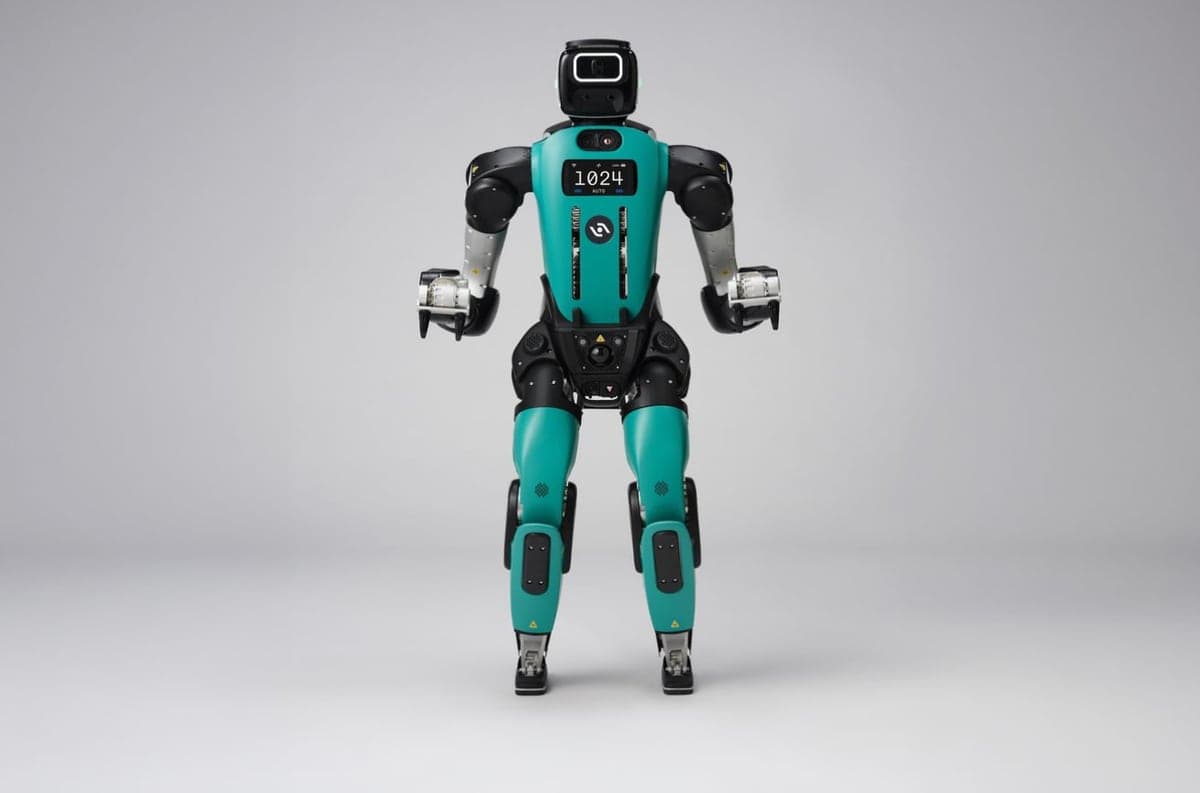
On September 15, Agility Robotics unveiled Digit 5, built for what the company calls “cooperatively safe” work: operating near people on a factory or warehouse floor without the physical cages that its earlier Digit 4 required. Digit 5 lifts up to 50 pounds, recharges in nine minutes, and uses sensors plus a separate safety controller to detect nearby workers and stop, steer around them, or sit down. Agility says it already has more than $300 million in multi-year orders, and plans to ship to the EU and UK starting in 2027.
Safety barriers have been one of the biggest practical limits on where a humanoid can actually work. If Digit 5’s safety approach holds up under real conditions, eliminating physical barriers could open up more of a warehouse or factory floor to human-robot work. Digit also has a substantial commercial track record, with Digit 4 logging more than 65,000 hours across customers including GXO, Amazon, and Toyota, giving Digit 5 a longer operating history to build on than a first-generation reveal would.
A safety system that works in a controlled unveiling is not the same as one that holds up across a full shift, a crowded aisle, and an unpredictable human worker. Agility built Digit 5 off three years of Digit 4 feedback, so the real signal will be how it performs once it’s out of Agility’s own demos and into customer sites at scale.
Cooperatively safe behavior is a prediction problem before it’s a mechanical one: the robot has to correctly read where a person is headed and how fast, in real time, across every layout and lighting condition it will ever see. That prediction is only as reliable as the range of human movement it was trained to recognize.
GMO Air launches Japan’s first “robot ambulance” to keep humanoids running on the job
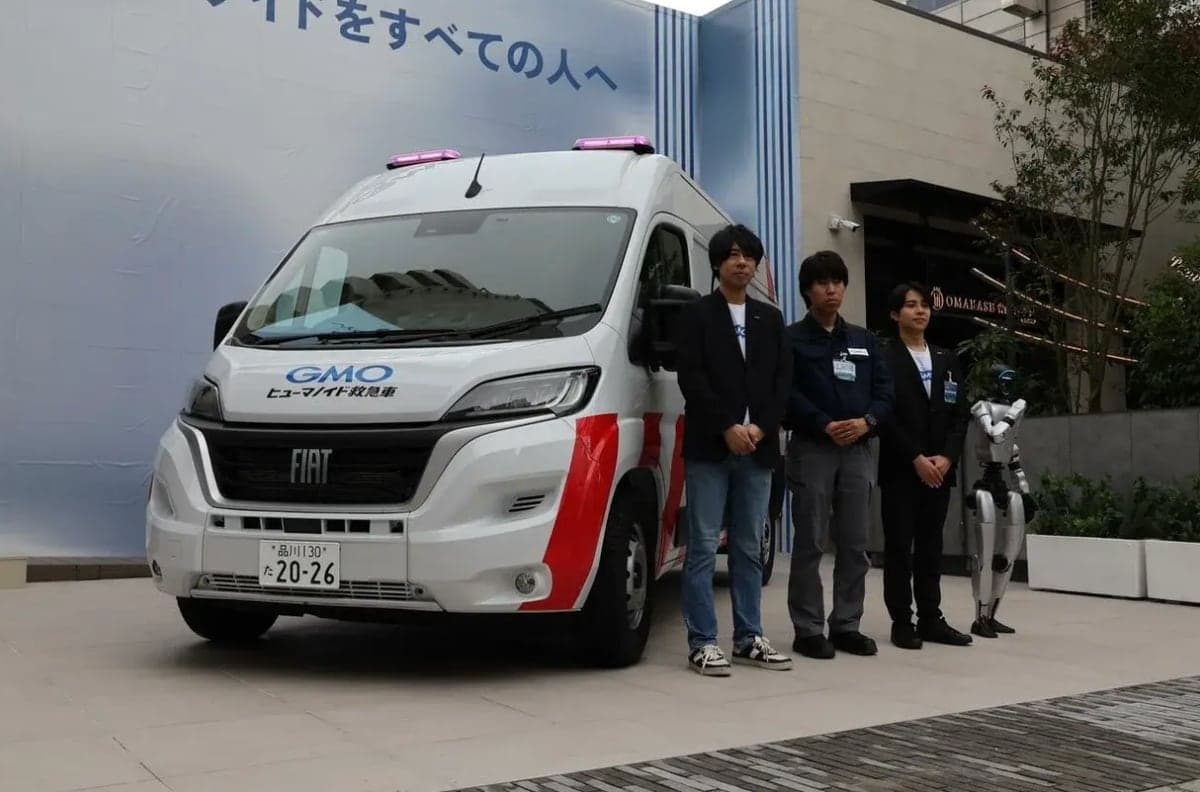
On September 8, GMO Air launched Japan’s first robot ambulance, a van staffed by human engineers that drives to a site, diagnoses a broken humanoid, repairs it on the spot when possible, and swaps in a spare robot when it isn’t. Right now there’s exactly one van, based at GMO’s Tokyo headquarters.
Japan’s government has set a target of roughly 10 million AI-equipped robots across 18 sectors by 2040. That ambition depends entirely on robots staying operational, and downtime has quietly become one of the biggest costs of enterprise robot adoption. A service and logistics layer for humanoids: uptime guarantees, response times, swap-out units. That is the unglamorous infrastructure that decides whether that target is realistic or just a slide.
This is one van and one pilot, not a fleet. Whether the model scales to Japan’s actual robot population, and whether it stays a human-driven service van or eventually becomes something more automated itself, is the thing to track.
A robot’s downtime is itself a signal worth capturing, not just a cost. Every breakdown and every repair is a data point about where a robot’s training didn’t generalize, and a service layer like this is in a good position to feed that back into the next model.

Cindy writes about Physical AI, robotics, and the human data that teaches models to perceive and act, for Labelix.ai, an independent data foundry for robotics and multimodal AI.
The Data Brief
Get the Radar in your inbox, one sharp read a week on Physical AI and the data behind it.