Humanoids are heading for the logistics floor, robots are getting a memory, and money keeps pouring into the people who film how humans work. Four signals that the scarce resource in Physical AI isn’t hardware. It’s good experience, captured and labeled well.
Here’s a weekly scan of what moved in Physical AI and robotics, and what it means for the data behind it.
UBTECH and FAW-Volkswagen take humanoids from inspection to logistics
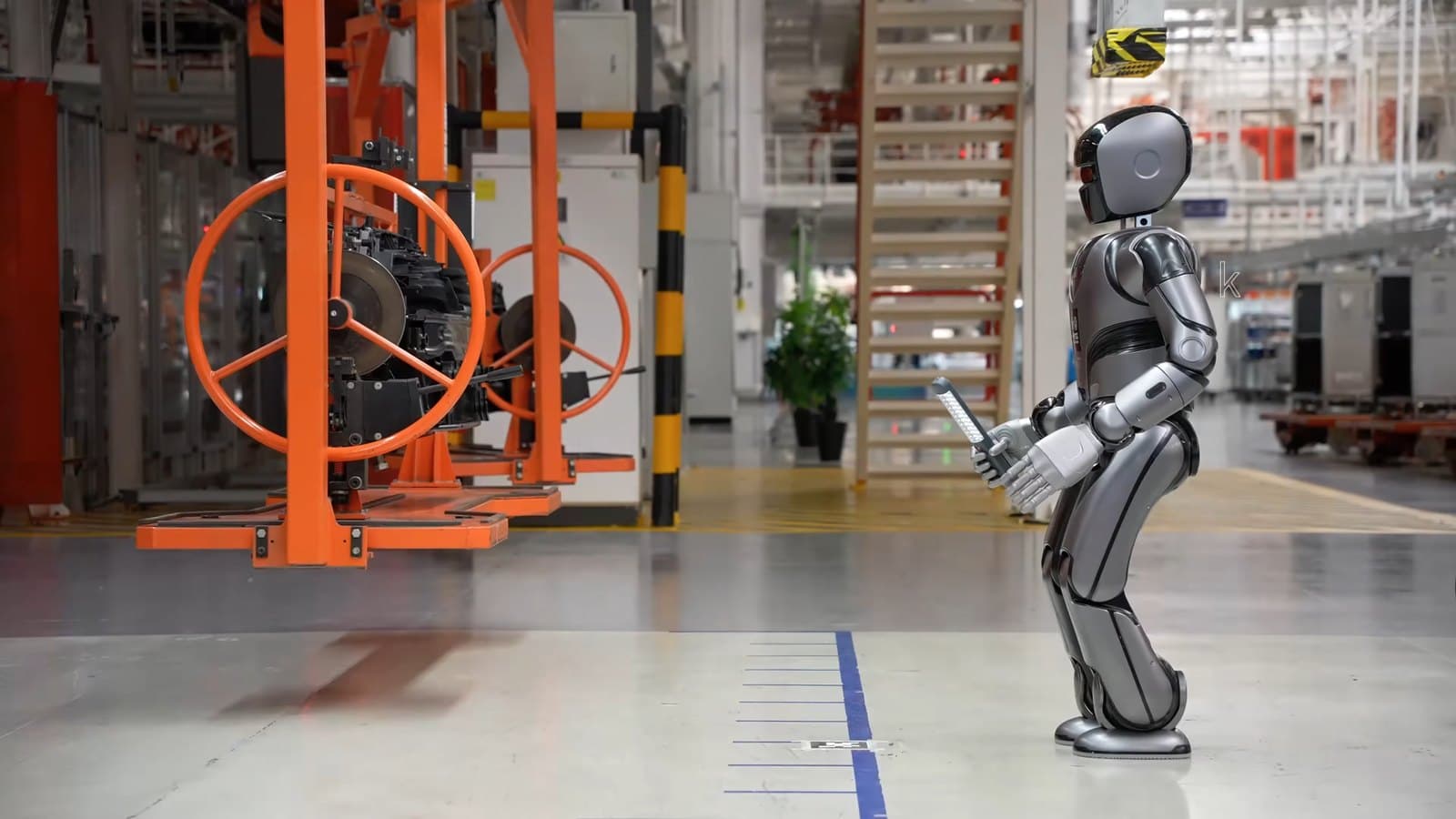
On October 8, UBTECH and FAW-Volkswagen announced a strategic agreement to jointly develop and test humanoid robots for factory logistics, with demonstration sites in real production environments. It builds on earlier trials of UBTECH’s Walker S Lite for vehicle quality inspection at FAW-Volkswagen’s Qingdao plant. UBTECH’s new Liuzhou factory, which started operating on September 12, can reportedly build one robot every 10 minutes, according to the Guangxi regional government.
Moving parts around a car plant is repetitive, but the layout and vehicle variants keep changing. Fixed automation struggles there, and that’s the pitch for a humanoid: one platform, many tasks. Going from inspection to logistics is a step from looking at things to handling them.
The agreement doesn’t name the robot model, the tasks, the number of robots, or a timeline. For now this is a promising partnership, not a deployment.
Logistics looks simple until you list the variation: different bins, shifting floor traffic, a rack that moved overnight. Demonstrations captured in the actual plant, with clear success and failure labels, are what help a robot cope with a layout it hasn’t seen before, not just the one it trained on.
Monolithos launches Robot Brain, a long-term memory for robots
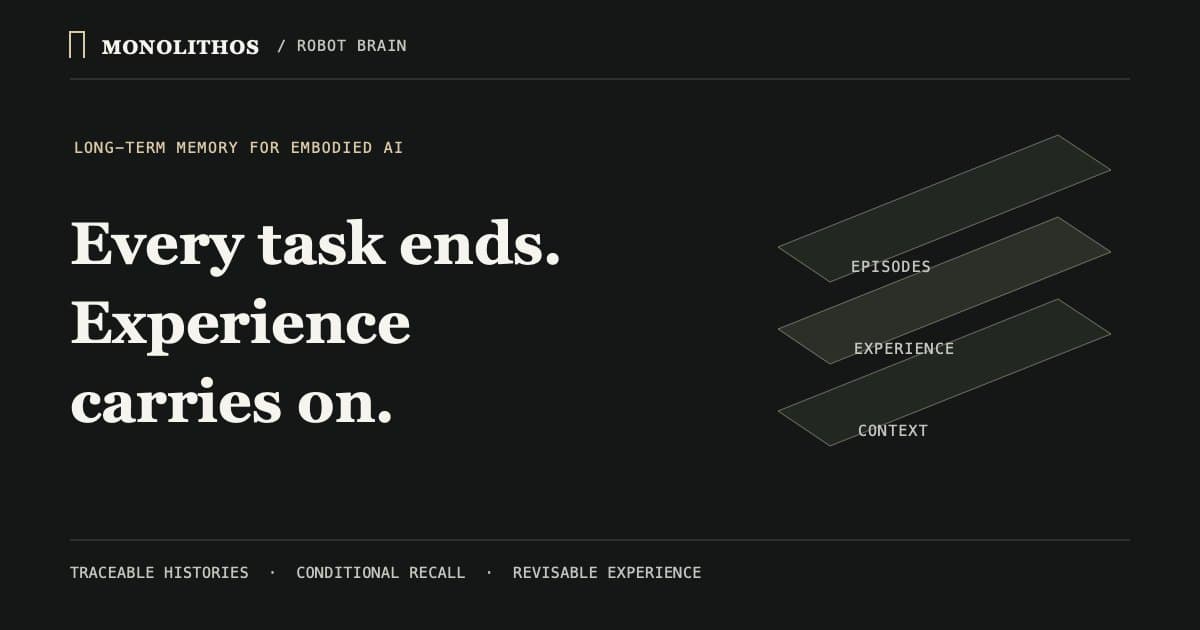
Monolithos has released a public alpha of Robot Brain, a service that stores a robot’s task history, including failures, human corrections and outcomes, and recalls it by task and operating conditions, as Robotics & Automation News reported on October 9. It runs alongside the existing robot stack, which keeps control of planning, real-time control and safety. Developers can try it without a robot, simulator or GPU.
Most robots treat each task as a fresh start. A memory that keeps what went wrong and what a human did about it is a step toward robots that get better during a deployment. We also like that it tracks the conditions behind each experience, so an old fix isn’t blindly reused when things have changed.
Monolithos is upfront that its demos aren’t measured comparisons, and that benefits need testing on comparable tasks. We’d love to see that data.
A memory is only as useful as what goes into it. A stored failure helps only if someone worked out what actually went wrong and what fixed it. That’s the heart of robot failure analysis, and it’s why we keep saying robot policy evaluation needs consistent, well-defined labels to mean anything.
Mecka AI raises $60M to capture how humans move

On October 7, Mecka AI announced a $60M Series B led by Sequoia, with Nvidia and Microsoft’s M12 joining. Founded in 2024, the company pays people to record themselves doing everyday tasks, like making coffee or repairing cars, using smartphones and wearable body sensors. TechCrunch previously reported valuation talks of around $500M, and noted that XDOF, another real-world robot data startup, was reportedly in talks at $1.2B. Scale AI and Micro1 have also moved from LLM data into robotics.
Human demonstration data is becoming its own category, and investors and bigger data players are treating it that way. When Sequoia, Nvidia and M12 back the same bet, it’s hard to argue that data is a side quest.
Whether volume or quality wins. Collecting a lot of footage is one challenge. Turning it into consistent, trustworthy training data is another.
Honestly, we’re excited. This is our corner of Physical AI, and seeing it validated feels good. Our take is that the collection is only the first half. Footage needs careful annotation, review, and people who stay consistent over time, which is why we’re building around dedicated, independent teams rather than crowdsourced labeling. Where we’d push back a little: more hours of footage doesn’t automatically mean a better robot.
Agile Robots sends robots to school with workers filming themselves
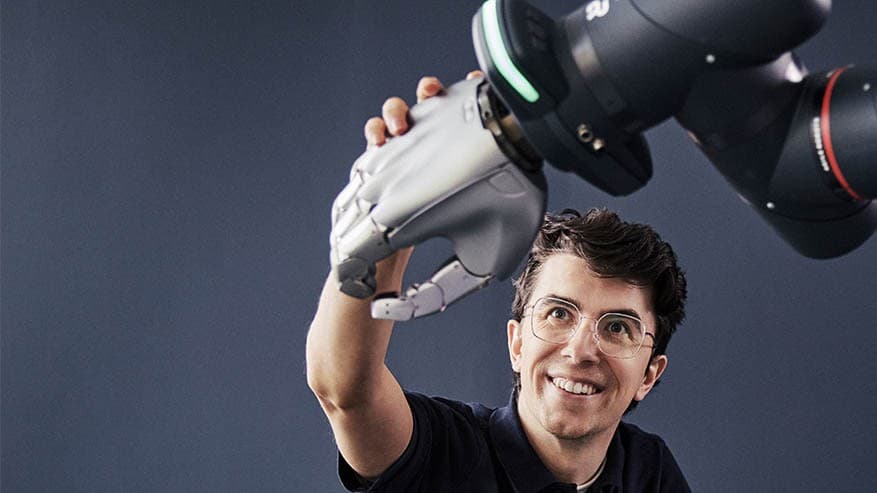
Speaking in Turin on October 8, Agile Robots CEO Zhaopeng Chen described the Munich company’s “Robot Academy”, where workers film themselves doing tasks, capturing how their hands and fingers move. That footage is combined with other training data, and robots then practice the movements in simulation. Chen said robots can need thousands of attempts to master a job, and may have to relearn it after small changes. The company says it has deployed more than 20,000 systems and raised $1.5B to date. Neura Robotics is also building a training facility with the Technical University of Munich.
A robot maker is building its own data pipeline: human footage first, simulation second. Chen put it simply: “If human beings can learn from school, why can’t robots?” Paired with Mecka this week, it shows human demonstration moving from research idea to standard practice.
How the recipe splits between footage, simulation and other data, which the report doesn’t say. And whether it travels beyond the factory.
The detail that caught our eye is finger-level capture. Hand footage is rich, but it’s hard to label consistently, especially when deciding what counts as a clean grasp and what’s a near-miss. A good school also needs a curriculum and a way to grade the work, and for robots, that grading is the data. If you want the background, our explainer on imitation learning vs. teleoperation is a good place to start.
The takeaway
Put this week’s stories side by side and they form a loop. Mecka and Agile Robots are working on the front end, capturing how humans do things. UBTECH and FAW-Volkswagen are heading to the back end, where a robot meets a real plant and real surprises. Monolithos sits in the middle of the return trip, trying to keep what went wrong so it can be used next time.
What connects the loop is the handoff: footage has to be labeled, outcomes have to be judged, and failures have to be explained before they can feed back into training. The teams that get those handoffs right will move faster than the ones that only collect more.

Cindy writes about Physical AI, robotics, and the human data that teaches models to perceive and act, for Labelix.ai, an independent data foundry for robotics and multimodal AI.
The Data Brief
Get the Radar in your inbox, one sharp read a week on Physical AI and the data behind it.