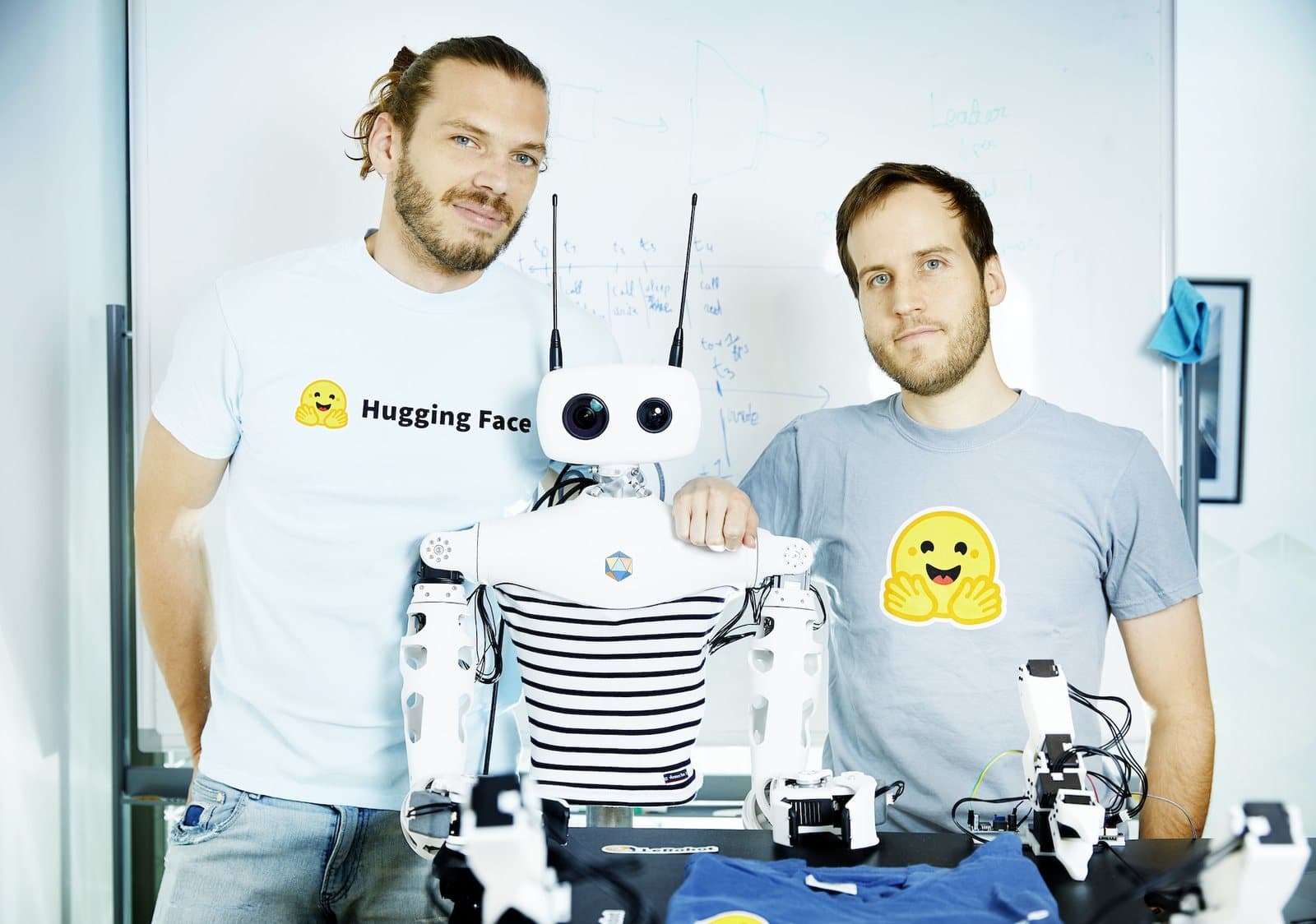
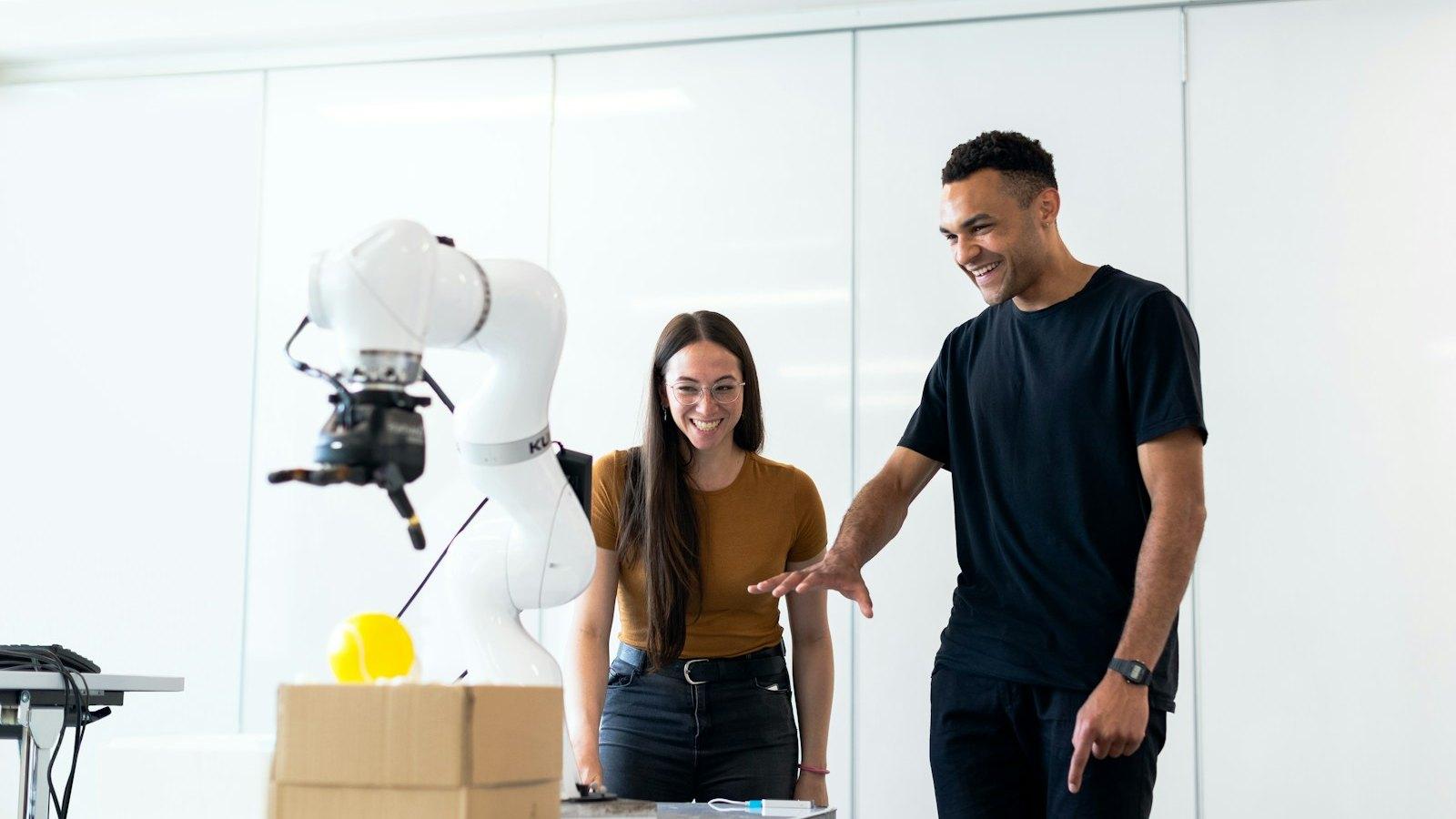
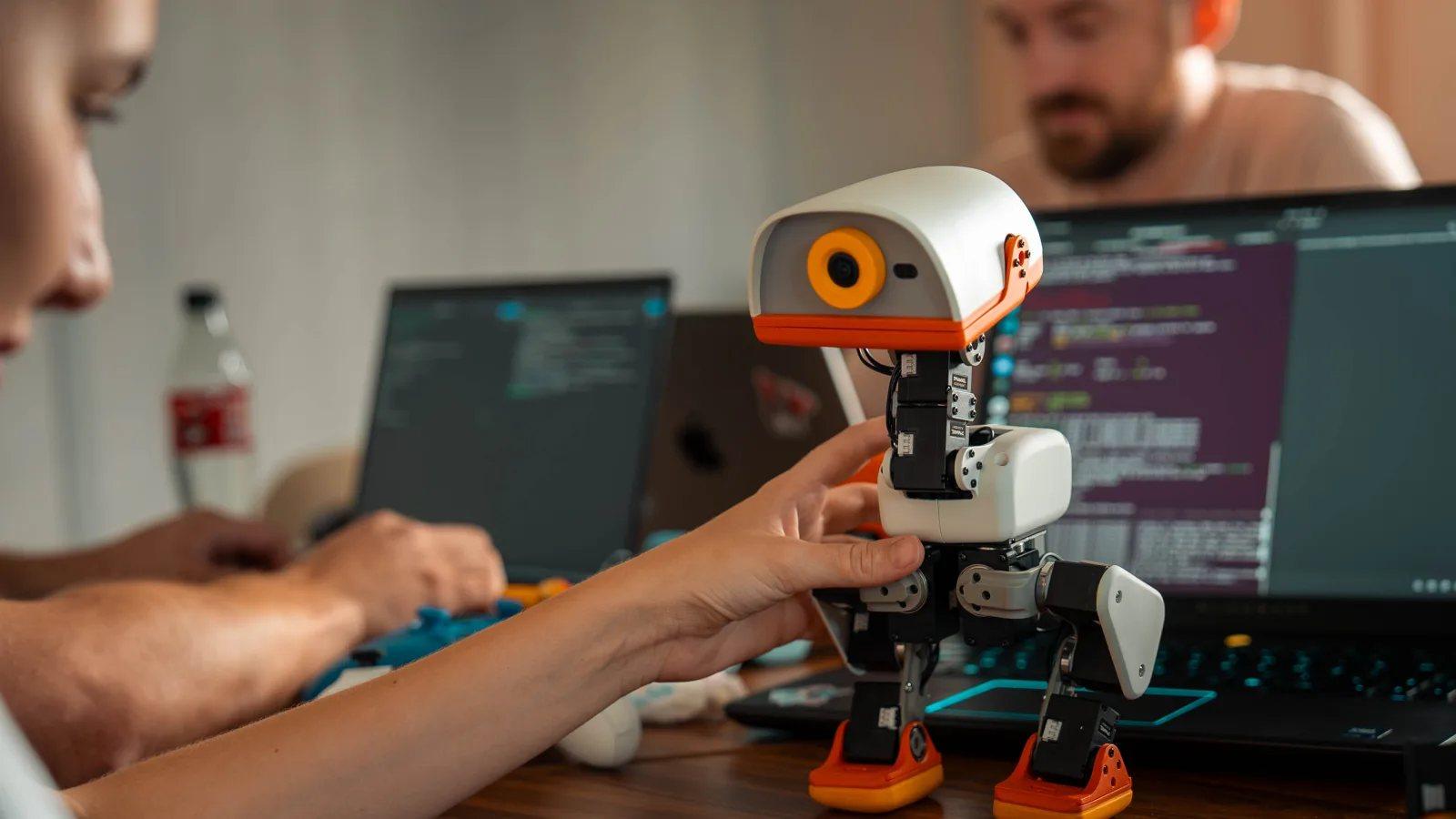
Franka Robotics develops force-sensitive robot arms for robotics and AI research. Researchers use the Franka Research 3 to study how robots grasp and move objects. The FR3 Duo prototype lets researchers study tasks that require two arms to work together.
Researchers used Franka’s earlier Panda arm to collect DROID, a dataset of robot demonstrations from hundreds of scenes.
Here’s how the two platforms compare, what buyers should know, and how researchers collected DROID across different environments.
| Franka Robotics at a glance | |
|---|---|
| Company | Franka Robotics, a German developer of force-sensitive robot arms for robotics and AI research |
| Research arm | Franka Research 3, a single arm for manipulation research |
| Dual-arm prototype | FR3 Duo, designed for two-arm demonstrations, data collection, and policy testing |
| Earlier research arm | Franka Panda, the arm used in the DROID data collection setup |
| Intended users | Robotics and AI researchers studying manipulation and robot learning |
| Buying options | Use “Buy now” on the product page or contact an authorized sales partner. Request early access or a quote for the FR3 Duo prototype. |
Company Snapshot
Franka Robotics began as Franka Emika in 2016 and is headquartered in Munich, Germany. In November 2023, Agile Robots took over Franka Emika’s operations and announced plans to continue its research and development. Zhaopeng Chen, founder and CEO of Agile Robots, called the merger “a strong signal for Germany as a robotics and AI location.”
The DROID researchers chose the Franka Panda partly because it was available at most participating institutions.
The Technology: Franka Research 3 and FR3 Duo
Franka Research 3: A Force-Sensitive Arm for Robot Learning
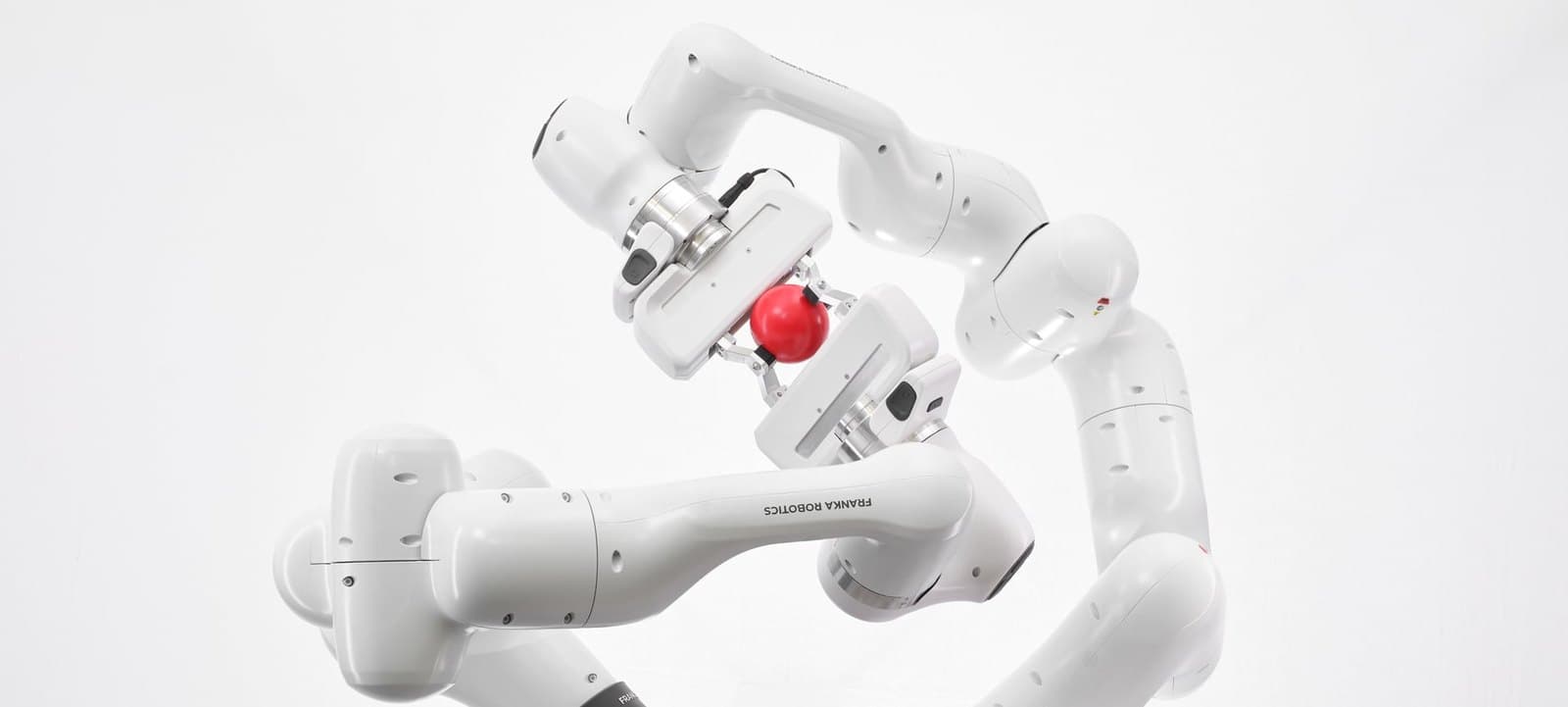
The Franka Research 3 has torque sensors in all seven joints. These sensors help the arm detect contact and estimate external forces.
Researchers can use the Franka Control Interface to read sensor data and send control commands. This gives teams a way to test their own control algorithms on the physical arm.
| Robot facts | Franka Research 3 |
|---|---|
| Maximum reach | 855 mm |
| Manufacturer-listed weight | About 17.8 kg for the arm and about 7 kg for the separate controller |
| Rated payload | 3 kg |
| Arm movement | Seven degrees of freedom |
| Power | Mains-powered through the controller |
| Gripper options | Two-finger gripper or vacuum gripper, listed as add-ons |
| Price | Not listed publicly |
| How to buy | Use “Buy now” on the Franka Research 3 product page or contact an authorized sales partner |
Official video: Franka Research 3 - The Reference Platform for Robotics & AI, from Franka Robotics.
FR3 Duo: A Platform for Two-Arm Manipulation
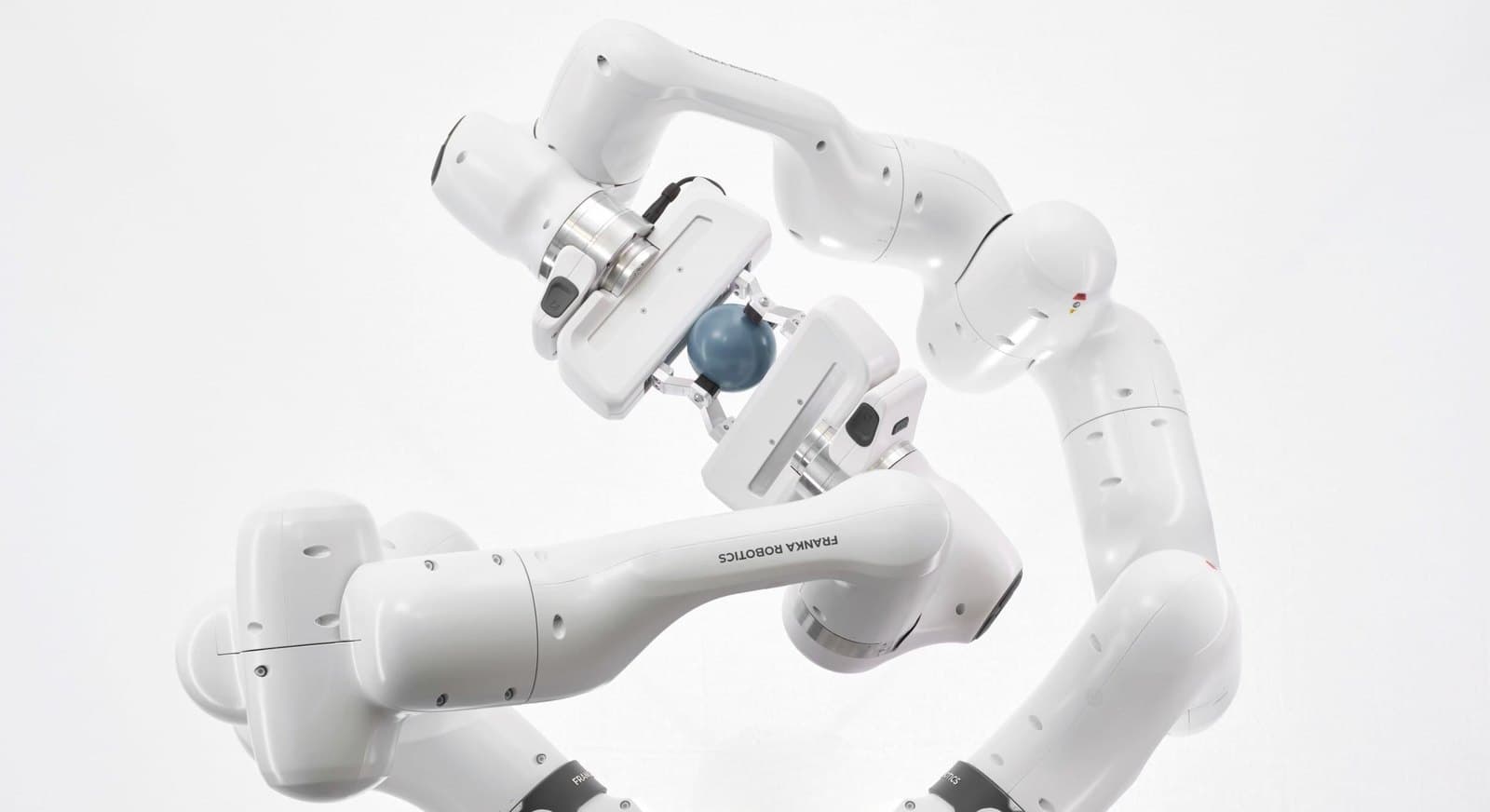
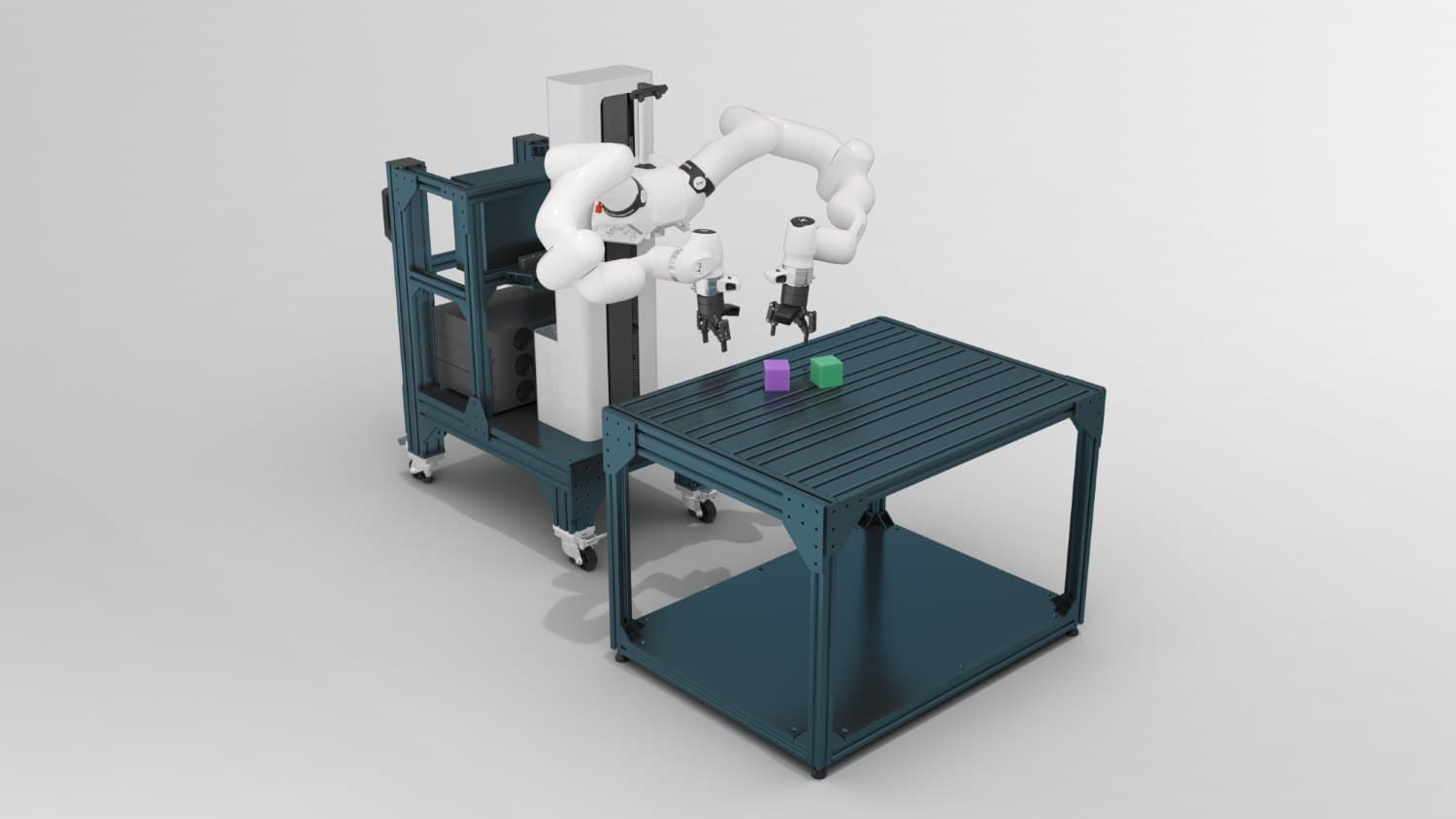
The FR3 Duo prototype combines two Franka Research 3 arms on a shared mount for tabletop research. The FR3 Duo’s arms have overlapping workspaces, allowing researchers to study how both arms coordinate within a shared area.
What you’ll see: At the German Robotics Conference, a Franka engineer drives two FR3 arms with Franka GELLO controllers and shows LABS, a suite that records each demonstration, marks it as a success or a failure and saves it for training.
Video: Franka Robotics, 2026. Plays from YouTube.
An operator can use Franka GELLO Duo to control both arms at the joint level in real time. Researchers can collect demonstrations and test learned policies on the FR3 Duo.
| Robot facts | FR3 Duo |
|---|---|
| Configuration | Two Franka Research 3 arms on a shared mount |
| Maximum reach | 855 mm per arm |
| Payload | 3 kg per arm |
| Arm movement | Seven degrees of freedom per arm |
| Grippers | The optional Vision and Manipulation Kit includes two Robotiq 2F-85 grippers |
| Price | Quote on request |
| Availability | Franka lists the FR3 Duo as a prototype. You can request early access or a quote. |
Official video: Teleoperation with FR3 Duo, from Franka Robotics.
Business Model and Strategy
Franka sells research hardware through an authorized partner network and provides technical support through its customer support team. Its developer hub gives labs example projects they can adapt to their own experiments.
Those projects cover different ways to control the same arm. One ROS 2 example lets researchers move the FR3 and operate its gripper with a SpaceMouse. Another uses a second FR3 as a controller and lets the operator feel contact forces from the remote arm.
Franka also provides LABS, open-source software that coordinates robots, sensors, and teleoperation devices during data collection.
The Data Challenge
The DROID team used a shared Franka Panda setup to collect demonstrations in labs, offices, and homes. The DROID paper reports about 76,000 demonstrations across 564 scenes. Each episode includes synchronized camera streams, depth data, camera calibration, and natural-language instructions. The team also logged the robot’s control commands.
What you’ll see: Highlights from Franka’s ICRA 2026 booth in Vienna: the two-arm FR3 Duo collecting teleoperated demonstrations with LABS, and the same setup running a Gemini Robotics model on its own.
Video: Franka Robotics, 2026. Plays from YouTube.
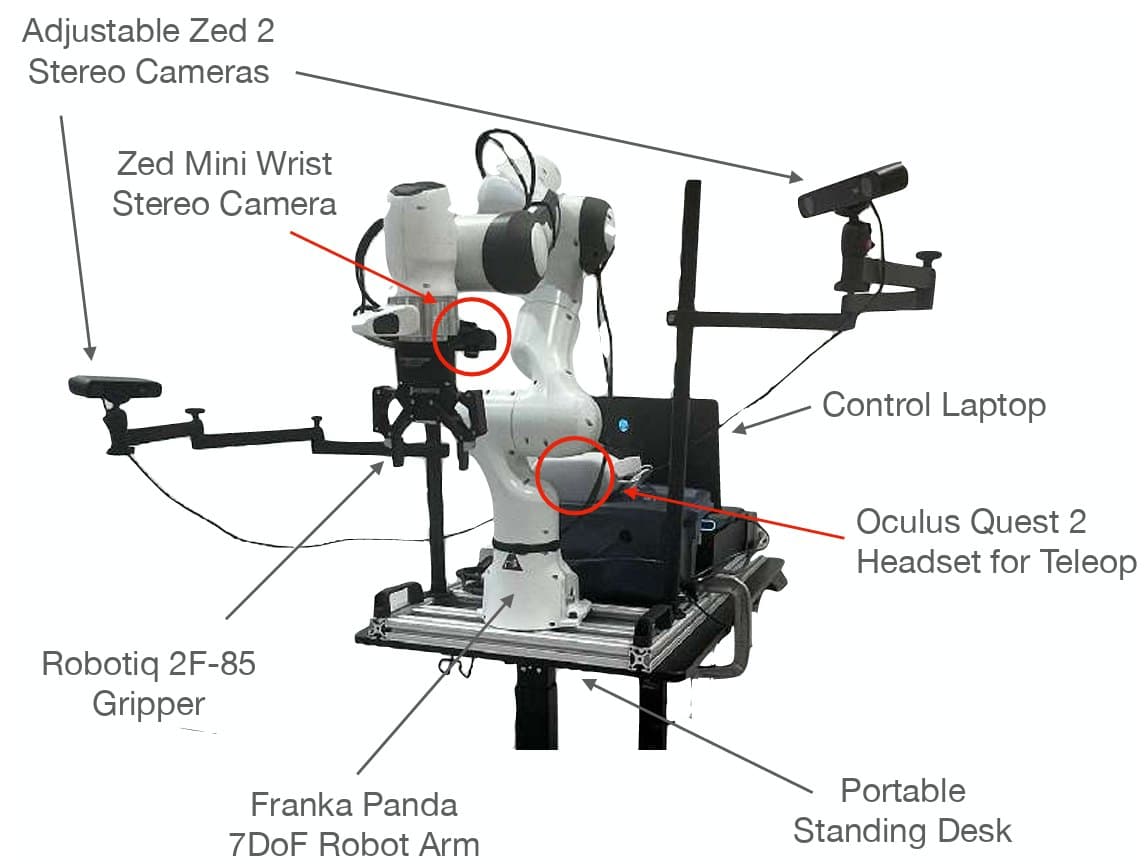
In the authors’ experiments, adding DROID data improved policy performance and generalization. The shared setup let researchers vary tasks and environments while keeping the recording hardware consistent.
DROID used one Panda arm per setup. With two arms, reviewers also need to track how the arms coordinate. For a hypothetical handoff, useful review questions include:
- Timing: did the receiving gripper close before the other gripper released?
- Recovery: if the object slipped, did the receiving arm regain its grip?
- Outcome: do the project’s scoring rules count a recovered handoff as a success?
Labeling the recovery separately preserves what happened during the handoff, even when the attempt ultimately passes.
Labelix.ai’s Take
Two policy versions can reach the same success rate, even if one retries more often within each trial. Track first-attempt success separately to see how often each version finishes without a retry.
At Labelix.ai, our robot failure analysis team reviews failed and borderline trials against criteria agreed with your engineers. We tag the failure cause, mark when it began, and record whether the robot recovered. That gives engineers specific trials to investigate when performance changes.
Teams that already run an FR3 can keep the arm at their own site and plan remote test sessions run by Labelix.ai operators over a secure link, through the Labelix.ai Robot Lab.
Request a pilot to discuss your recorded trials and what your team wants to measure.
Have robot trials that need a second look?
Send a few recorded trials: one task, your hardest failures and near misses. A dedicated Labelix.ai team tags each failure cause, the step where it began, and whether the robot recovered, against criteria agreed with your engineers.
FAQs
What is the Franka Research 3 used for?
The Franka Research 3 is a robot arm for robotics and AI research. Teams use it to study grasping, manipulation, and how robots respond to contact.
Can you buy the FR3 Duo?
Franka lists the FR3 Duo as a prototype. You can request early access or a quote through its product page.
How much does the Franka Research 3 cost?
Franka does not list a public price. Buyers can request pricing from an authorized sales partner.
What is the difference between Franka Research 3 and FR3 Duo?
The FR3 has one arm. The FR3 Duo prototype combines two FR3 arms on a shared mount so researchers can study how they work together.
Which Franka robot was used to collect the DROID dataset?
Researchers used a Franka Panda arm with a Robotiq 2F-85 gripper. They used the same hardware setup across participating institutions.

Stephanie writes about robotics, agriculture AI, and the training data behind them, for Labelix.ai, an independent data foundry for robotics and multimodal AI.
Get the next one first
One sharp read a month on Physical AI and the data behind it.