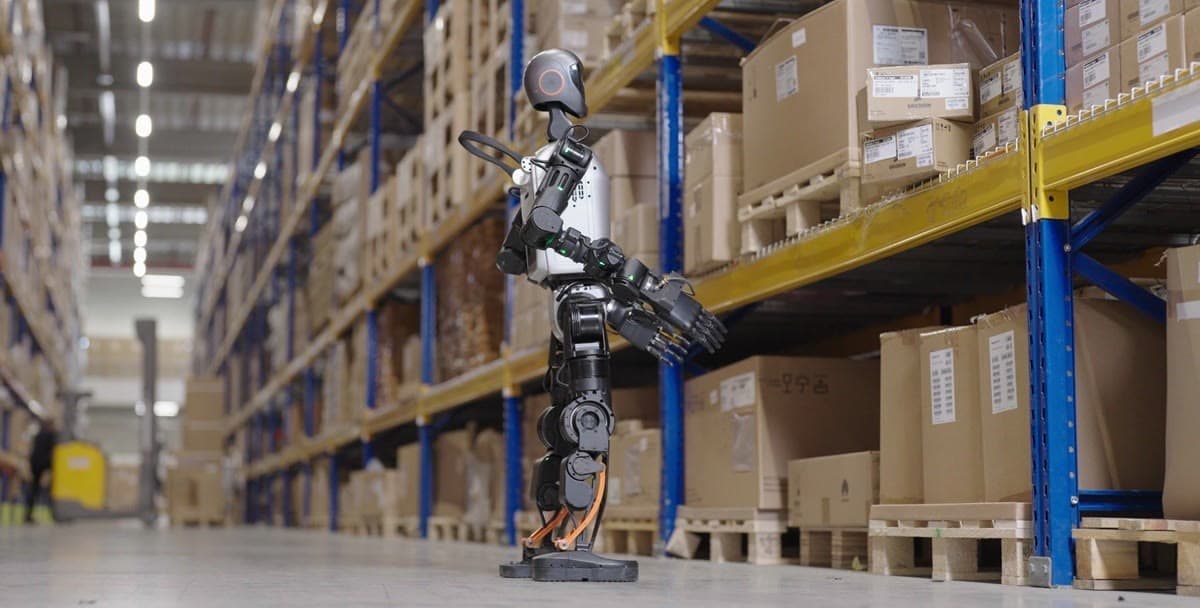
Meta has reportedly built a humanoid robot prototype, codenamed Max, with Shanghai-based Fourier in about three months, and it is aimed at household tasks. A robot body that comes together that fast moves the hard part to the data. Max still has to learn how real homes work, and that takes footage of real home tasks, labeled consistently enough for a model to learn from.
On October 31, The Information reported that Meta has built the prototype with Fourier. Per the report, the build took about three months, and a second version is already underway. Meta’s long-term aim is a robot that can help with household tasks.
That is a quick turnaround, and it is exciting to see. The more interesting question is what comes after the hardware exists. A body that can be assembled in a quarter still has to learn how a home works, and that part runs on data.
What Did Meta Build?
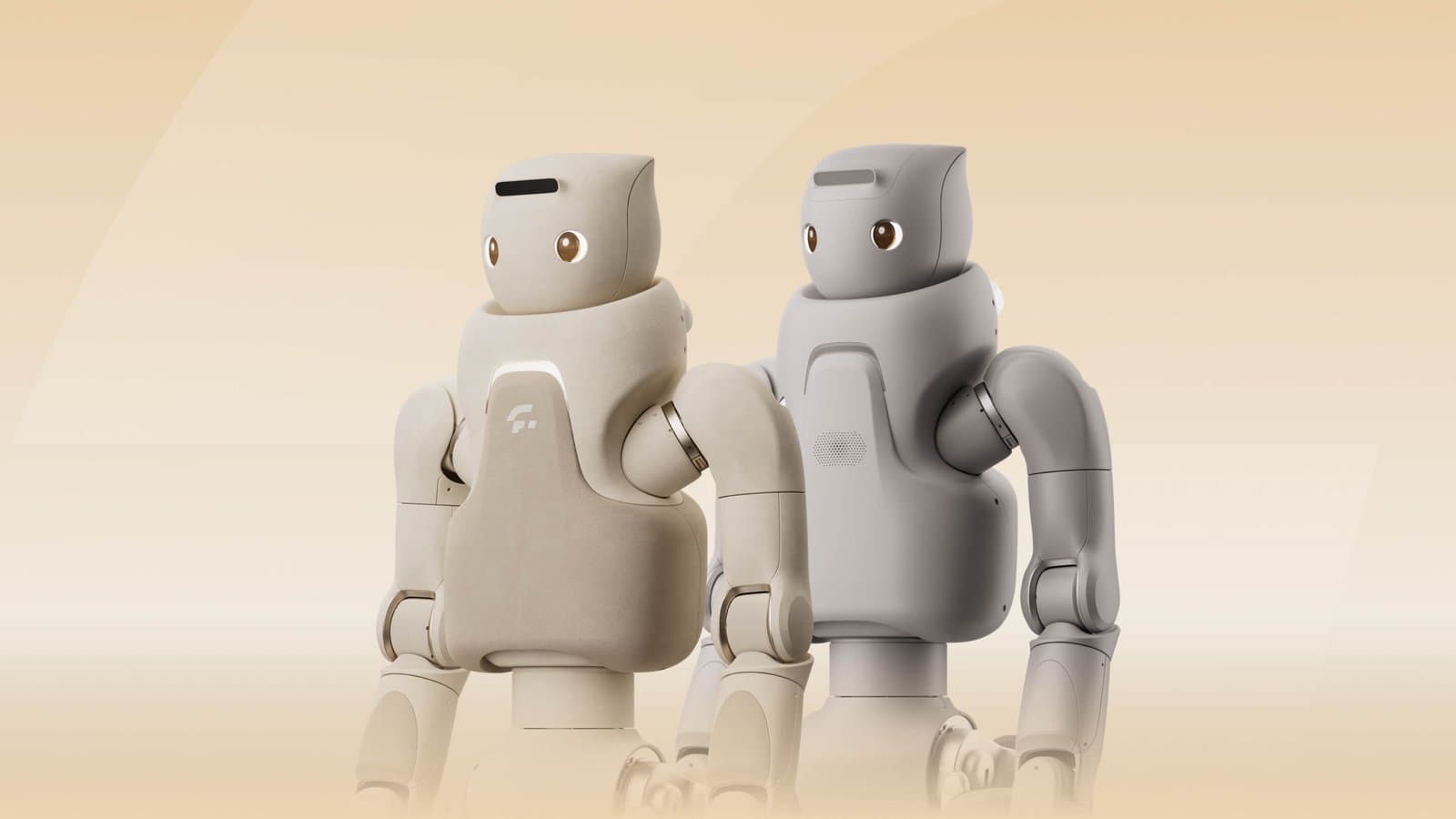
According to reports, Max stands roughly 1.5 meters tall and weighs about 48 kilograms (106 pounds). It runs on Nvidia’s Jetson Thor chip, with a face that mimics expressions through its eyes and mouth, two speakers in its chest, and five-fingered hands designed for small objects.
Meta’s VP of product for robotics, Li-Chen Miller, reportedly spent almost two months at Fourier’s Shanghai factory. Max was shown to some Meta employees at an internal robotics meeting in late August. Work on Max 2 began in September, with a redesigned torso, improved hands, a projector, and extra sensors for navigating stairs.
Fourier, founded in 2015, started in rehabilitation robotics before moving into humanoids. In 2025 it launched the GR-3, a full-size care robot. In our reading, that background fits a home robot, since rehab machines are built to move safely around people. One outlet, Unwire HK, also reports that Max builds on three generations of Fourier’s earlier robots, which would help explain the speed.
Meta told The Information the work is internal research and that it has no plans to sell the units.
The Real Bet Is the Software
Max is one piece of a bigger push. According to the report, CTO Andrew Bosworth has described humanoids internally as a physical form for Muse, the personal AI agent Meta launched in September. In May, Meta acquired Assured Robot Intelligence, a startup building AI for whole-body humanoid control. Its co-founders, robotics researchers Xiaolong Wang, Xuxin Cheng and Lerrel Pinto, joined Meta with the team, and Wang wrote that their goal runs through “learning directly from human experience.” Bosworth had already said in 2025 that software, not hardware, is the real bottleneck.
Put together, the approach reads fairly plainly: the body comes from a partner, and Meta puts its effort into the intelligence that runs it.
Why Does This Matter Now?
When a prototype takes three months, the body stops being what sets a team apart. What remains is what the robot knows, and in Physical AI, that comes down to data. A home is the hardest place to teach it. Every kitchen is laid out differently, and every household has its own objects, lighting, and habits. A robot that handles one tidy demo kitchen can still struggle in the next.
Data collected for one setting does not always carry over to another. A team that wants a home robot needs data that looks like homes, labeled consistently enough for a model to learn from. Meta’s own researchers have shown the scale of the problem: in 2024 they released PARTNR, a benchmark of 100,000 natural-language household tasks across 60 houses, built to test how AI models plan and work alongside people at home.
What the Report Doesn’t Tell Us
It helps to keep the limits in view. The report shows no task demos, success rates, or videos, and the only demo mentioned was internal. “Hands designed to handle small objects” describes a design goal, not a demonstrated skill. It also says nothing about the AI model running on Max, or how Meta plans to train it for household work. Max is currently a research prototype with no launch date.
That doesn’t make the story less interesting. It means the evidence so far is a spec sheet and a reported timeline. We’d want to see real tasks in real homes before drawing firm conclusions.
A Practical Way to Read a Home Robot Demo
When demos do arrive, a few questions make them easier to judge:
- Task and success criteria. What was the robot asked to do, and what counted as success?
- Autonomy. Was the robot acting on its own, or was a person guiding it remotely?
- Variety. Did it work across more than one home or setup, or only the one it was trained in?
- Failures. Does the demo show what went wrong, or only the best take?
This is our own practical framework, not something the report describes.
Labelix.ai’s Notes
We’re excited about this one. A company with Meta’s resources putting a home humanoid at the center of its plans says a lot about where general-purpose robotics is heading, and a three-month prototype suggests robot hardware is reaching researchers much faster.
Here is our two cents. The idea we’d watch most closely is Wang’s: learning from human experience. In practice, that points to first-person footage of people doing everyday tasks. This is human demonstration data, and it is the kind of robot training data Labelix.ai records and annotates. Someone has to mark which step is happening, which object matters, and what counts as success versus a near miss. Footage alone isn’t training data. The labels make it usable, and consistent labels make it trustworthy.
We’d also add a note of caution. A three-month prototype is impressive engineering, but it isn’t proof that home robots are close. A robot that folds one towel is not yet a robot that does laundry, which is why teams will need test scenarios built from real homes and clear success criteria. That is the ground covered in policy evaluation and benchmark design, and in failure analysis for when things go wrong.
A robot in a home also sees a lot. How home data is collected, with what consent, and where it is processed will matter as much as how well the robot performs. The report is silent on this, which is fair for a research prototype, but we’ll be listening for it.
We’ll be watching for three things: a real task demo of Max 2, what Meta says about how it trains these robots, and whether the human-experience approach shows up in the data it collects.
Teaching a robot household tasks? Start with one.
Tell us the tasks your robot needs to learn. A dedicated Labelix.ai team stages the rooms, records trained people doing the work, and labels every step the same way, starting with a small paid pilot.
FAQs
What is Meta's humanoid robot, Max?
Max is the internal codename for a humanoid prototype Meta reportedly built with Fourier in about three months. It stands around 1.5 meters tall, weighs about 48 kilograms (106 pounds), and is aimed at household tasks. A second version, Max 2, is already in development.
Who is Fourier?
Fourier is a Shanghai-based robotics company founded in 2015. It began in rehabilitation robotics and now builds humanoid robots, including the GR-3 care robot.
Is Meta going to sell Max?
Not according to recent reports. Meta told The Information the work is internal research and experimentation, and that it has no plans to sell the units. No launch date has been set for a consumer version.

Cindy writes about Physical AI, robotics, and the human data that teaches models to perceive and act, for Labelix.ai, an independent data foundry for robotics and multimodal AI.
Get the next one first
One sharp read a month on Physical AI and the data behind it.