A home robot you train with your phone, a startup betting on touch, a new five-finger hand, a shipyard trying autonomous welding, and NASA’s open testbed. Five signals that a lot of the hard part of Physical AI is the last inch: the fine, messy details of a real task in a real place.
Here’s a weekly scan of what moved in Physical AI and robotics, and what it means for the data behind it.
- Flourish One wants you to teach your home robot with your phone Home robots
- Tangent Robotics raises $4.5M to give robot hands a sense of touch Funding
- HD Hyundai tests autonomous welding and painting at its Samho shipyard Deployment
- NASA’s Dexterous Robotics Team shows what a good robot testbed looks like Testing
- DH-Robotics debuts a 13-DOF direct-drive hand at IROS 2026 Hardware
Flourish One wants you to teach your home robot with your phone
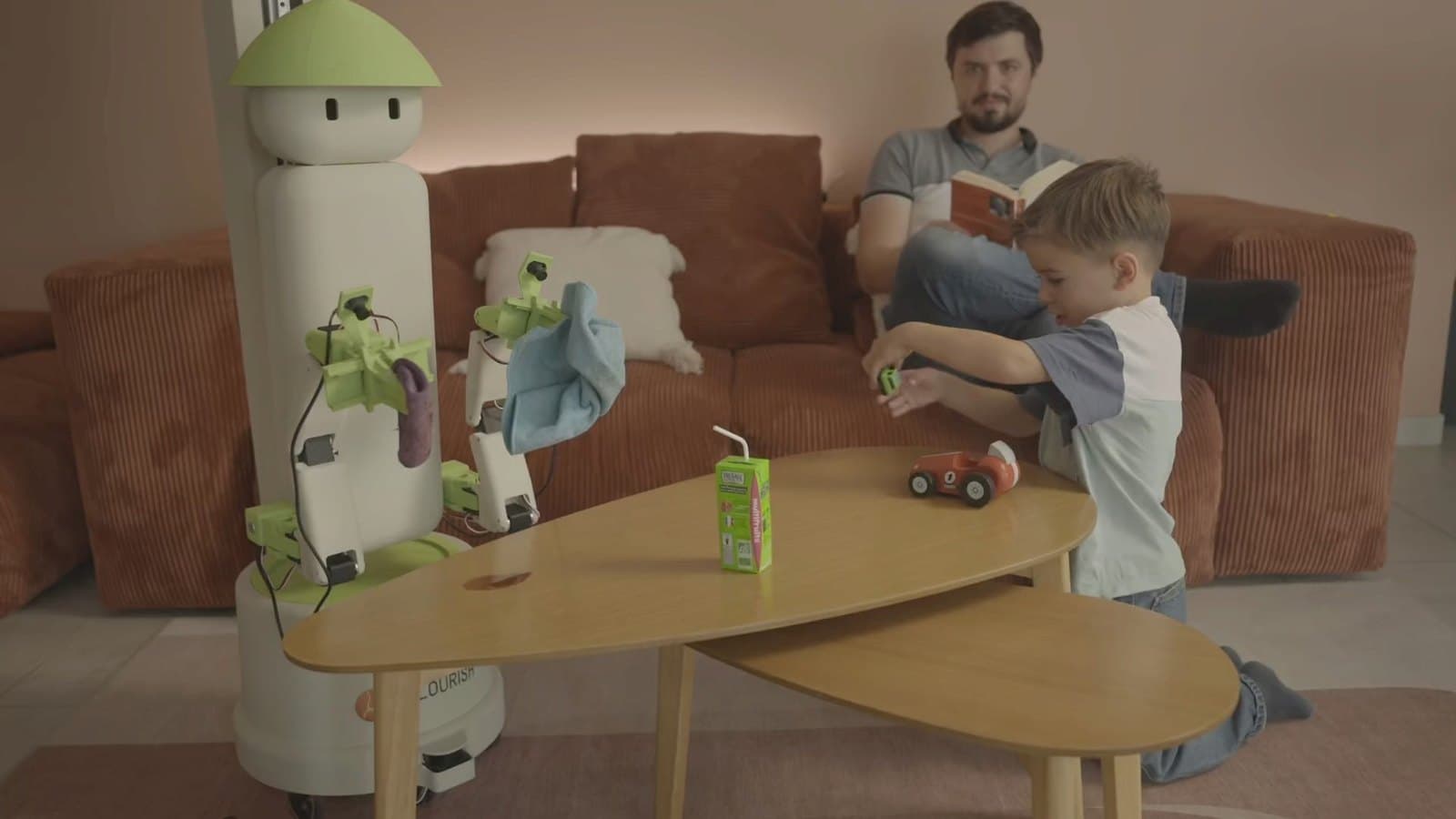
On September 29, The Robot Report covered Flourish One, a $3,555 wheeled home robot from Flourish, a San Francisco and Paris startup founded this year. Owners teach it a chore in under 30 minutes by moving their smartphone as if doing the task, and the robot’s two arms mirror the motion. Skill training happens on cloud GPUs, while the robot runs on a Raspberry Pi to keep costs down. The first batch is 50 units, with shipping hoped for before Christmas. It handles light jobs like tidying, taking out trash, and wiping a table.
Most humanoid and mobile manipulation startups chase factories and warehouses. Flourish is betting that homes are too different for one generalist model, so the robot is fine-tuned task by task, home by home. That makes the owner the data collector, a notable shift in who produces robot training data.
Whether a demo of under 30 minutes is enough for reliable behavior in a cluttered, ever-changing kitchen. Fifty units is a small test, but an honest one.
Teleoperation and demonstration data only teach what they capture well. Consistent demos, clear success and failure labels, and variety across homes are what turn a neat demo into a robot that works on a random Tuesday.
Tangent Robotics raises $4.5M to give robot hands a sense of touch
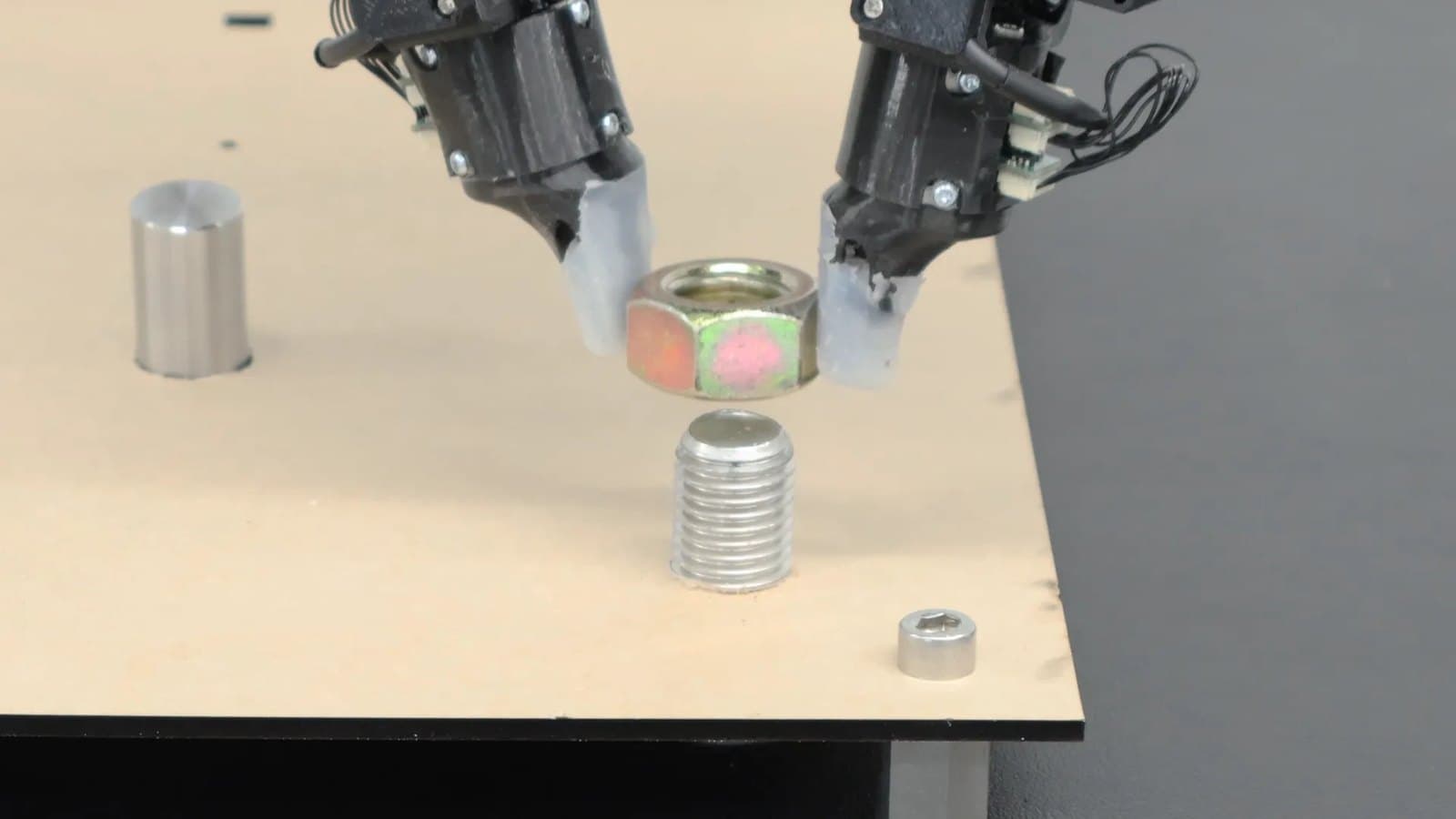
On September 30, Tangent Robotics announced a $4.5M pre-seed round led by Fly Ventures and Toyota Ventures. The New York company spun out of Columbia Engineering’s Robotic Manipulation and Mobility Lab. It is building robot hands, light-based touch sensors, and motor learning methods for fine manipulation, starting on the factory floor. Target tasks include connector mating, gasket seating, snap fitting, and gear meshing. The stated goal is to cut the time it takes to teach a robot a fine motor skill from days to, eventually, hours.
Vision-language-action models are good at understanding what a task is. Hands like these aim at the last mile, the delicate “how.” Touch remains less widely deployed than vision, yet it’s important for assembly work where robots need to detect contact, force, and fit.
Whether Tangent shows repeatable results on real production parts, not just lab benches. It’s pre-seed, so the proof is still ahead.
Touch adds another data stream that has to line up with video, motion, and task outcomes. The useful question isn’t simply whether a sensor captures contact, but whether the resulting data makes it possible to distinguish successful manipulation from near-misses. More sensors mean more signals to align and verify.
HD Hyundai tests autonomous welding and painting at its Samho shipyard
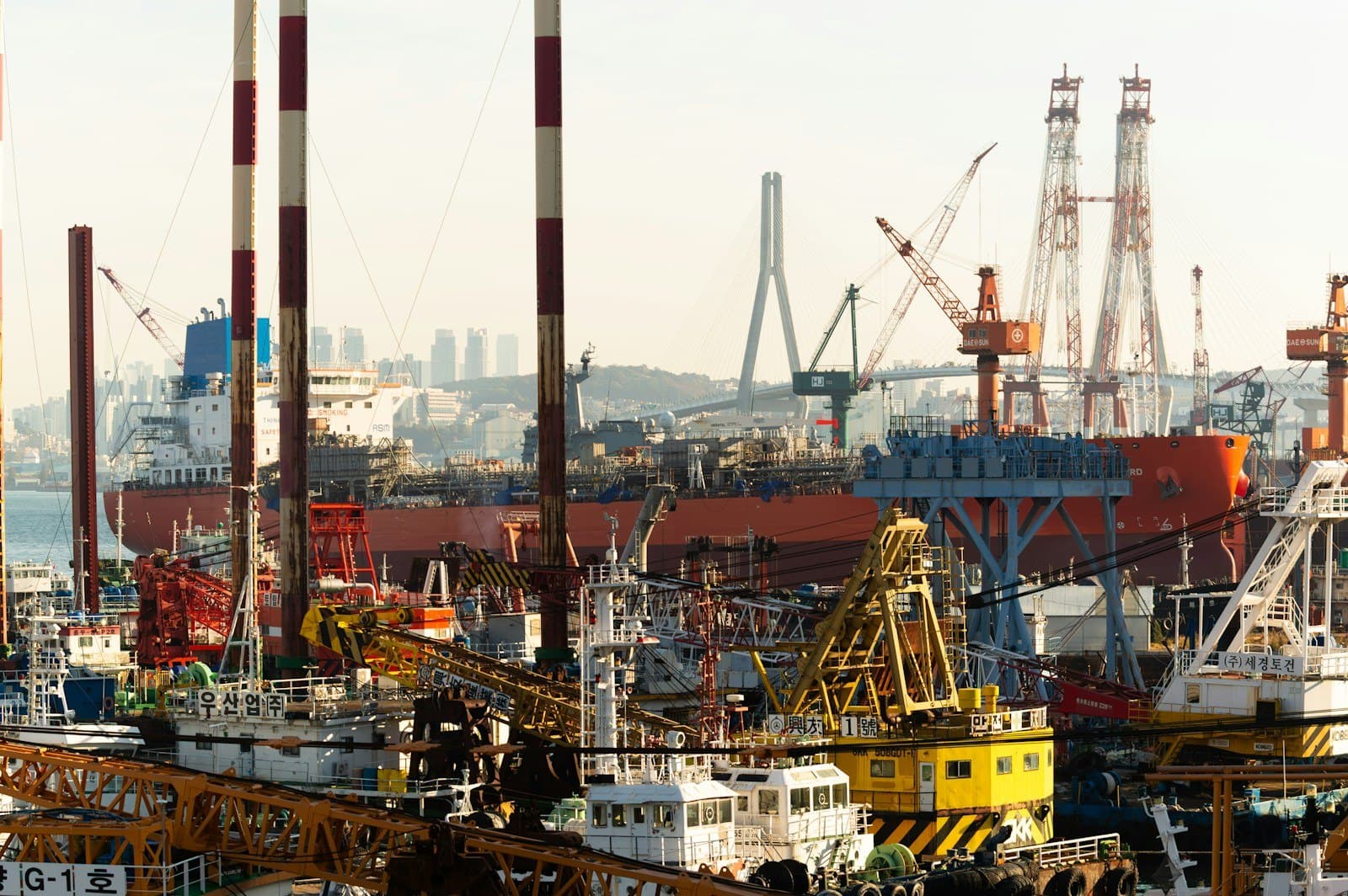
HD Hyundai is piloting physical AI at its Samho shipyard in Yeongam, South Korea. The demo is led by KT as part of the Ministry of Science and ICT’s AI network program. It pairs 5G and GPU computing so robots can process video and sensor data in real time. Two types of industrial robots will take on welding and painting work that is currently semi-automatic. Separately, an SK Telecom-led group is testing autonomous patrol and transport robots at SK Incheon Petrochem and KG Mobility. The ministry plans to validate the approach across shipbuilding, petrochemical, and automotive sites before widening it.
The interesting piece is where the compute lives. Networked or edge computing can give robots access to more processing power without putting all of it onboard, while keeping latency lower than a distant cloud connection. The test also shows governments and carriers treating physical AI as infrastructure.
Shipyards are huge, loud, and unstructured. The test is how well robots handle the variety of real welds and surfaces, and how the results compare with a controlled production line.
Welding and painting involve highly variable physical conditions, which makes demonstration data especially valuable. Capturing expert behavior from the worker’s point of view can preserve the sequence of actions, while labels tied to task outcomes help distinguish a clean result from a near-miss. The challenge is turning craft knowledge into data that a robot can actually learn from.
NASA’s Dexterous Robotics Team shows what a good robot testbed looks like
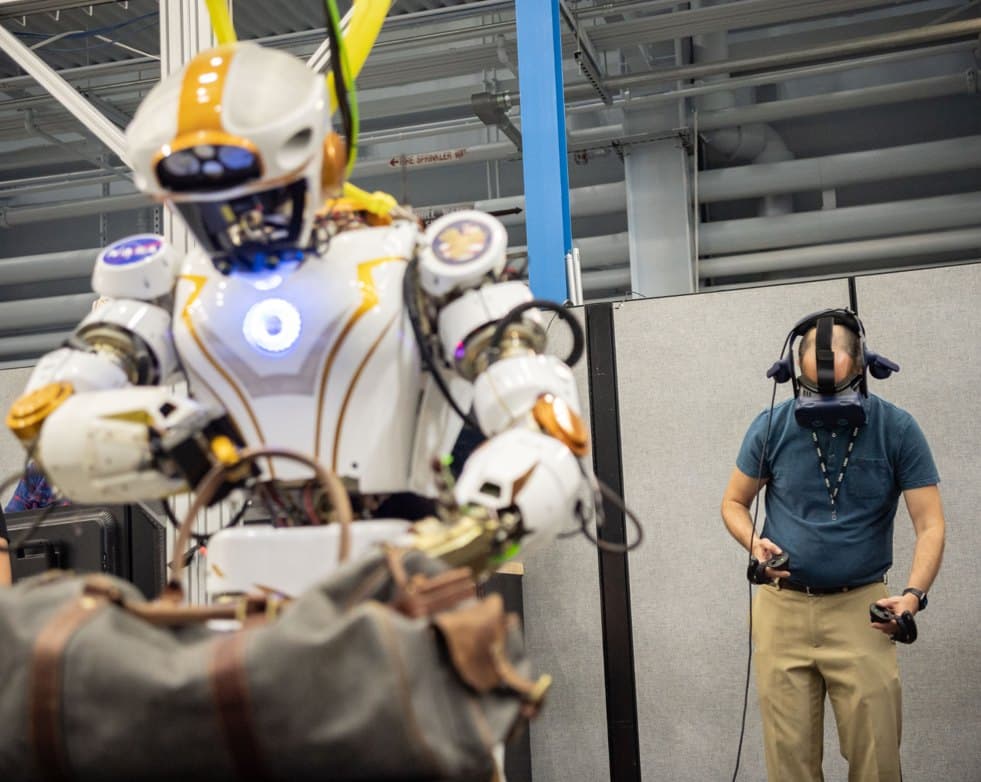
NASA has profiled the 16-person Dexterous Robotics Team at Johnson Space Center, which grew out of the Robonaut 2 and Valkyrie humanoid projects. A centerpiece is iMETRO, a testbed with open-source software and simulation assets, space vehicle and habitat mockups, and an outdoor rock yard. NASA programs and outside partners can test a whole robot or a single component. In one example, PickNik tested software that let a robot arm recognize a spacecraft hatch, turn the latch, and move cargo bags through it.
The team’s pitch is that showing partners what NASA actually needs reduces guesswork. Testing against realistic mockups and real tasks gives everyone a shared reference point. Team lead Shaun Azimi also stressed the goal is safer exploration, not replacing people.
NASA says it is working on a public challenge inviting ideas for Mars technology. It could widen who gets to build for these environments.
A robot is only as good as the way you test it. Realistic scenarios, repeatable scoring, and a clear definition of success help separate a promising demo from reliable robot behavior. That’s the core of robot policy evaluation.
DH-Robotics debuts a 13-DOF direct-drive hand at IROS 2026
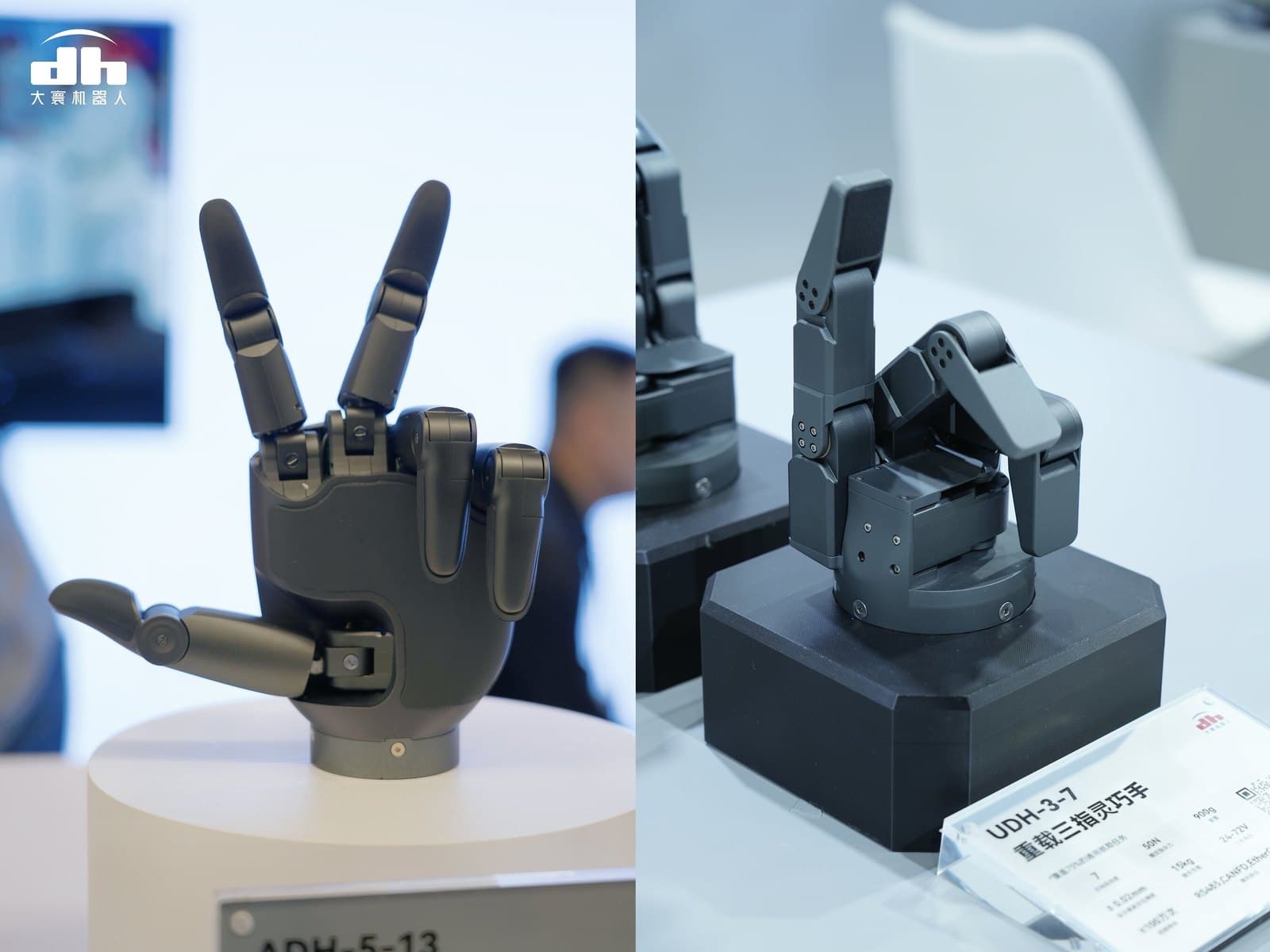
On September 30 at IROS 2026 in Pittsburgh, DH-Robotics debuted the ADH-5-13, a five-finger hand with 13 independently controllable joints. The company says it weighs 735 g, can handle loads of up to 20 kg once an object is grasped, and includes fingertip tactile sensing, with room for add-ons like electronic skin and force/torque sensors. Its direct-drive, backdrivable design is meant to support compliant contact, and parts can be swapped without taking the whole hand apart. DH-Robotics also showed its three-finger UDH-3-7, which supports ROS 2 and workflows in Isaac and MuJoCo.
Hands are becoming a platform choice for embodied AI research and teleoperation, and this one is built with that in mind. It’s the hardware-side answer to the same dexterity problem Tangent is attacking with software and touch.
Independent results. A spec sheet says little about how a hand performs on real tasks across thousands of cycles.
More joints and more touch sensors allow richer data per grasp, but they also increase the number of signals that need to be captured and synchronized. A 13-DOF hand can produce much more complex demonstrations than a two-finger gripper, which makes consistent capture, synchronization, and labeling even more important.

Cindy writes about Physical AI, robotics, and the human data that teaches models to perceive and act, for Labelix.ai, an independent data foundry for robotics and multimodal AI.
The Data Brief
Get the Radar in your inbox, one sharp read a week on Physical AI and the data behind it.