Agriculture data annotation is the labeling of farm imagery, from drones, tractors, ground robots and greenhouse cameras, so that AI models can tell crops from weeds, ripe fruit from unripe, and healthy tissue from stressed. It is what turns a camera on a weeding robot or a scouting drone into a system that can act. The images do not need to be many so much as representative: the crop, the season, the light and the clutter the model will actually meet in the field.
A farmer can spot a weed between rows almost instantly. An agricultural robot needs to learn that distinction from data.
That is where agriculture data annotation comes in. As farms adopt drones, computer vision, autonomous machinery, and agricultural robots, AI models need labeled examples of what they are expected to see: crops, weeds, fruit, soil, plant damage, terrain, and more.
The goal is not simply to build a large collection of agricultural images. The data must represent the conditions in which an AI system will actually operate. For agricultural AI startups, robotics companies, and precision farming providers, high-quality annotation is an important part of developing reliable computer vision systems.
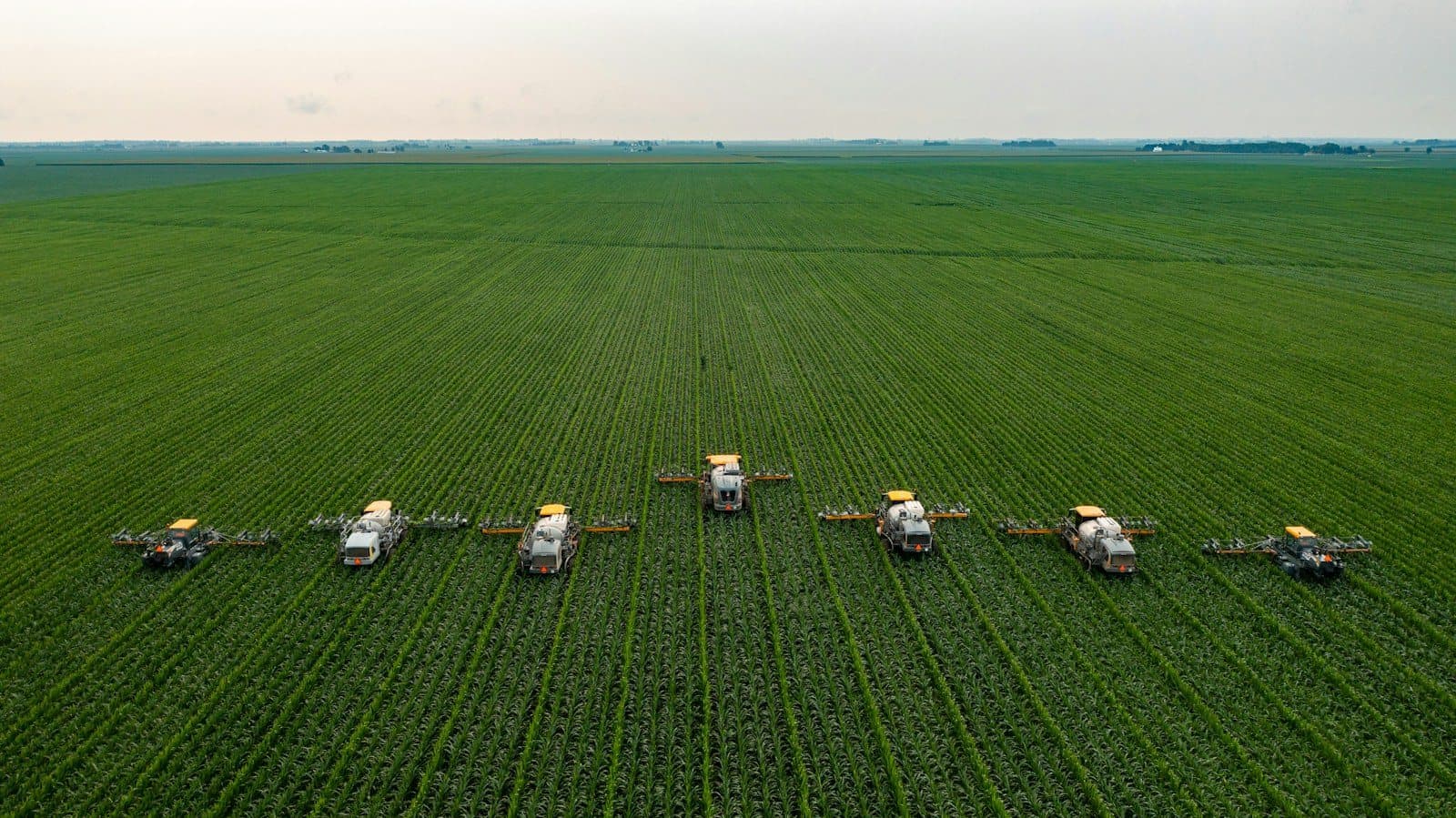
What Is Agriculture Data Annotation?
Agriculture data annotation is the process of labeling agricultural images, video, and related visual data so AI models can recognize objects, plants, conditions, and environments relevant to farming.
The data may come from drones, tractors, ground robots, greenhouse cameras, field cameras, or autonomous agricultural machinery. Annotators then label the imagery according to the requirements of a specific AI application.
Common agricultural labels include:
- Crops and individual plants
- Weeds
- Fruits and vegetables
- Healthy and affected plant tissue
- Soil and terrain
- Crop rows
- Agricultural equipment
The basic process is straightforward. Cameras capture real-world farming conditions. Images are reviewed and labeled. Those annotations become training, validation, or evaluation data for computer vision models.
The challenge is that agricultural environments constantly change. A model trained on imagery from one crop, region, or season may encounter very different visual conditions elsewhere.
Labelix.ai’s agriculture AI data annotation solution covers crop and plant classification, weed-versus-crop segmentation, fruit and yield counting, disease and stress detection, and row and terrain segmentation.
It is also important to distinguish annotation from autonomy. Labeled data helps an AI model learn visual perception, but an autonomous agricultural robot also requires navigation, planning, sensing, manipulation, and control systems.
Where Is Image Annotation Used In Agriculture?
Agriculture image annotation supports a growing range of farming and precision agriculture applications. The labels depend on what an AI system needs to detect, classify, count, or understand.
Crop and Weed Identification
Weed detection is one of the clearest applications of image annotation for agriculture.
Young weeds can look similar to crops, particularly when plants are small and densely packed. AI models therefore need examples that distinguish crops, weeds, soil, and other vegetation.
For a precision-weeding robot, cameras capture field imagery and a computer vision model identifies plants. The robotic system can then use that information to determine where an intervention should occur.
For instance, a USDA Agricultural Research Service project is refining computer vision and artificial intelligence tools to estimate and map weed density and biomass in US soybean production.
The annotation task goes beyond simply drawing boxes around plants. Labels may need to account for weed categories, crop types, growth stages, and field conditions.
Plant Health and Disease Detection
Agricultural AI can also analyze visual signs associated with plant stress, disease, or pest damage.
A dataset might contain healthy leaves alongside images showing discoloration, lesions, deformation, or other visible symptoms. These annotations can help train models to identify areas that require further inspection.
There is an important limitation: visual symptoms do not always reveal the underlying cause. Similar symptoms can result from different diseases, pests, nutrient deficiencies, or environmental stress.
Computer vision can therefore serve as a detection or decision-support layer rather than a standalone agronomic diagnosis.
Fruit Detection and Robotic Harvesting
Fruit harvesting shows why detailed agricultural image datasets matter.
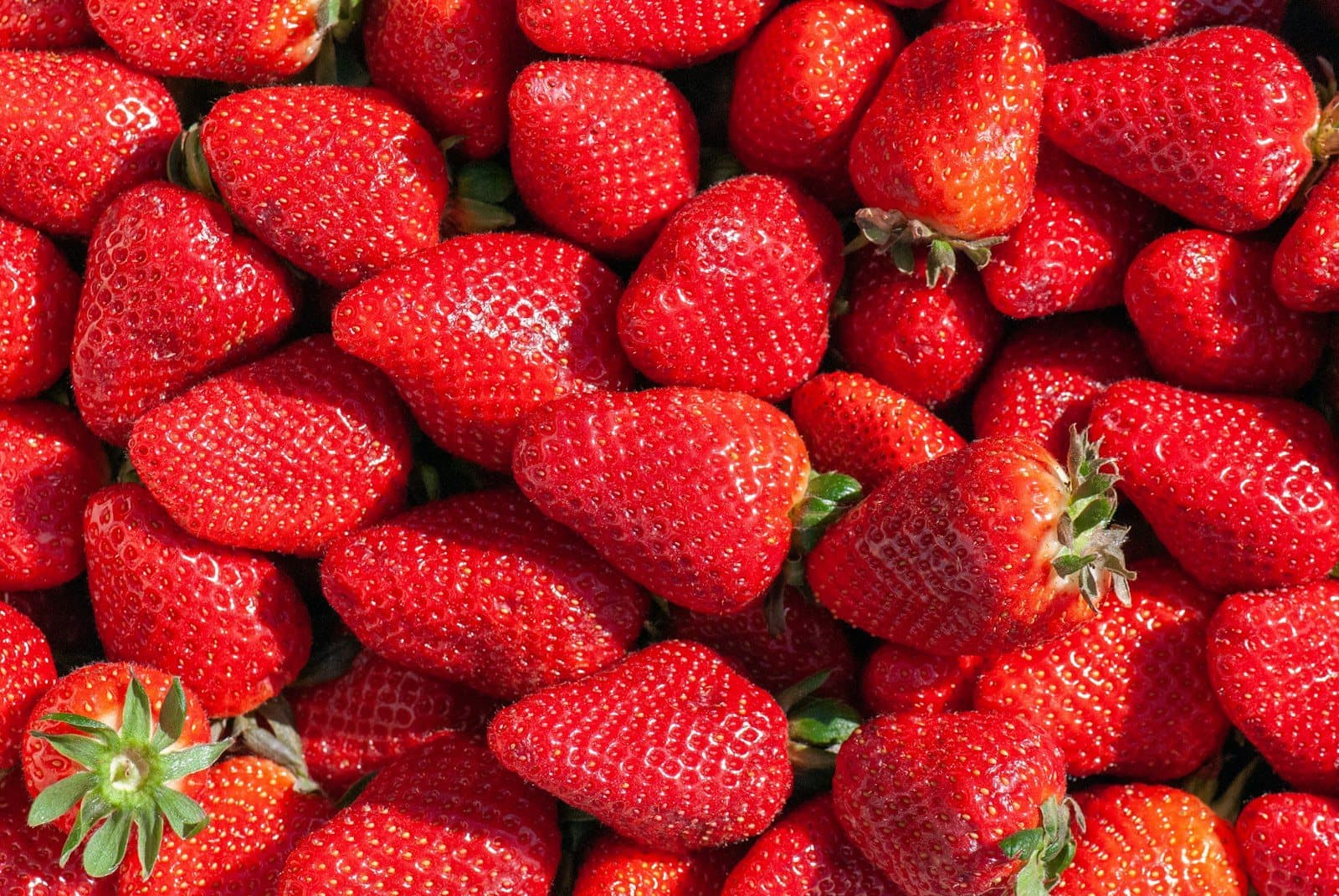
Consider a strawberry harvesting robot. Its vision system may need to identify ripe fruit, distinguish it from unripe berries, locate the fruit, and determine how to approach it without causing damage.
The problem becomes harder when leaves partially hide strawberries or several berries overlap.
A 2026 study of picking-point localization for strawberry harvesting robots (Frontiers in Plant Science) trained its vision system on an annotated set of 1,652 images and reported that “severe occlusion between targets often leads to missed detections,” with dense clusters blurring which stem belongs to which fruit.
This means training data should include difficult examples rather than only clear, unobstructed fruit.
Crop Monitoring and Yield Estimation
Agricultural image annotation can also support field-scale crop monitoring.
Drone and ground imagery can be labeled for plant counts, crop coverage, field boundaries, rows, weeds, and other visible features. AI can then automate parts of crop scouting and monitoring.
The Philippine Department of Agriculture, for example, is piloting AI-powered drones on banana farms in the Davao region to count plants, monitor crop growth, forecast production, and detect early signs of disease.
It is useful to distinguish visible-object detection from final yield prediction. Counting plants or fruit is one task. Predicting harvest output may also require weather, historical yield, crop condition, management practices, and other information.
What Types of Image Annotation Are Used In Agriculture?
Different agricultural AI applications require different annotation techniques. Bounding boxes place rectangles around objects such as strawberries, plants, livestock, or equipment. They are commonly used for object detection and counting.
Semantic segmentation assigns a class to individual pixels. A field image could classify pixels as crop, weed, soil, or other vegetation. This is useful when understanding the area occupied by different classes matters.
Instance segmentation distinguishes individual objects within the same class. For example, it can separate several overlapping strawberries instead of treating them as one object.
Other projects may use polygons, classification labels, or combinations of techniques.
Labelix.ai supports crop classification, segmentation, fruit and yield counting, disease and stress detection, and row and terrain segmentation for agricultural AI applications.
Why Is Agricultural Image Annotation Particularly Challenging?
Agricultural environments are constantly changing. Sunlight varies throughout the day. Shadows move across plants. Rain can affect visibility. Crops grow and change shape. Soil conditions vary between fields. Different seasons can produce very different imagery.
Natural variation creates another challenge.
Two plants from the same crop can have different sizes, colors, orientations, and growth stages. Weeds can appear at multiple stages of development. Fruit may be partially hidden by leaves or branches.
Occlusion is particularly important for agricultural robotics. A strawberry robot trained mainly on clear images of ripe fruit may struggle when berries are partially hidden by foliage.
Training data therefore needs to represent difficult field conditions, not just ideal images.
Agricultural labeling can also require specialized knowledge. Some projects involve plant species, crop stages, visible disease symptoms, or distinctions between weeds and crops.
For Labelix.ai founder Rashid Arif, agricultural labeling should be designed around the crop, task, and operating environment. It should not be treated as generic image labeling.
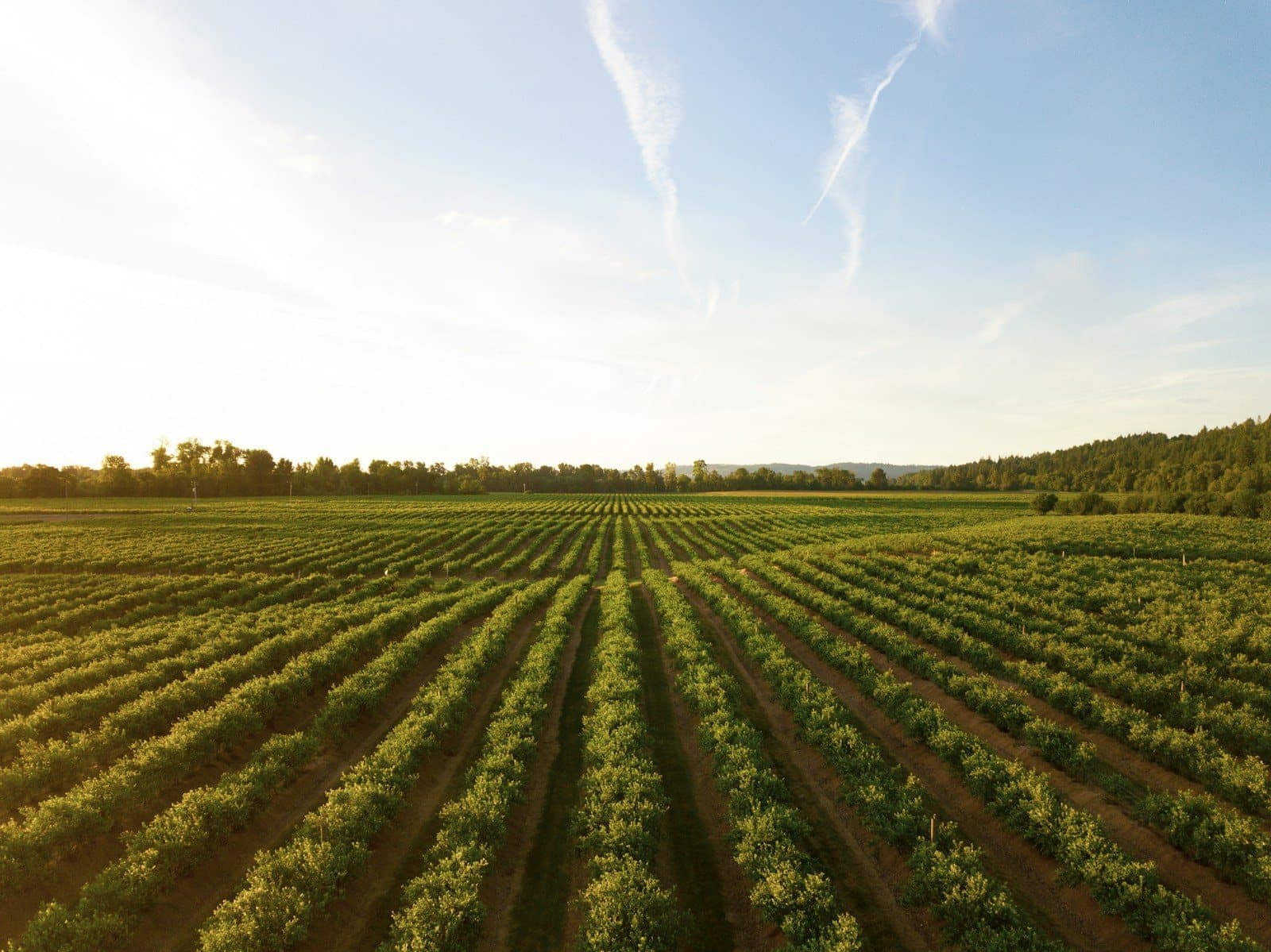
How Does Agriculture Data Annotation Support Physical AI Robotics?
Traditional computer vision helps an AI system understand what appears in an image. Physical AI takes that perception into the real world, where a machine must use what it sees to move and interact with its environment.
For agricultural robotics, the relationship can be illustrated with a simple harvesting workflow:
- Cameras capture images of crops.
- A vision model trained on annotated images identifies ripe fruit.
- The robot combines visual information with depth, navigation, and other sensor data to plan an approach.
- Its robotic arm moves toward the target and attempts the harvest.
Annotation supports the perception stage, but it does not solve the entire robotics problem.
Agricultural robots may also use depth cameras, GPS, lidar, force sensors, joint-position data, and other inputs. These systems combine perception with planning and control to interact with physical environments.
What Should Agricultural AI Companies Look For In An Annotation Partner?
Choosing an annotation partner for agricultural AI requires more than checking whether a provider can draw boxes or polygons.
Look for:
- Agricultural imagery experience: Experience with field, greenhouse, drone, rover, and in-row imagery.
- Task-specific labeling: Support for crop classification, weed segmentation, fruit counting, disease detection, and terrain segmentation.
- Consistent guidelines: Clear definitions for crops, weeds, fruit, symptoms, and other categories.
- Quality assurance: Processes for reviewing ambiguous images and difficult edge cases.
- Seasonal adaptability: Workflows that can accommodate new crops, regions, seasons, and visual conditions.
- Data security: Appropriate handling of proprietary field imagery and agricultural datasets.
These requirements matter because agricultural datasets can change significantly between projects. A model may need fresh labeled data when it encounters a different crop variety, growing region, camera setup, or season.
Building Better Agricultural AI Starts With Better Data
AI in agriculture is moving beyond analysis on a screen toward systems that interact directly with crops and fields.
Drones can capture field imagery. Computer vision can identify weeds and monitor crop conditions. AI models can count plants and fruit. Agricultural robots can use visual perception to navigate rows, target weeds, and attempt selective harvesting.
Each application depends on data that accurately represents the environment.
That makes agriculture data annotation an important part of the agricultural AI development stack. The objective is not simply to label more images. It is to create reliable, task-specific ground truth that helps AI models understand the conditions they will encounter in real farming environments.
Building an agricultural AI or robotics solution? Contact Labelix.ai to request a pilot.
Have field imagery that needs labeling?
Send a representative sample: one crop, one season, your hardest frames. A dedicated Labelix.ai pod labels it against your guideline and shows you how the edge cases were decided.
FAQs
What is agriculture data annotation?
Agriculture data annotation labels crops, weeds, fruit, plant symptoms, soil, and other farming objects in images or video so AI models can recognize and analyze them.
How is image annotation used in agriculture?
It supports crop monitoring, weed detection, plant-health analysis, fruit counting, yield estimation, and agricultural robots that use computer vision to perceive their surroundings.
What images train agricultural AI?
Agricultural AI can use drone, satellite, greenhouse, ground-level, tractor, rover, and robot-camera imagery. The best datasets reflect the real conditions where the AI will operate.
Why do agricultural robots need annotated images?
Annotated images help train vision models to recognize crops, weeds, fruit, terrain, and other targets. Robots also require navigation, depth sensing, planning, and control systems.
How is agricultural image annotation different from general annotation?
It must account for crops, growth stages, seasons, lighting, occlusion, soil, and visually similar plants. Many projects also require specialized agricultural knowledge and consistent labeling.

Cindy writes about Physical AI, robotics, and the human data that teaches models to perceive and act, for Labelix.ai, an independent data foundry for robotics and multimodal AI.
Get the next one first
One sharp read a month on Physical AI and the data behind it.