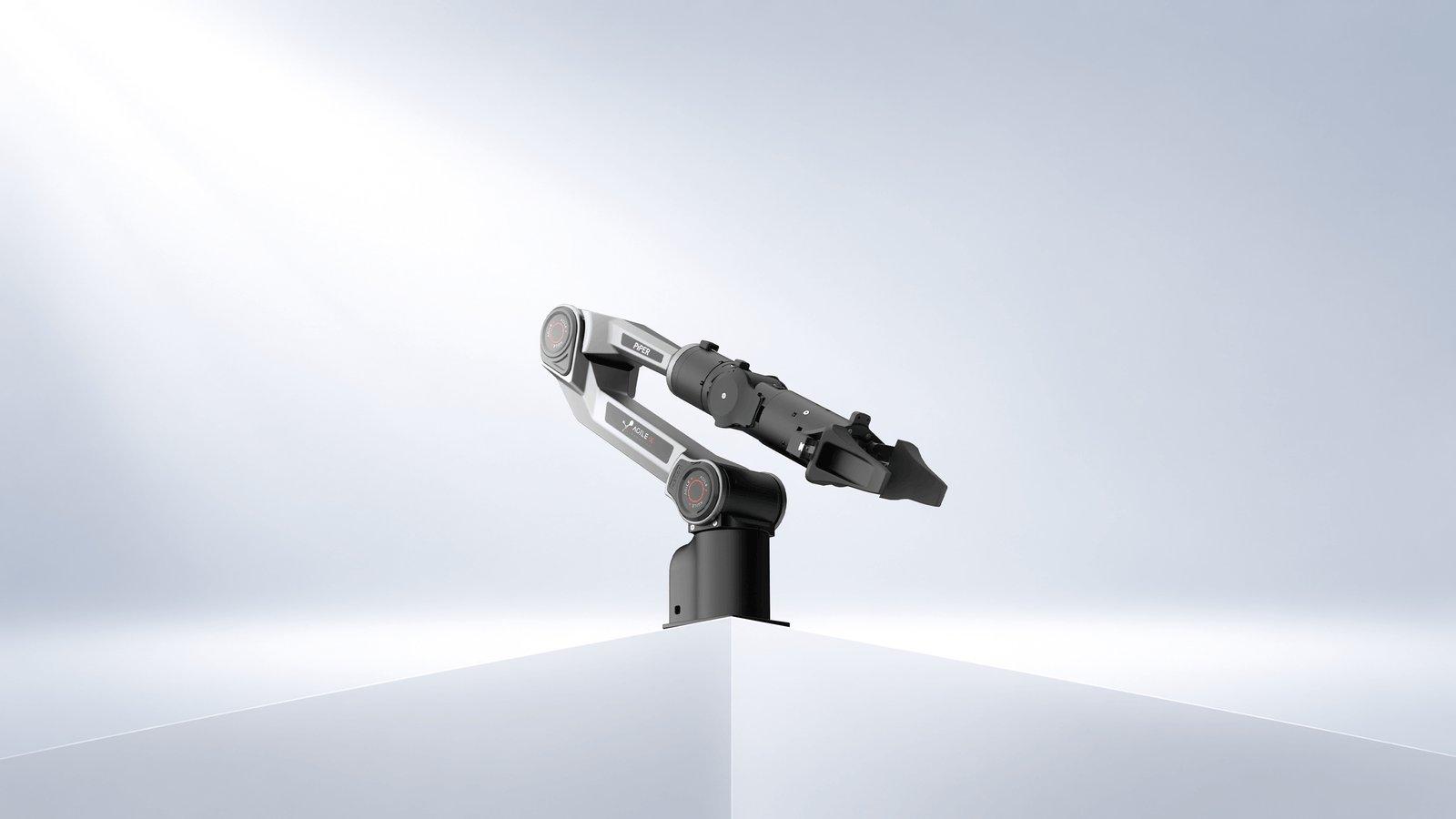
AgileX Robotics’ PiPER is a desktop robot arm with a manufacturer-listed payload of 1.5 kg. Developers can teach movements by hand, replay trajectories, or program it through Python and ROS.
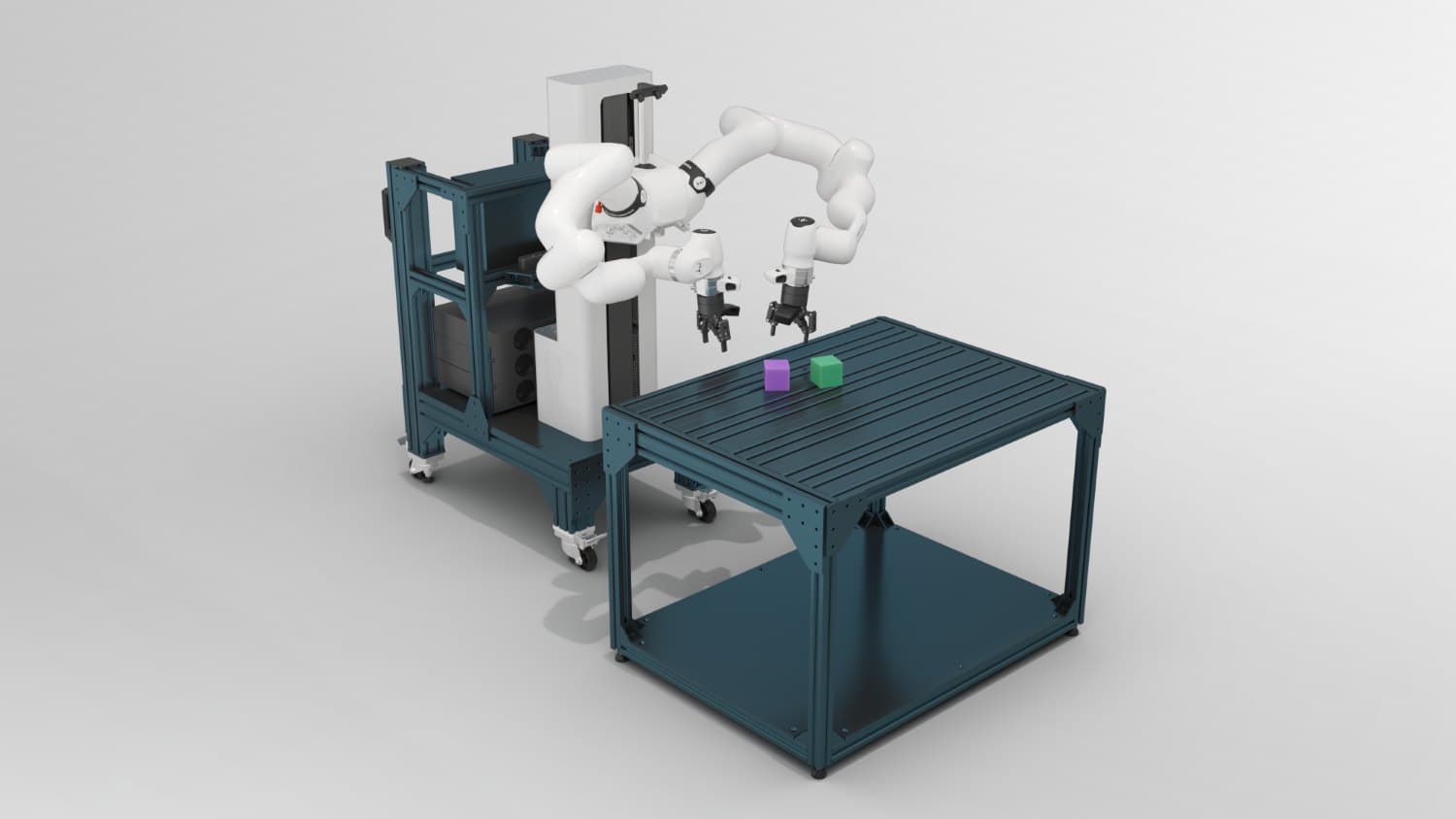
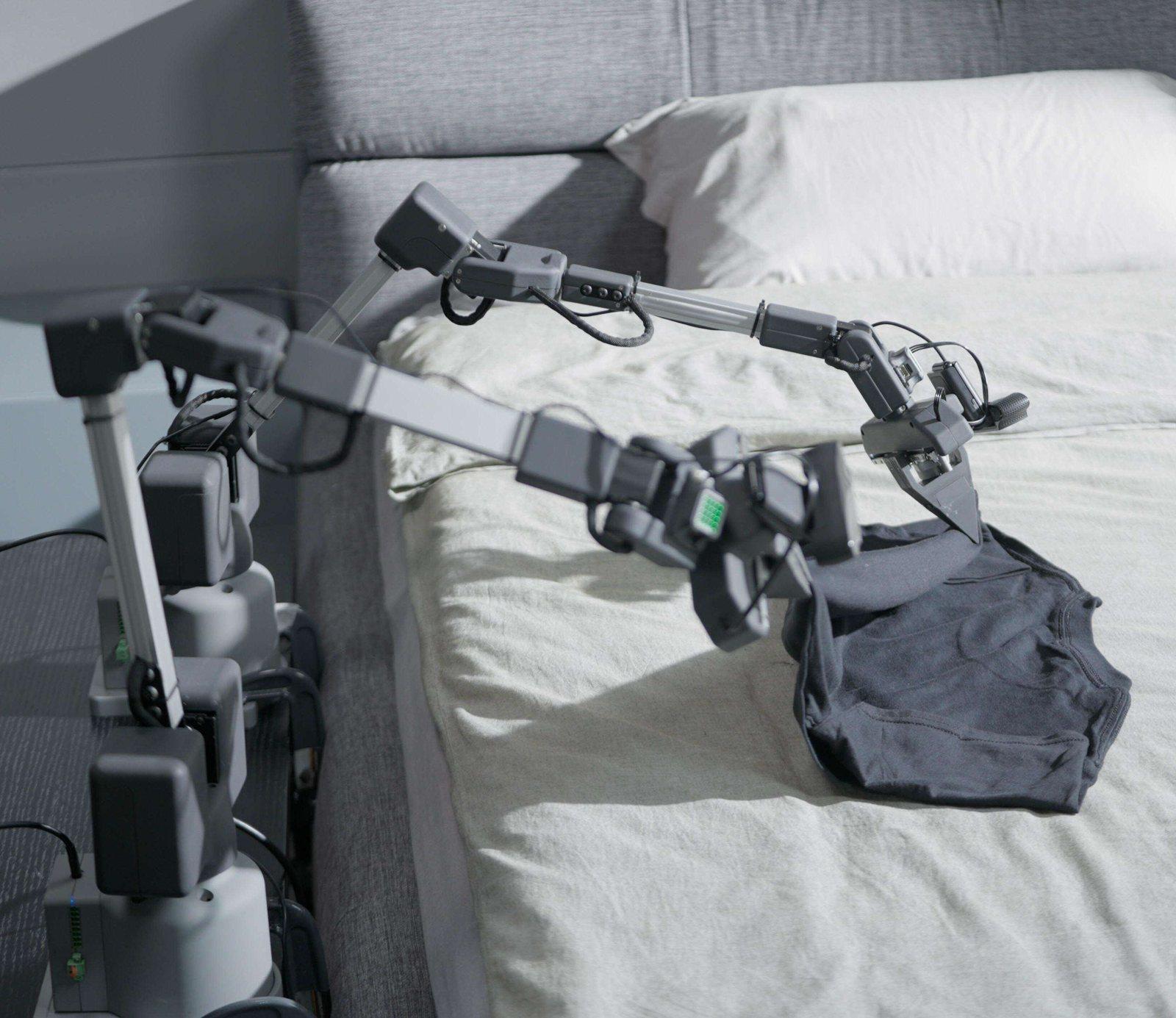
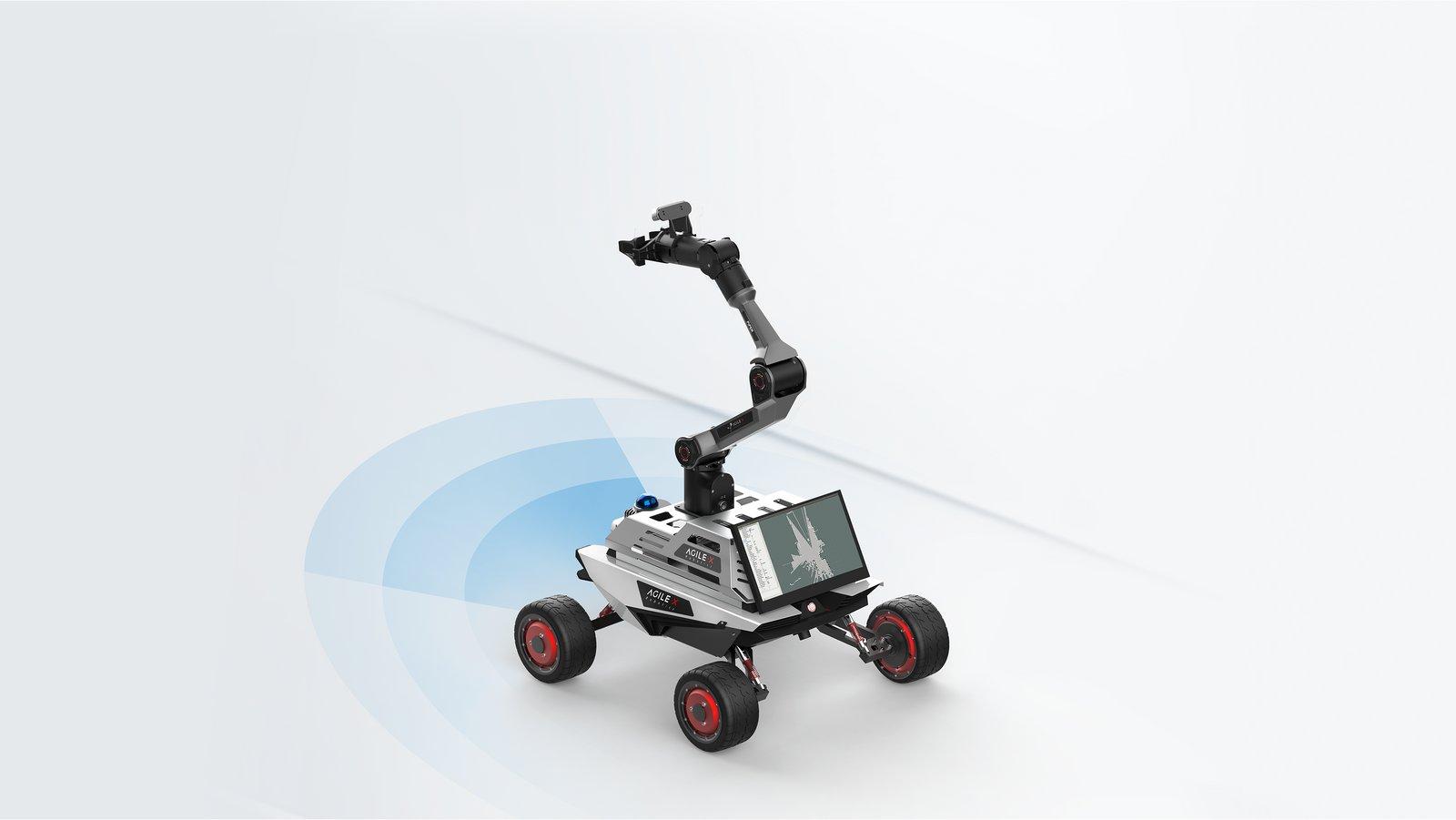
AgileX also incorporates PiPER into mobile manipulation and multi-arm data collection systems.
That gives the arm a role beyond repeating movements on a desk. It provides hardware for teams developing grasping applications, collecting demonstrations, and testing learned control, with integration work required for each setup.
AgileX Robotics at a Glance
| AgileX Robotics at a glance | |
|---|---|
| Company | AgileX Robotics, founded in Dongguan, China, in 2016 |
| Product focus | Mobile platforms, robotic arms, and robot data collection systems |
| Featured robot | PiPER, a desktop arm for manipulation research, education, and prototyping |
| Control options | Hand-guided teaching, trajectory replay, PC control, and programming |
| Developer resources | Python SDKs, ROS 1 and ROS 2 support, and URDF models for Gazebo and Isaac Sim |
| Related systems | SCOUT MINI COBOT combines PiPER with a mobile base; COBOT MAGIC supports bimanual teleoperation |
| Purchase route | Contact AgileX sales or an authorized distributor for pricing and availability |
Company Snapshot
AgileX Robotics was founded in Dongguan, China, in 2016, initially focusing on mobile robotics. Its early products included programmable bases for developers building their own robotic systems. The company later expanded into manipulation, teleoperation, and data collection.
PiPER fits that broader direction. AgileX offers the arm independently and incorporates it into larger research systems.
- SCOUT MINI COBOT pairs it with a mobile base and onboard computing.
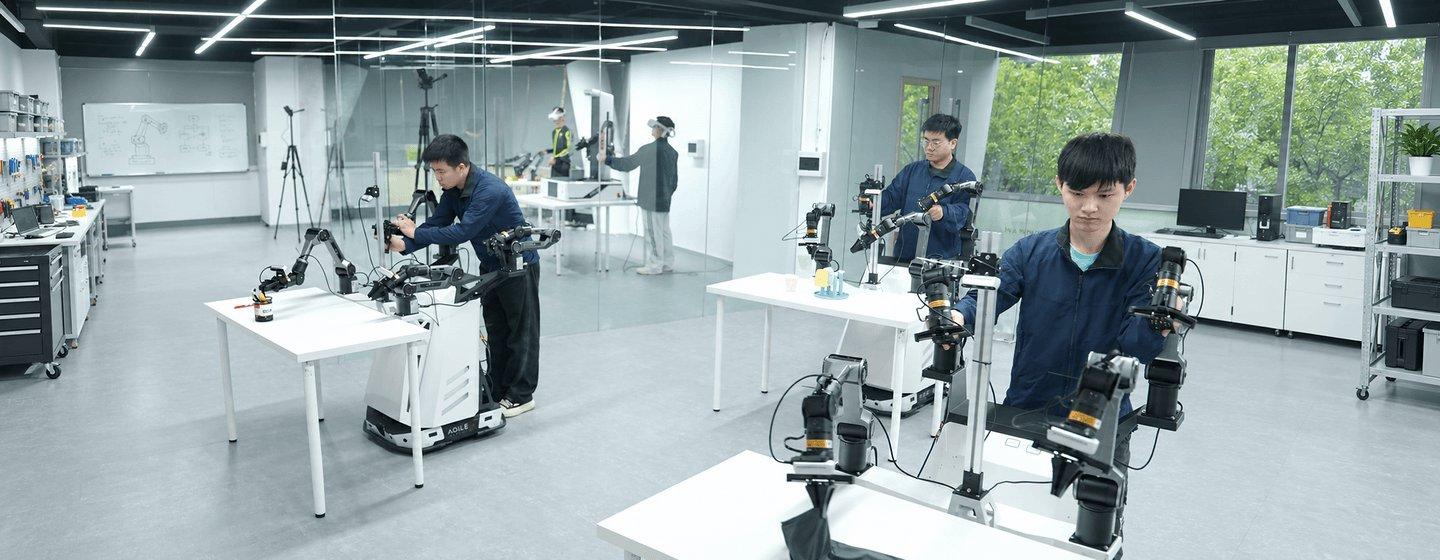
- COBOT MAGIC uses PiPER arms in a leader-follower setup for bimanual teleoperation and demonstration collection.
The Technology: PiPER
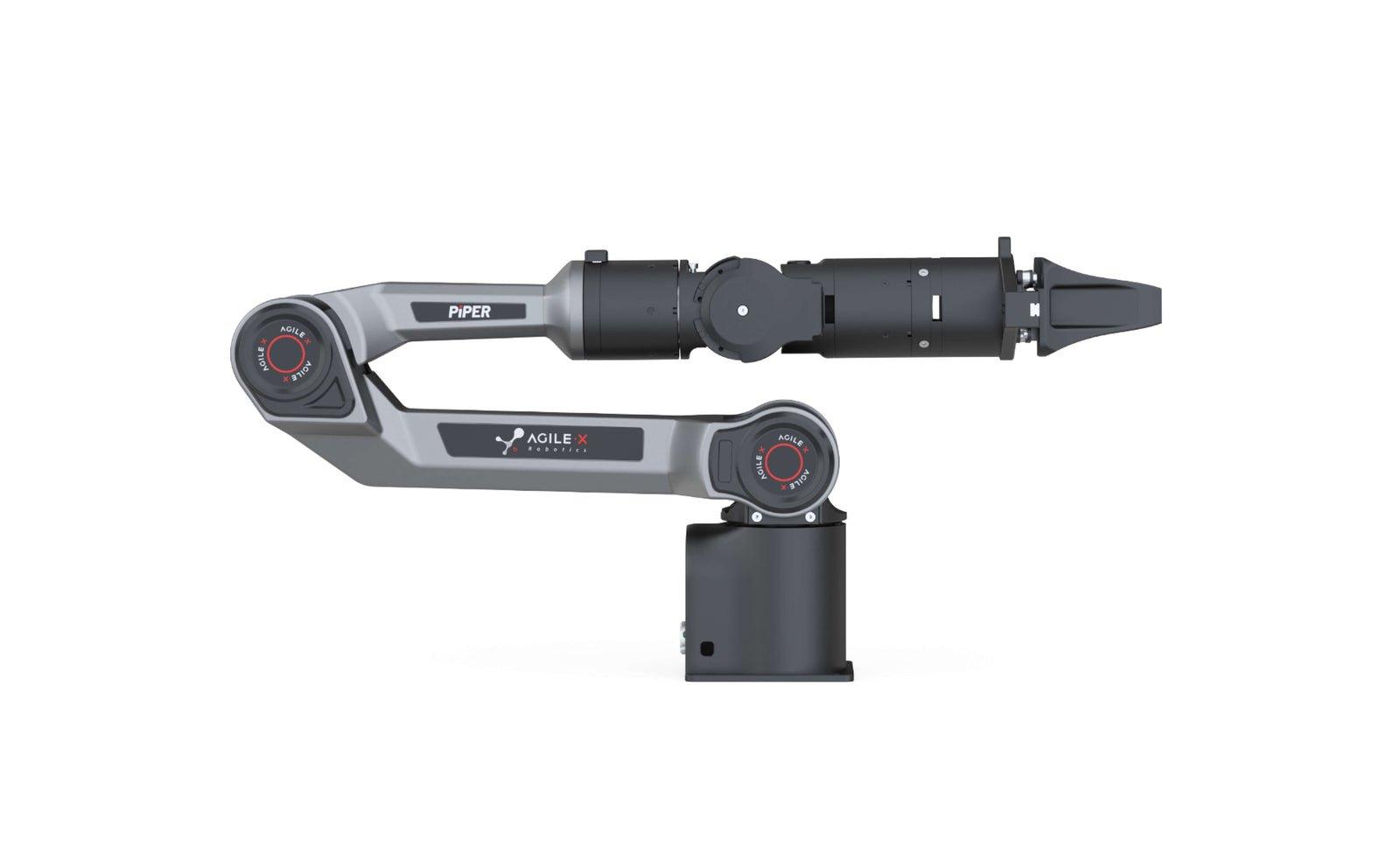
PiPER combines an aluminum alloy frame, a plastic housing, and an integrated controller. Its wrist flange accepts tools, including an optional two-finger gripper. The tool choice determines which objects the arm can grasp and how it interacts with them.
Its development options include:
- Hand-guided teaching: Move the arm manually to record a trajectory, then replay it. The user manual states that each new recording erases the previous trajectory in this mode, and that a recording can last up to three minutes. Teams collecting demonstrations must account for that limitation.
- Programmed control: AgileX’s pyAgxArm SDK provides motion commands, status readings, and end-effector control over CAN, the arm’s communication interface. Developers can incorporate these functions into their applications.
- Learned control: Connecting an AI model requires adapting camera inputs, mapping actions and calibrating the setup. PiPER supplies the physical arm and control interfaces. Developers must integrate the model with their hardware configuration.
- Physical setup: Users must securely mount the arm, verify connections, calibrate joint zero positions and assess workspace safety.
PiPER does not include automatic obstacle-avoidance sensors.
What you’ll see: AgileX’s quick-start film: what comes in the box, mounting the arm, fitting the end effector, connecting the CAN cable and power, and switching to drag teaching mode.
Video: AgileX Robotics, 2026. Plays from YouTube.
How PiPER’s Design Affects Grasping
PiPER’s joint configuration affects how it approaches an object. The RoboTwin 2.0 paper illustrates this in its simulation framework, which supports PiPER alongside other robot arms.
When grasping a can, the authors note, a Franka arm typically favors a top-down approach, while PiPER is better suited to side grasps. As they put it:
“A task successfully completed by Franka using a top-down grasp may require a side approach when executed with Piper.”Tianxing Chen and colleagues, RoboTwin 2.0, arXiv, June 2025
For developers, this means a grasp designed for another arm may need adjustment to suit PiPER’s movement constraints.
The object’s position, surrounding space, and available approach angles all matter when planning the movement.
PiPER Robot Facts and How to Buy
| Specification | Standard PiPER |
|---|---|
| Degrees of freedom | 6 |
| Manufacturer-listed arm weight | 4.2 kg |
| Rated payload | 1.5 kg |
| Reach | 626 mm |
| Repeatability | ±0.1 mm |
| Power input | DC 24 V |
| Communication | CAN |
| Gripper | Optional two-finger gripper |
| Current official price | Not published; contact sales |
How to buy: Contact sales@agilex.ai or an authorized distributor to confirm pricing, delivery, and included accessories.
PiPER-X differs from the standard model: PiPER-X has a spherical wrist, a listed reach of 669 mm, and an arm weight of 4.5 kg. Both models have a rated payload of 1.5 kg. The series also lists PiPER-L, with a 750 mm reach, and PiPER-H, with a 2 kg payload.
Business Model and Strategy
AgileX combines in-house manufacturing with an authorized distributor network.
Its company page describes standardized hardware and OEM services. This positions the business to supply other companies developing robotic applications.
For overseas buyers, the commercial relationship extends beyond delivery. AgileX’s after-sales service page describes the following:
- Technical assistance
- Eligible warranty repairs
- Paid repairs
- Spare-part support
Customers submit product details and diagnostic information before the company determines the appropriate response. Depending on the assessment, engineers can provide remote support or arrange a return for repair.
We think this is a more useful basis for judging the purchase than the arm’s price alone.
For a laboratory running scheduled experiments, a faulty component can interrupt data collection and consume engineering time. Access to replacement parts and a clear repair process therefore deserve attention alongside hardware specifications.
AgileX describes a repair process, but the page does not give a fixed turnaround time. It says estimated costs and timelines will be confirmed before paid repairs proceed.
We would ask the following:
- Who handles return shipping
- Where repairs take place
- Which spare parts are available locally
The Data Challenge
A completed movement does not necessarily mean a completed task. For teams collecting PiPER recordings, the challenge is defining what happened between the first approach and final release.
Consider a hypothetical experiment where PiPER places a small part into a tray. The arm reaches the destination, but the part lands outside its assigned compartment. The movement finished, but the placement failed.
A useful review record would distinguish:
- Task steps: When the arm approached, grasped, lifted, transported, and released the part.
- Outcome: Whether the part reached the correct compartment and remained there.
- Recovery: Whether the robot retried after a missed grasp or dropped object.
- Intervention: Whether an operator repositioned the part, guided the arm, or stopped execution.
- Uncertainty: Whether the camera view provided enough evidence to judge the attempt.
These are suggested criteria for this example, rather than AgileX’s published evaluation rules.
Our guide to finding robot failures in video explains how teams can review attempts against task-specific definitions.
The distinction between an event and its cause is also important. Footage might show a part slipping without establishing whether grip force, contact position, or another factor caused it. Engineers may need robot logs or additional views to investigate.
For us, useful annotation preserves those distinctions. Record the failed attempt even if a retry succeeds.
If the available evidence cannot establish the outcome, mark it as uncertain. This gives researchers a clearer basis for selecting demonstrations and comparing policy versions.
Labelix.ai’s Take
We would shortlist PiPER for a lab that already has a robotics developer and a specific manipulation experiment in mind. Its documented controls give that developer a starting point. A buyer expecting to unpack the arm and immediately run unfamiliar tasks has more work ahead.
What interests us most is how PiPER performs through repeated experiments. Can another team reproduce a published setup? How often does it need recalibration? What happens after weeks of use?
We would look for customer reports covering those questions before recommending it for a demanding research schedule.
For teams already collecting recordings, Labelix.ai can help annotate task steps, outcomes, and failure cases against agreed project criteria. Share a representative sample through our contact page to discuss the review work your experiment needs.
Have robot trials that need a second look?
Send a few recorded trials: one task, your hardest failures and near misses. A dedicated Labelix.ai team tags each failure cause, the step where it began, and whether the robot recovered, against criteria agreed with your engineers.
FAQs
How much does PiPER cost?
AgileX's official product page does not publish a price. Contact AgileX sales or an authorized distributor for a current quote and configuration details.
What can you use PiPER for?
PiPER supports robotics education, manipulation research, and prototyping. With suitable tools and software, applications include grasping, sorting, assembly experiments, and demonstration collection.
How do you program PiPER?
Developers can use AgileX's Python SDKs or ROS 1 and ROS 2 packages. PiPER also supports hand-guided trajectory recording and replay, plus PC-based control.
Does PiPER come with a gripper?
The official manual lists the two-finger gripper as optional. Confirm the gripper, mounting equipment, and other included accessories when requesting a quote.
What is the difference between PiPER and PiPER-X?
PiPER-X has a spherical wrist and a longer reach: 669 mm versus PiPER's 626 mm. Its listed weight is 4.5 kg versus 4.2 kg. Both have a rated payload of 1.5 kg.

Stephanie writes about robotics, agriculture AI, and the training data behind them, for Labelix.ai, an independent data foundry for robotics and multimodal AI.
Get the next one first
One sharp read a month on Physical AI and the data behind it.