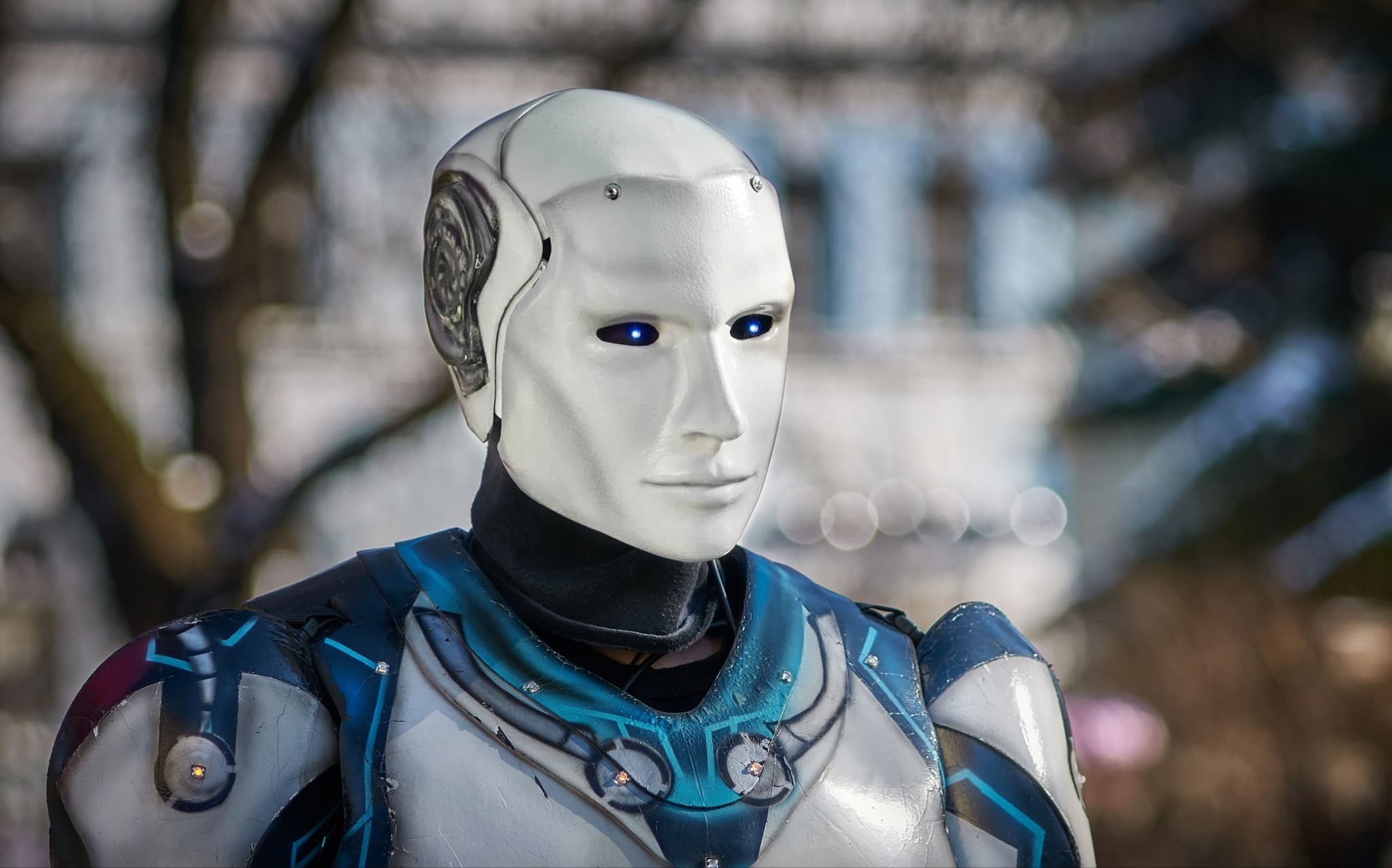
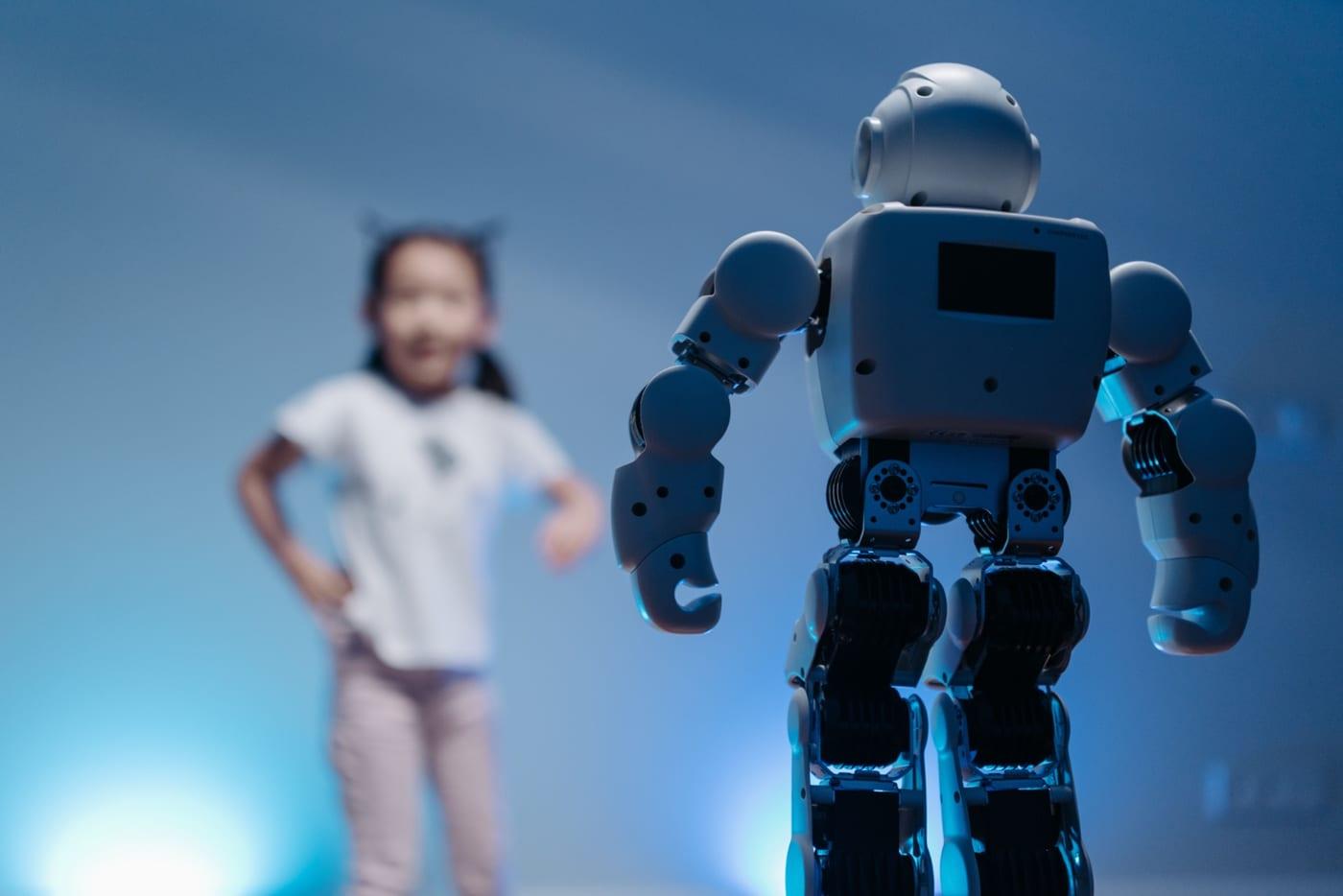
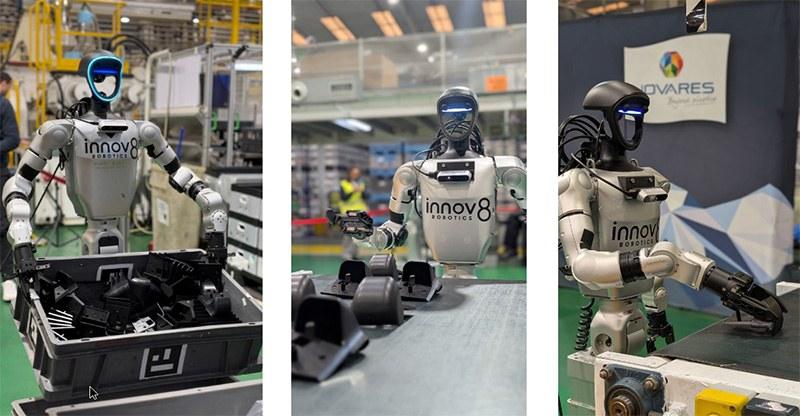
Elephant Robotics’ myCobot 280 is a six-axis desktop robot arm that weighs 850 grams, carries 250 grams and is listed from $599. That sounds like a toy. It is not: the myCobot is a popular entry point into robot manipulation, and the way people use it says a lot about where physical AI is heading.
Here is how the myCobot works, what changed in the myCobot Pro line, and what cheap, imperfect arms mean for robotics training data.
| myCobot at a glance | |
|---|---|
| Maker | Elephant Robotics, Shenzhen, China (founded 2016) |
| Robot | myCobot 280, a six-axis desktop collaborative arm |
| Weight and payload | 850 g, carries 250 g |
| Reach | 280 mm working radius |
| Price | From $599 (M5Stack edition) |
| Editions | M5Stack, Raspberry Pi, Jetson Nano and Arduino |
| Bigger siblings | myCobot Pro 450 and Pro 630 |
Company Snapshot
Elephant Robotics is a Shenzhen-based robotics company that sells collaborative robot arms, mobile bases, bionic robot pets and, since late 2023, the Mercury humanoid series. Its pitch has always been access: robots that students, makers and labs can actually afford to own.
That access is now feeding a bigger story. At CES 2026, the company showed several products, including its myArm series performing human-like dual-arm tasks such as folding clothes.
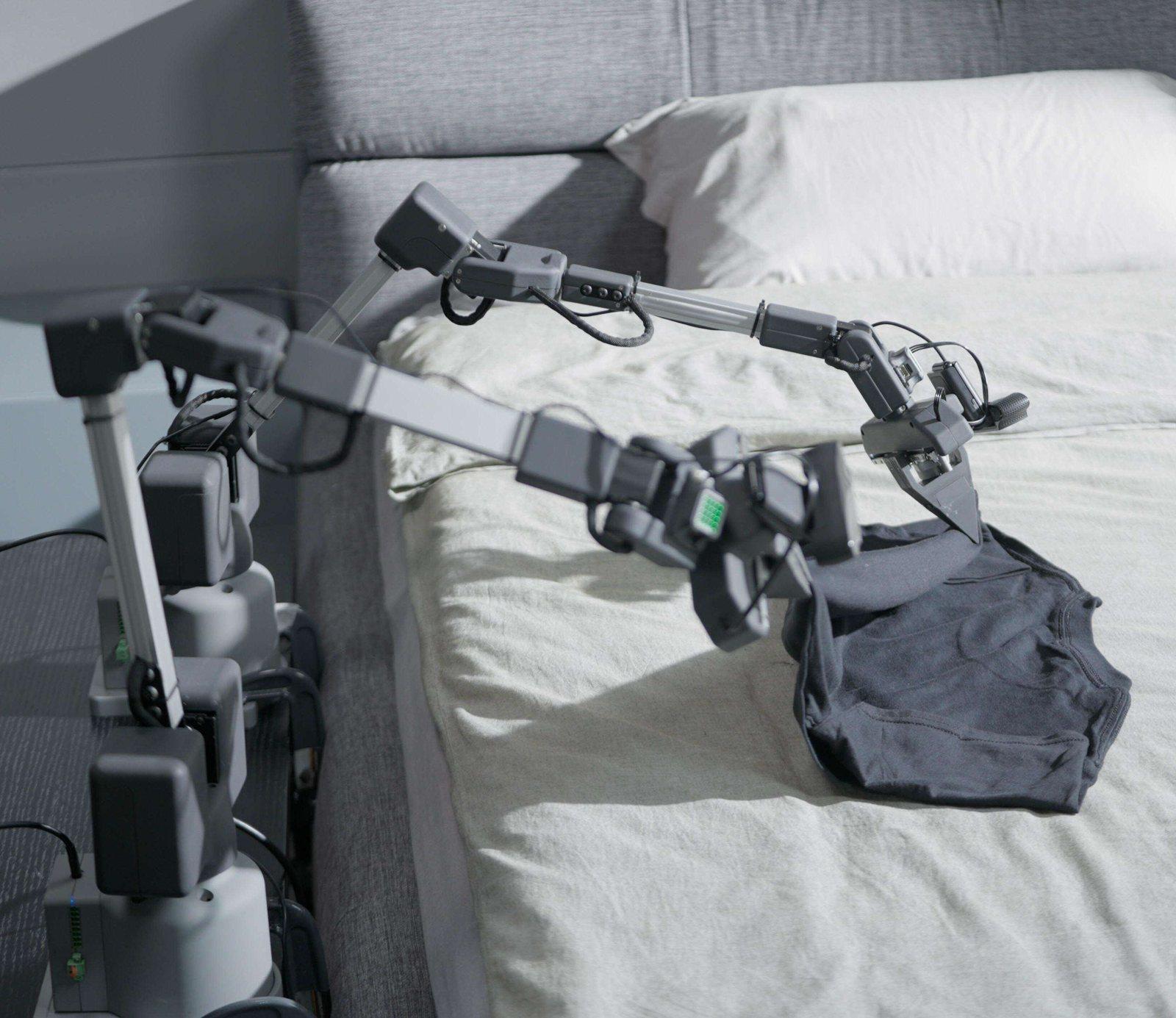
The myCobot is where the ladder starts. Think of it as the company’s front door to robot learning.
The Technology: A Small Arm Built for Iteration
What the myCobot 280 Actually Is
The myCobot 280 is a six-axis robotic arm with six servo joints, a 280 mm working radius, and a maximum joint speed of 160 degrees per second. Five of its joints rotate ±165°, while the sixth, at the end of the arm, turns ±175°. Elephant Robotics markets it as the world’s smallest six-axis robot arm. The spec sheet also highlights LEGO-compatible mounting holes at both the base and the end flange, plus two built-in display screens on the flagship M5Stack edition.
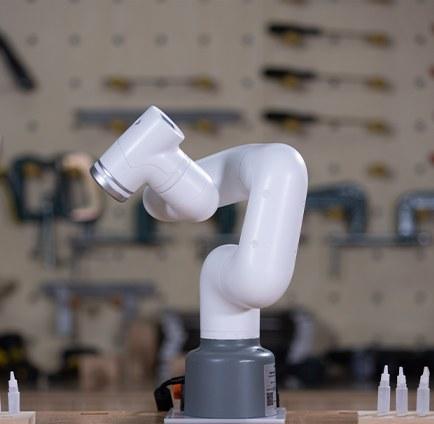
| Part | What it does |
|---|---|
| Six servo joints | Give the arm full six degree-of-freedom reach in a desktop workspace |
| ESP32 controller | Dual-core 240 MHz chip on the M5Stack edition, handling motion and communication |
| I/O ports | 13 inputs and 13 outputs for sensors, grippers and custom add-ons |
| End flange | Takes grippers, suction pumps and camera modules |
| Connectivity | USB, Wi-Fi and Bluetooth, plus serial and TCP/IP protocols |
One Body, Four Brains
Here is a design choice we find smart. The same mechanical arm ships with different compute: M5Stack, Raspberry Pi, Jetson Nano and Arduino editions. The mechanical platform remains largely the same; the computing hardware determines what users can build and run.
The M5Stack version is a controller, not a computer. Heavy perception, like running a camera feed through a vision model, happens on a laptop. The Jetson Nano version is built around an NVIDIA Jetson Nano board for image processing, so vision can run on the robot’s own computer, and a classroom can graduate between editions without relearning the robot. The newest, shown in November 2026, runs on Arduino’s UNO Q board.
What you’ll see: Elephant Robotics unboxes the myCobot 280 edition built on Arduino’s UNO Q board, from November 2026.
Video: Elephant Robotics, 2026. Plays from YouTube.
Drag and Teach, and the Gap It Hides
The arm’s most charming feature is drag and teach. You move the arm by hand, it records the motion, and it plays it back. A 2023 review noted that the default recording window is 100 seconds and that anything beyond record and playback has a steep learning curve.
That gap is the interesting part. Record and playback is the oldest form of imitation in robotics. It repeats one motion perfectly in one exact setup. A learned policy does something harder: it handles a cup that sits two centimeters to the left. The distance between replaying a demonstration and generalizing from many of them is, more or less, the entire field of robot learning.
Why a 250 Gram Payload Is Not the Point
A 250 gram limit rules out most real work, but payload is the wrong metric here. What matters is how many experiments a lab can run.
When an arm is cheap, a failed grasp costs nothing and a student can own one instead of booking a shared machine. The spec sheet lists a working lifespan of 500 hours, which tells us this is a teaching instrument, not a three-shift factory worker. One study made a related argument at a larger scale: low-cost hardware paired with imitation learning can perform fine manipulation that once demanded expensive, precise machines.
The myCobot 280 makes experimentation accessible, but its limitations become apparent as research moves toward heavier objects, longer operating sessions and more demanding manipulation tasks. This is where Elephant Robotics’ Pro line enters the picture.
Stepping Up: The myCobot Pro Line
The myCobot name covers a second family with a different job. The older Pro 600 carried up to 2 kg across a 600 mm reach. The newer models are the Pro 450, launched in August 2025, and the Pro 630. On the Pro 450, each joint combines a harmonic reducer, a servo motor and a brake, with the controller built into the arm; the Pro 630 also uses harmonic joint modules.
| Arm | Reach | Payload | Precision spec | Rated life |
|---|---|---|---|---|
| myCobot 280 M5 | 280 mm | 250 g | ±0.5 mm positioning accuracy | 500 h |
| myCobot Pro 450 | 450 mm | 1 kg | ±0.1 mm repeatability | Not listed |
| myCobot Pro 630 | 630 mm | Up to 2 kg | ±0.1 mm repeatability (ISO 9283) | Over 10,000 h |
Specifications vary by model and hardware configuration. Do not compare the precision column directly: the 280 figure is positioning accuracy, while the Pro figures are positioning repeatability, which the Pro 630 states under ISO 9283. The more telling detail is the rated life, along with the joint design described above.
The Pro line’s harmonic-drive joints and brakes suggest a more robust platform for repeated laboratory work. However, better mechanical rigidity does not automatically guarantee calibration stability. For labs collecting manipulation data over extended periods, repeatability should be validated through periodic calibration and measurement of actual end-effector movement.
What you’ll see: A myCobot Pro 450 with 3D vision moves obstacles aside to find and pick a hidden object, from November 2026.
Video: Elephant Robotics, 2026. Plays from YouTube.
Business Model and Strategy
Elephant Robotics sells hardware directly through its online store and through distributors, then monetizes the surrounding ecosystem: grippers, suction pumps, camera modules, AI kits for vision tasks, and full education solutions for universities.
The strategy reads like a ladder. A student learns on a myCobot 280. A lab that outgrows it moves to a myCobot 320 or Pro, then to the myArm series built for embodied AI work, then possibly to a Mercury humanoid. Each step reuses habits, code and tooling from the last.
Academic institutions are also finding value in this approach. A conference paper from Colorado State University Pueblo describes a vertical lab sequence of five robotics lab modules built on myCobot 280 Jetson Nano arms, from a first-year engineering course to fourth- and fifth-year courses. An arm that appears in coursework, papers and tutorials builds familiarity that is hard to buy.
The Data Challenge
A cheap arm is a wonderful learning tool and a tricky data source. Here is what teams collecting robot data on hardware like this will run into.
The command is not the truth. Low-cost servo arms flex, drift and shift over time. One 2024 paper used a myCobot as its test case precisely because a low-rigidity arm does not move its body as intended, and that body changes over time as cameras move and joints age. Joint logs alone can mislead. Stiffer harmonic-drive arms like the Pro line narrow the gap, but labels that say what actually happened, taken from video, still matter more than the commanded path.
One demonstration is not a dataset. Drag and teach produces a trajectory. Learning needs many of them, with objects in different positions and lighting. An imitation learning project that Elephant Robotics shared records the six joint values in real time and trains a compact ResNet-based network on them and the camera images. That is a fine start, and it shows why a usable robotics dataset needs variety and consistent labels from the first session.
Success needs a definition. With a light gripper and a 250 gram limit, near misses are everywhere. Did the arm grasp the object, lift it, or only nudge it? A clear test design settles that before anyone counts wins.
Context travels with the data. Camera position, gripper type, calibration state and arm edition all change what a recording means. Skip that metadata and a dataset from one desk quietly fails to transfer to another arm.
Labelix.ai’s Notes
We love this robot, and not for its specs. The myCobot matters because it multiplies the number of people running physical AI experiments. Plenty of the field’s experiments happen on small benches, not just in a handful of humanoid labs.
That shifts what to watch. The hardware is already good enough to learn on. The open question is whether the data coming off cheap arms can be compared across labs: shared formats, shared definitions of success, and clear records of how each arm was set up.
Our takeaway: Elephant Robotics’ push into embodied AI kits and dual-arm systems is the right instinct. The next differentiator for a platform like this is not another joint. It is whether the recordings it produces are structured well enough for someone else to train on.
This is where structured data annotation becomes important. Labelix.ai helps robotics and AI teams organize robot recordings by labeling task steps, execution outcomes and failure cases according to their research requirements. For teams that need additional training data, our physical AI data collection services help support the collection of relevant real-world footage.
Have robot recordings that need labeling? Contact Labelix.ai to discuss a representative sample and your annotation requirements.
Have robot recordings that need labeling?
Send a representative sample: one task, a few episodes, your hardest cases. A dedicated Labelix.ai team labels task steps, outcomes and failures against your criteria and shows you how the close calls were decided.
FAQs
What is myCobot 280?
It is a six-axis desktop collaborative robot arm from Elephant Robotics, designed for education, research and prototyping. It weighs 850 g and carries 250 g.
Who makes the myCobot?
Elephant Robotics, a robotics company headquartered in Shenzhen, China. It also makes the myArm and Mercury robots, myAGV mobile bases and robot pets.
How much does the myCobot 280 cost?
The Elephant Robotics page lists the M5Stack edition at $599, with grippers and cameras sold separately. Check the store for current prices.
What is the difference between the myCobot 280 and the myCobot Pro?
The Pro arms use harmonic-drive joints and carry 1 to 2 kg instead of 250 g, and the Pro 630 is rated for over 10,000 hours. The 280 is cheaper and built for learning.
Is the myCobot good for imitation learning?
It works for small experiments. Drag and teach and joint recording make demonstrations easy to capture, but the arm's low payload and low rigidity limit how far results transfer to larger robots.

Cindy writes about Physical AI, robotics, and the human data that teaches models to perceive and act, for Labelix.ai, an independent data foundry for robotics and multimodal AI.
Get the next one first
One sharp read a month on Physical AI and the data behind it.