Stretch 4 is Hello Robot’s newest robot: a wheeled, one-armed mobile manipulator that launched in May 2026 at $29,950. It is sold to researchers and developers today, and it was designed around people with severe mobility impairments, some of whom are already piloting it.
Here is how it works, where the company is taking it, and what a robot made for real homes means for the data behind it.
| Hello Robot at a glance | |
|---|---|
| Founded | 2017, by Dr. Aaron Edsinger and Dr. Charlie Kemp |
| Robot | Stretch 4, a wheeled mobile manipulator with one telescoping arm |
| Launched | May 12, 2026 |
| Price | $29,950 at launch |
| Sold to | Researchers, developers and application engineers |
| Recognition | World Economic Forum Technology Pioneer, 2026 |
Company Snapshot
Hello Robot was founded in 2017 by Dr. Aaron Edsinger and Dr. Charlie Kemp, who bring years of combined experience from MIT, Google and Georgia Tech. The first Stretch arrived in 2020, and the company says more than a thousand users in 23 countries have built on the platform since. Stretch 3 won a 2025 RBR50 Robots for Good award, and in June 2026 the World Economic Forum named Hello Robot a Technology Pioneer.
What sets the company apart is its philosophy. Hello Robot favors a compact, lightweight, low-potential-energy design over the complexity of a full-size humanoid, and it treats people as the reason for the design, not an afterthought. Edsinger says a robot’s value is the agency a task gives someone, not how complicated the task is.

The Technology: What Is Inside Stretch 4?
What you’ll see: Hello Robot’s 45-second launch film for Stretch 4, from May 2026.
Video: Hello Robot, 2026. Plays from YouTube.
A Slim Body for Cluttered Rooms
Stretch 4 stands 160 cm tall on a base about 45 cm across, and it rolls. A lift column raises a telescoping arm that reaches 55 cm, plus a 6 cm wrist. It carries 4 kg with the arm retracted and 2.5 kg fully extended, and runs up to eight hours under a light computing load, according to the spec page. It weighs 46 kg, or 33 kg with ballast removed for transport.
The height is deliberate. Kemp told The Robot Report that many people with severe mobility impairments use powered wheelchairs, which puts their heads higher off the ground, so the robot needed enough reach and dexterity to work around them. Edsinger adds that the team still wanted it light enough to lift into the back of a car.
| Part | What it does |
|---|---|
| Sensing head | Two hemispherical 3D LiDARs and fisheye cameras watch the surroundings, while one central high-resolution camera watches the gripper’s workspace |
| Arm and lift | Telescoping arm and lift that move at twice the speed of Stretch 3, with 10% more total reach |
| Wrist and tools | Ambidextrous wrist with a depth camera, plus quick-release swaps between a compliant gripper, a parallel jaw gripper and a tablet |
| Base | Omnidirectional drive on 20 cm wheels that handle carpets, rugs and thresholds, with six laser line sensors that watch for drop-offs and hazards |
| Computer and power | An Intel NUC main computer plus an NVIDIA Jetson Orin NX for on-board AI models, and a dock for self-charging |
In our view, the sensing head is the quiet star. It is calibrated and fixed in place relative to the arm and base, so perception and motion share one frame of reference, which simplifies autonomy. It also follows what Hello Robot calls a sensor-rich approach, similar to Waymo’s. Edsinger’s reasoning is practical: in a home, a robot has to notice the pet or child behind it.
Safety by Design
Hello Robot puts safety into the physics first. Stretch 4 keeps its weight low, avoids having to counteract gravity on a long lever arm, and uses backdrivable, torque-sensing joints that can stop when they detect contact, per its safety guide and The Robot Report. Edsinger told The Robot Report the design is “fundamentally much better than anything out there in terms of safety, because of the intrinsic physics of what we’re doing.”
The company is candid about the limits. The same guide calls Stretch a research robot that can be dangerous, and Edsinger told The Robot Report the safety layer is still being built and the robot is not safety-certified. Fox News reports it is currently certified only for laboratory and research use.
Open Source and Developer Tools
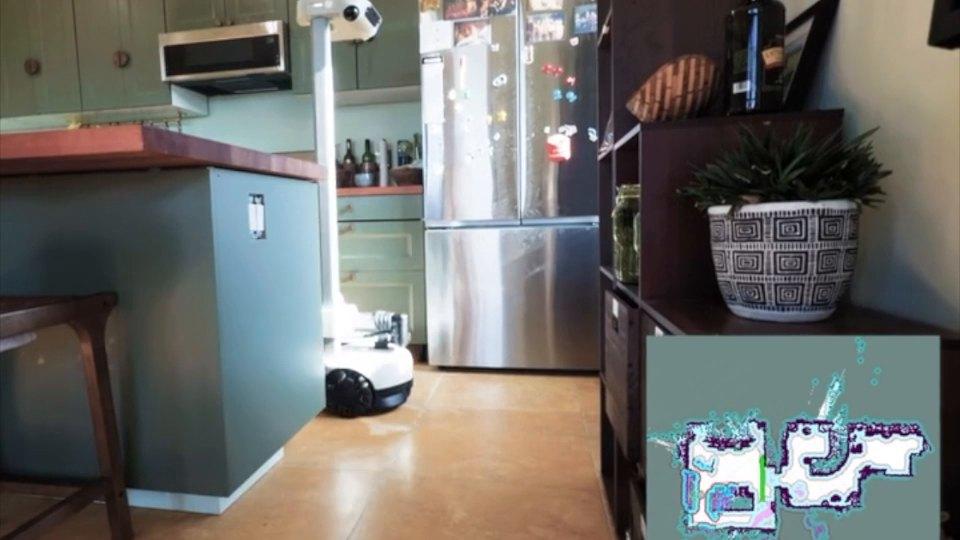
Stretch 4 is built for people who like to write code. Hello Robot publishes its software on GitHub, including robot description files, an RGB-D imaging package, a grasping demo and a community repo for sharing tools. Coverage of the launch also lists mapping, navigation, self-charging and vision-language-model grasping demos. Users can drive the robot from a phone app.
Business Model and Strategy
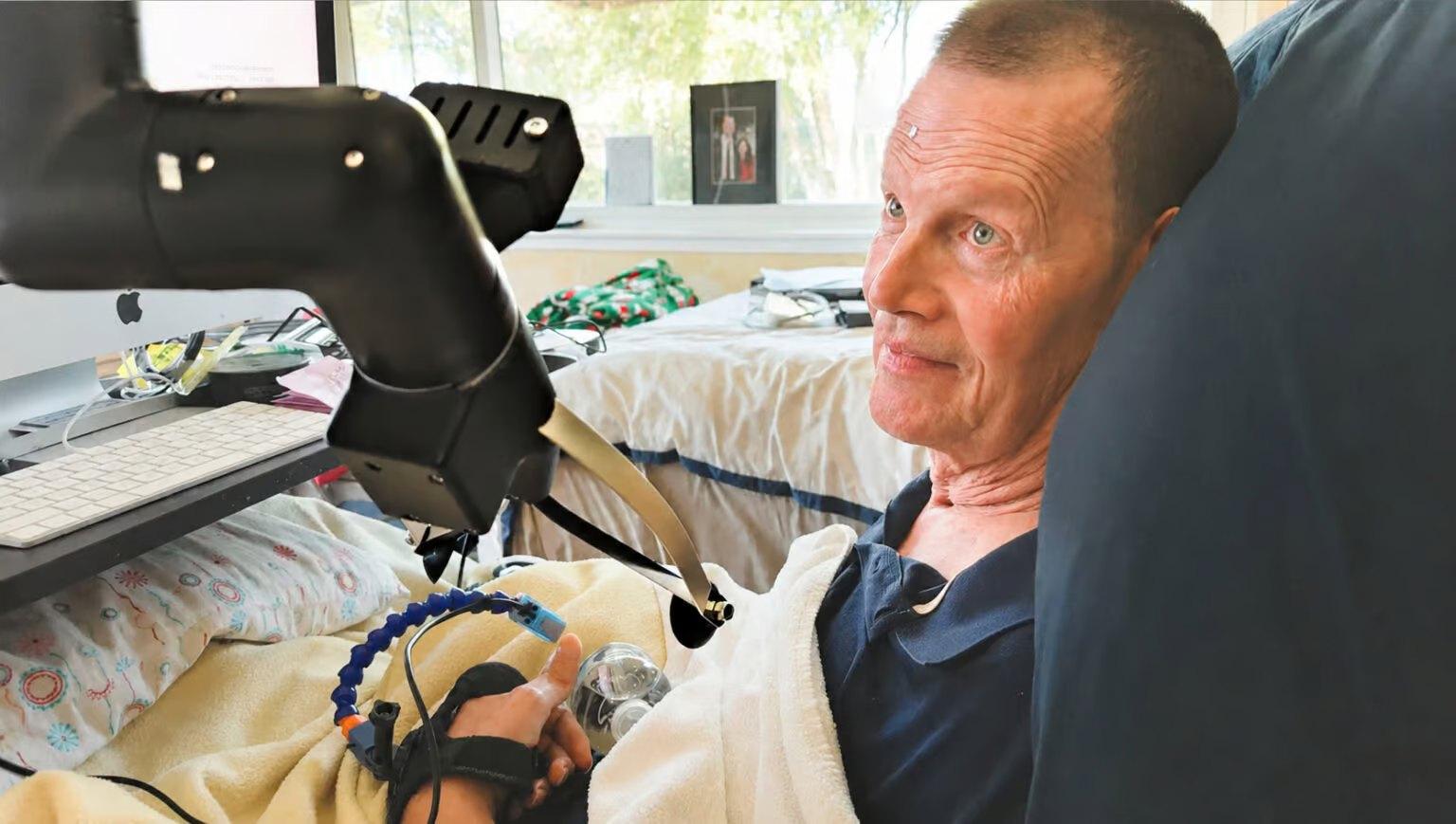
Hello Robot sells Stretch 4 to researchers, developers and application engineers, and the open-source code and community are part of the product. The robot is also a stepping stone. Kemp told The Robot Report that a main goal was to pilot with people with severe mobility impairments, which sets up a later version that would be a true assistive product, and he said it will need another iteration before then.
The company is cautious about scale. Its goal for the coming year is daily use over long periods, and Kemp calls premature scaling a common mistake in robotics. An enterprise pilot is running too, and Edsinger says the speed of getting up and running on useful tasks stands out.
Early users show what the pilots look like. Henry Evans, a co-founder of Robots for Humanity who has quadriplegia, says Stretch 4 is his only means of interacting with his physical environment. Georgena, an early user from Portland, Oregon, who has multiple sclerosis, visited the California Academy of Sciences in San Francisco through Stretch 4. At the coral reef tank, her partner Sharon played rock, paper, scissors with a scuba diver through the glass, according to Georgena’s story.
What you’ll see: Georgena’s visit to the California Academy of Sciences with Stretch 4, from Hello Robot’s people stories.
Video: Hello Robot, 2026. Plays from YouTube.
In September 2026, Hello Robot received a Phase IIB grant from the National Institute on Aging (part of the National Institutes of Health, NIH), worth nearly $3 million over three years. Working with the University of Illinois Urbana-Champaign, the team will explore how Stretch can support older adults with mild cognitive impairment and early Alzheimer’s dementia, across cognitive assistance, social engagement and safety management. Sixty older adults, care partners and care staff will take part in participatory design, and the release points to the need: more than 11,000 Americans turn 65 every day, and caregiver turnover can reach 77%.
The Data Challenge
Hello Robot has not published how it collects or labels data, so we will stick to what the setup implies and what research on Stretch has already shown.
Homes are not labs. Researchers from NYU and Meta built Dobb-E on a Stretch. They gathered 13 hours of demonstrations across 22 New York homes, then tested in 10 new homes across 109 tasks, reaching an 81% average success rate. The paper also flags challenges lab robots rarely face, such as strong shadows and uneven demonstration quality from non-experts. A usable robotics dataset has to capture that variety on purpose.
Many sensors, one timeline. Two LiDARs, several cameras, six floor sensors and a wrist depth camera produce a lot of parallel data. It only becomes training material when the streams line up in time and the labels agree across them. That is the daily work of robotics data annotation.
Success belongs to the person. The NIH project will measure effectiveness, usability, reliability, trust and acceptance, along with whether Stretch can operate safely around older adults. Most of those are human judgments. Did the robot bring the cup, and did it do so in a way the person was comfortable with? Spelling out those standards before testing starts is what good benchmark design does.
Handoffs and retries are signals. Mobile manipulation research already leans on teleoperation, shared autonomy, and recovery. A recent study combined wearable muscle-signal control with vision, language, and motion-planning modules, and tested it in a twelve-day in-home study with a user with quadriplegia, covering navigation and daily tasks. Another tested an execution-monitoring loop that helps a mobile manipulator recover from induced empty grasps or escalate to the user. Every handoff and retry marks a moment worth labeling, and failure analysis sorts them by cause. The care-setting evaluations alone run eight weeks, and if those sessions are recorded, searching video for suspected failures keeps the review manageable.
Labelix.ai’s Notes
Stretch 4 is a refreshing kind of Physical AI story. The goal is not a robot that dazzles but one a person can rely on every day. We like that Hello Robot says so openly, including that it needs another version before an assistive product reaches the market.
Our two cents: the numbers to watch from the NIH project are not speed or reach. They are how often people choose to use Stretch, what it gets wrong, and how it recovers. Those answers live in hours of recordings, and teams that can turn that footage into labeled, reviewable evidence will learn faster than those that cannot.
That is where careful labeling helps. Labelix.ai’s robotics data annotation work structures recordings so teams can label task steps, handoffs, outcomes and failures against their own criteria, and our Physical AI data collection service supports teams that need that footage in the first place.
Have robot recordings that need labeling? Contact Labelix.ai to discuss a representative sample and your review criteria.
Have robot recordings that need labeling?
Send a representative sample: one task, a few episodes, your hardest cases. A dedicated Labelix.ai team labels steps, handoffs, outcomes and failures against your criteria and shows you how the close calls were decided.
FAQs
What is Hello Robot's Stretch 4?
Stretch 4 is an open-source mobile manipulator from Hello Robot, with a telescoping arm, an omnidirectional base and a sensor-rich body. It launched on May 12, 2026.
How much does Stretch 4 cost?
It launched at $29,950 and is sold to researchers, developers and application engineers through Hello Robot's website.
Is Stretch 4 a humanoid robot?
No. It is a wheeled robot with one telescoping arm on a lift column. Hello Robot chose that form for safety and simplicity.
Can Stretch 4 be used at home today?
It was designed around home needs and has been piloted with people with severe mobility impairments, but it is sold as a developer platform. According to reports, it is currently certified only for laboratory and research use, and Hello Robot expects a later version to become the assistive product.
How much can Stretch 4 carry?
About 4 kg with the arm retracted and 2.5 kg with the arm extended, per the spec page.

Cindy writes about Physical AI, robotics, and the human data that teaches models to perceive and act, for Labelix.ai, an independent data foundry for robotics and multimodal AI.
Get the next one first
One sharp read a month on Physical AI and the data behind it.